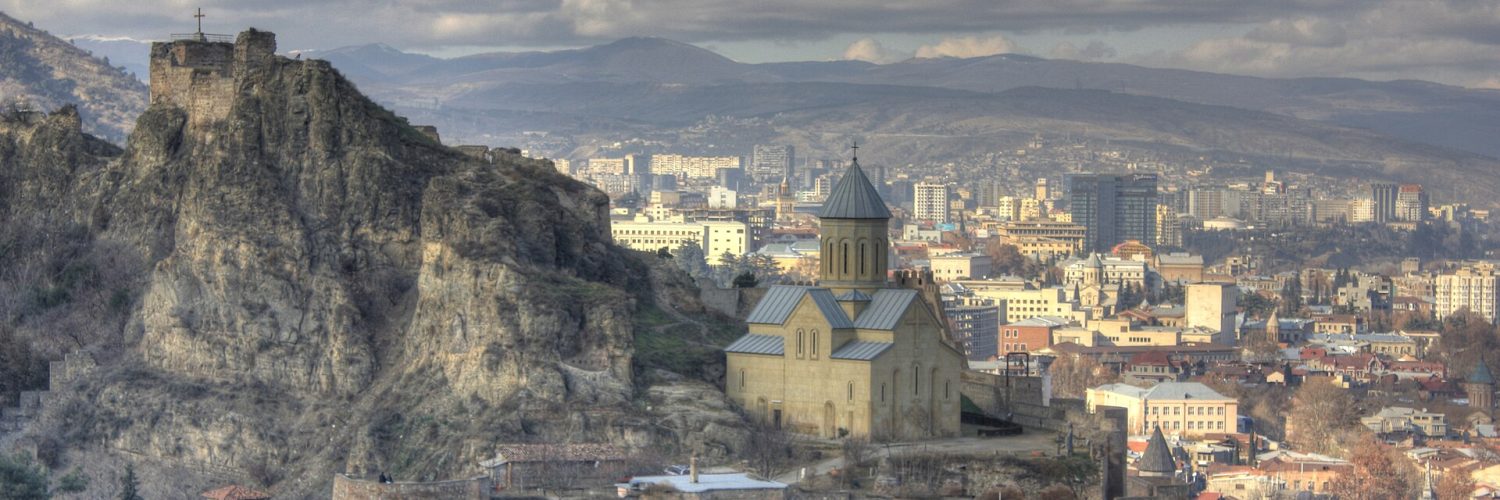
Tbilisi has been sacked, burned or occupied roughly forty times in sixteen centuries. It sits in a narrow gorge on the Mtkvari river at the point where the road from the Black Sea to the Caspian squeezes between two mountain ranges — the single most valuable few hundred metres of ground in the Caucasus, and therefore the most fought over. Almost nothing here is older than the eighteenth century, not because Georgians did not build, but because the city kept being levelled. That is the key to reading it: what looks like a charmingly higgledy old town is in fact a reconstruction layered on ruins, which is why the architecture jumps from Persian brick to Art Nouveau to Soviet concrete within one street.
Why the city looks like this
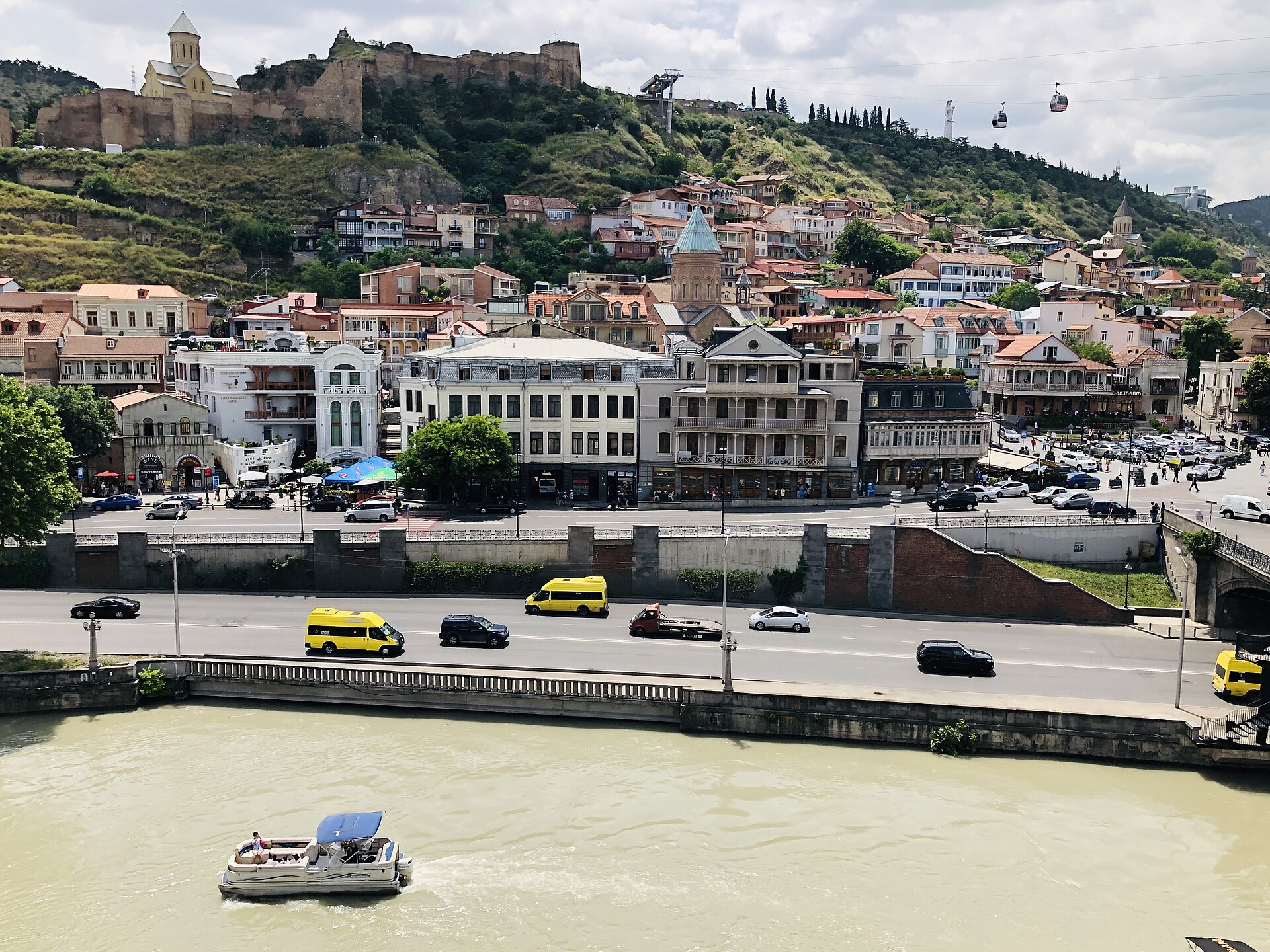
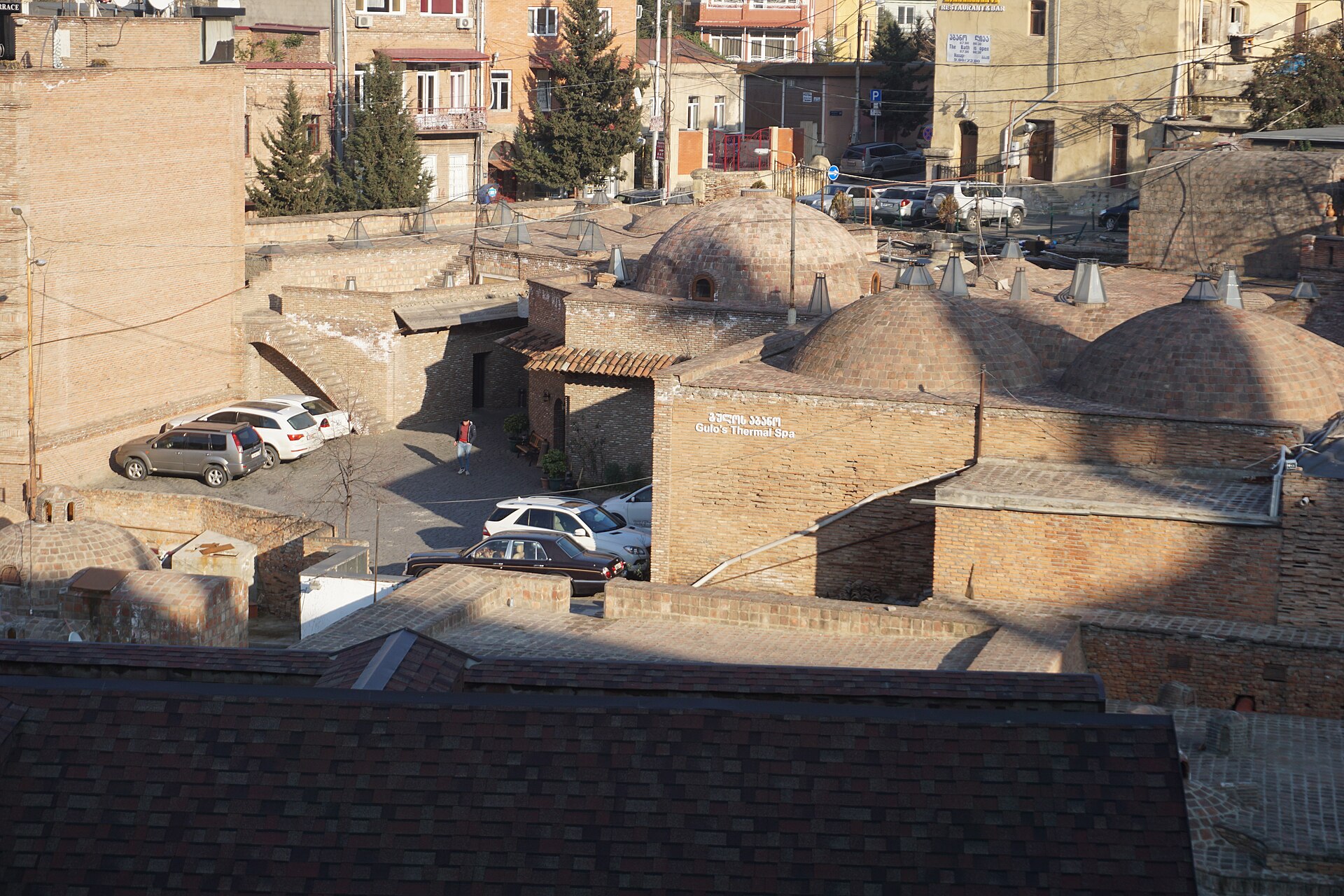
The founding story is a hot spring — King Vakhtang Gorgasali’s falcon fell into one while hunting, and tbili means warm. The springs are real and still in use, and they are the reason the settlement sat in a gorge rather than on defensible high ground. Everything follows from that compromise: the fortress went up the ridge (Narikala), the bathhouses went in the valley floor (Abanotubani), and the residential streets filled the impossibly steep gap between them.
The most recent destruction was economic rather than military. After 1991 Georgia went through a civil war, hyperinflation and near-total collapse of public services. Whole streets of carved balconies rotted because nobody could afford to fix them. The restoration you see now dates largely from the 2010s and is uneven — one building immaculate, its neighbour propped up with scaffolding for a decade. Locals are divided about it, and some of the “restored” facades are new construction behind an old skin.
Getting in from the airport
Tbilisi International (TBS) is 17 km southeast of the centre. A ride-hailing app is the default and costs roughly 15–30 GEL into town depending on time and demand; booking in advance for a pre-dawn departure pushes it to around 45–50 GEL. There is also a train from the airport to Tbilisi Central for a couple of lari, but it runs only a few times a day and is useless if your flight lands at 04:00 — which, given the airport’s schedule of budget flights, it very likely does.
If you are landing overnight with luggage and no local SIM, a pre-arranged transfer removes the one genuinely stressful part of arriving here.
What costs money and what does not
Tbilisi is inexpensive by European standards and the headline sights are cheap enough that the usual advance-booking calculus barely applies.
- Rike–Narikala cable car — 2.5 GEL each way, charged separately, so a return is 5 GEL. Paid with a MetroMoney card (2 GEL to buy), not cash.
- Mtatsminda funicular — around 6 GEL one way, also on a card system; the park at the top is free to enter and you pay per ride.
- Sulphur baths — the public pools are a few lari; a private room for an hour runs from roughly 60 GEL upward depending on the bathhouse and whether you want a scrub.
- Metro and buses — 1 GEL per journey with a MetroMoney card, with transfers included in a 90-minute window.
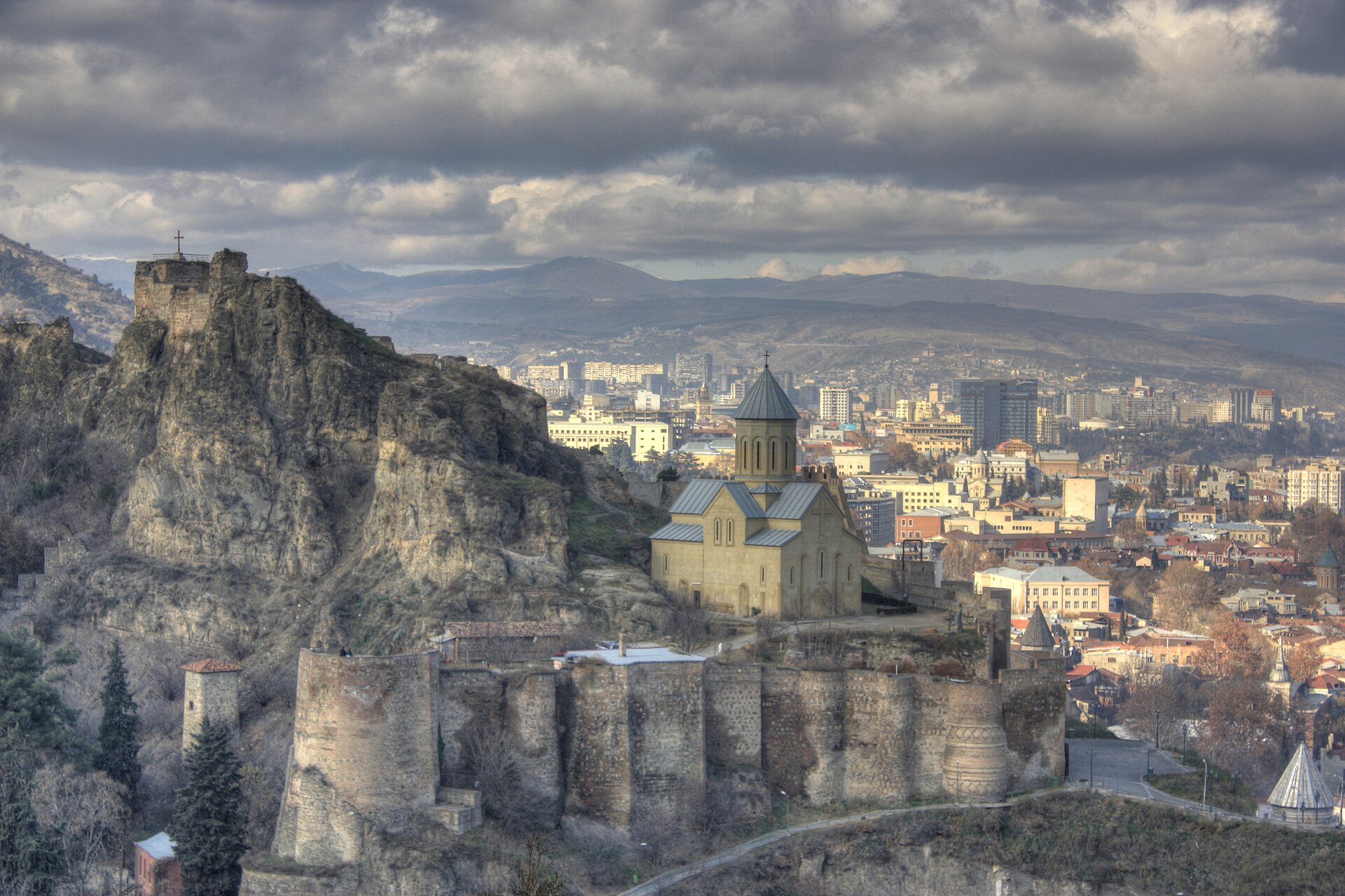
Honest note: the cable car queue at Rike on a summer weekend can run 40 minutes, and the walk up through the botanical garden side takes about 25 minutes and is more interesting. Ride down instead of up.
Free, and better
Walking the Sololaki and Chugureti backstreets and pushing open the unlocked doors of nineteenth-century apartment buildings — the stairwells often have hand-painted walls and stained glass — costs nothing and is the best hour you will spend here. The Chronicle of Georgia, Zurab Tsereteli’s unfinished 35-metre monument above the Tbilisi Sea reservoir, is free, almost empty, and genuinely strange. It is a 25-minute drive from the centre and there is no practical public transport to the top of the hill.
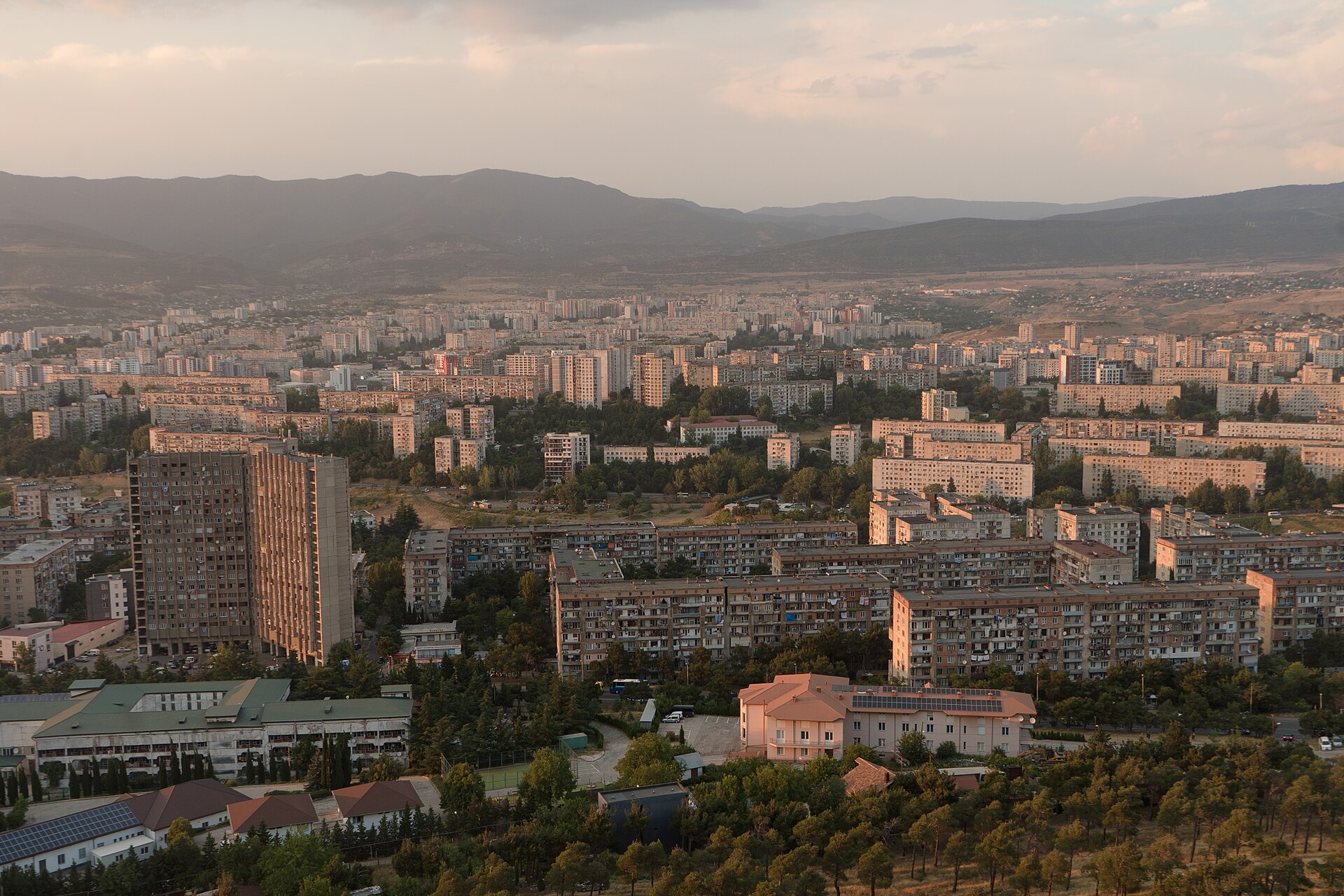
Neighbourhoods and what each is for
Old Town (Kala) and Abanotubani — the baths, the balconies, the tourist restaurants. Beautiful, steep, and the most expensive place to sleep.
Sololaki — grand crumbling apartment blocks just west of the old town, the best of the stairwells, quieter, still walkable to everything.
Vera and Vake — leafy, middle-class, good coffee and restaurants, few sights. Where to stay if you want a normal city rather than a stage set.
Chugureti (Marjanishvili) — across the river, faded German and Armenian merchant architecture, the most interesting food, cheaper rooms, a 15-minute walk from the centre.
Rustaveli Avenue — the ceremonial spine: parliament, opera, museums. More a corridor than a district.
A four-day itinerary
Day 1. Old town on foot — Abanotubani, Meidan, the Bridge of Peace — then the cable car down from Narikala at sunset. Dinner in Chugureti.
Day 2. Sololaki stairwells in the morning, Rustaveli and the Georgian National Museum in the afternoon (the Soviet Occupation hall is short and worth it), Mtatsminda funicular in the evening for the view.
Day 3. Day trip to Mtskheta, the old capital 20 km north — Jvari monastery on the ridge above the confluence of two rivers is the single most photographed view in Georgia and deserves it. Half a day; add Uplistsikhe cave town if you have a car.
Day 4. Chronicle of Georgia in the morning, Dezerter Bazaar for cheese and churchkhela, sulphur bath in the afternoon.
Day trips worth the drive
Kazbegi (Stepantsminda) — three hours north on the Georgian Military Highway, ending at Gergeti Trinity Church on a ridge below a 5,047 m peak. It is the single most spectacular day out from Tbilisi and it is a long one; leaving at 07:00 and returning after dark is normal. The road climbs the Jvari Pass and can close in snow.
Kakheti — the wine region, 1.5 to 2 hours east. Sighnaghi is the postcard town; Telavi is the working one. Most cellars accept walk-ins but the small qvevri producers prefer a call ahead. Do not drive this one yourself if you intend to taste — Georgia has a zero-tolerance drink-driving limit and enforces it.
David Gareja — a sixth-century cave monastery on the semi-desert border with Azerbaijan, two hours southeast. Parts of the complex sit on disputed ground and access to the upper Udabno caves has been intermittently closed by border guards. Check before committing a day to it.
Food and wine
Georgia has an 8,000-year winemaking tradition and ferments in buried clay qvevri, which produces amber wines that taste like nothing in the French or Italian canon. Ask for a qvevri wine specifically; the industrial semi-sweet reds that dominate supermarket shelves are a Soviet-era export legacy and are not the good stuff.
Eat khinkali (soup dumplings — twist off and discard the doughy top knot, or be judged), khachapuri in its regional forms, badrijani nigvzit (aubergine rolls with walnut paste) and pkhali. A supra, the formal Georgian feast with a tamada toastmaster, is a real institution and not something you can order off a menu — it happens to you if you are lucky.
Getting around
The metro has two lines, runs deep and fast, and costs 1 GEL. Buses are frequent and use the same card. Marshrutka minibuses cover everything else and are cheap, cramped and unmapped. Ride-hailing is inexpensive — 3–10 GEL for most trips inside the city — and is what most residents use. Street-hailed taxis without an app will overcharge you; there is no meter culture here.
Driving in Tbilisi itself is not recommended: the traffic is assertive, parking is improvised and the one-way system in the old town is punishing. Renting a car for trips out of the city — Kazbegi, Kakheti, Vardzia — is a different matter and is the right call, since Georgia’s best scenery is two to four hours from the capital on roads that are mostly good.
When to go
May–June and September–October are the sweet spots: 20–27°C, dry, and the mountain roads north are open. July and August regularly hit 35–38°C in the gorge, which is genuinely unpleasant, and half the city decamps to the mountains. Winter is cold but mild by Caucasus standards, around 0–7°C, with the advantage of empty bathhouses and cheap rooms; the Military Highway to Kazbegi can close after snow.
Practical notes
- Stray dogs. Tbilisi has a large tagged street-dog population. They are vaccinated, generally friendly, and follow tourists. They are also occasionally territorial in packs at night on the outskirts.
- Pavements. Uneven to the point of hazard, with open drains and steep cobbles. Not a good city for wheeled luggage or limited mobility.
- Air quality. The gorge traps exhaust. On still winter days the centre is noticeably smoggy.
- Politics. Georgia is going through a contested political period with recurring large protests centred on Rustaveli Avenue. They are usually peaceful and predictable in location, but check local news before planning an evening there, and do not join.
- Occupied territories. Abkhazia and South Ossetia are outside Georgian government control. Entering them other than from the Georgian side is illegal under Georgian law and will complicate future entry.
- Cash. Cards are widely accepted but bazaars, marshrutkas and small bakeries are cash-only. ATMs are everywhere.
Where to stay
Sololaki or Chugureti for character and value; Vera for a quieter base with good food; the old town only if you want to be in the middle of it and accept the noise and the price. Rates spike in September and around New Year.
Further reading
- Motorbike rental in Georgia
- Things to do in Istanbul