Most people planning a Maasai Mara trip spend their energy on the wrong decision. They agonise over whether to spend around $200 on a light aircraft or save it by driving five or six hours — and then discover that the reserve itself now charges non-resident adults $200 per person per day in high season. The flight is not the expensive part of this trip. It has not been the expensive part for a while.
That reframes the question usefully. It is not “can I afford to fly” but “given what each day inside the reserve costs, what is the best use of the days I am paying for”. Here is how the two options actually compare in 2026.
First, the number that dominates everything
Maasai Mara National Reserve entry for non-resident adults is $100 per person per day from 1 January to 30 June 2026, rising to $200 per person per day from 1 July to 31 December 2026. Children aged 9 to 17 pay $50 per day and under-nines go free.
Two people on a three-day high-season visit are therefore looking at $1,200 in park fees alone before a single night of accommodation or a single kilometre of transport. This is the figure that should drive your planning, and it is the one most itineraries bury in a footnote.
One consequence worth knowing: many of the private conservancies bordering the reserve — Naboisho, Olare Motorogi, Mara North and others — charge their own conservancy fee instead, often lower, with fewer vehicles per sighting and permission to do night drives and walking safaris that are not allowed inside the national reserve. If the reserve fee is straining your budget, the conservancies are the serious alternative rather than a compromise.
Flying: Wilson, not the big airport
The first thing to get right is which airport. Safari flights do not leave from Jomo Kenyatta International (NBO), the airport you probably arrived at. They leave from Wilson Airport (WIL), a separate general-aviation field on the other side of the city. Getting between the two takes 30 to 60 minutes depending on traffic, and Nairobi traffic is not a formality.
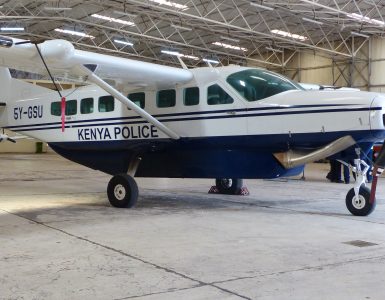
The two scheduled operators are Safarilink and AirKenya, both flying daily rotations in Cessna Grand Caravans, Dash 8s and Twin Otters. One-way fares typically run about $150 to $250, with peak-season pricing pushing toward $400. July to October is the expensive end; April to June and November to mid-December are the cheap end. Flights fill weeks ahead for the migration months, so this is a book-early item.
The flight takes roughly 45 minutes to an hour and lands on a dirt airstrip — Keekorok, Ol Kiombo, Musiara or Serena, among others. Which airstrip you use is determined by which camp you are staying at, so book the camp first and let it tell you the airstrip, not the other way round.
The baggage rule that catches people out
This one is genuinely strict and is not a suggestion. Both Safarilink and AirKenya allow 15 kg per person total, hand luggage and camera gear included, and it must be in a soft bag — a duffel, not a wheeled hard case. Safarilink permits maximum dimensions of about 70 × 60 × 35 cm; AirKenya’s limit is tighter at roughly 60 × 45 × 33 cm. Safarilink allows 20 kg on some coastal routes, but not on the Mara runs.
The reason is physical: the luggage holds on these aircraft are small and awkwardly shaped, and a rigid suitcase simply will not go in. Nearly every Nairobi hotel and both airlines will store your excess luggage while you are in the Mara, usually free or for a nominal fee, so the practical answer is to pack a duffel for the safari and leave the suitcase behind.
Driving: cheaper, longer, and harder than the map suggests
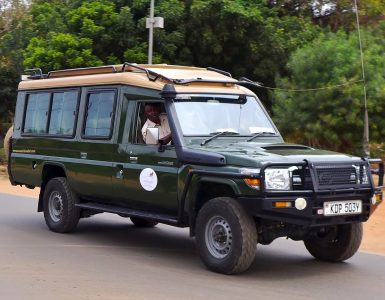
The road route runs roughly 270 km southwest from Nairobi via Narok, and takes five to six hours in good conditions. The first two-thirds is decent tarmac. The last stretch from Narok toward the gates — Sekenani, Talek or Oloololo depending on where you are staying — deteriorates sharply, and in the wet seasons of April–May and November it can be genuinely rough. This is 4×4 territory, not saloon-car territory.
The case for driving is real. Three or four people sharing a vehicle changes the economics completely, since a flight is priced per person and a car is not. You also arrive with your own transport, which matters if you want to move between camps or explore beyond a single lodge’s game-drive radius. And the drive itself passes the Great Rift Valley escarpment viewpoint, which is a genuine sight rather than a consolation prize.
The case against is that it eats a day in each direction. If you have four nights, driving costs you a meaningful fraction of the time you are paying $200 a day to have. If you have eight nights, it barely registers.
If you do drive, arrange the vehicle before you arrive rather than at the roadside — self-drive 4×4 hire in Kenya is a specific product and availability is thin in season:
So which one?
- Fly if your trip is four nights or shorter, you are travelling as a couple, you are visiting in July–October when every day counts, or your camp is deep in the reserve or in a conservancy well off the road network.
- Drive if you are a group of three or more, you have a week or more, you want to combine the Mara with Lake Nakuru or Naivasha on the same loop, or you are travelling in the April–June low season when both the fares and the fees are at their lowest.
- Do both — this is the option people forget. Drive in, fly out, or the reverse. You see the Rift Valley on the way in, and you get a day back on the way home. Most operators will arrange a one-way vehicle without much fuss.
The Nairobi end
You will almost certainly spend at least one night in Nairobi at either end, and the transfer between JKIA, the city and Wilson is the part of the trip most likely to go wrong on timing. Nairobi traffic can turn a 20-km hop into 90 minutes without warning, and morning safari flights from Wilson leave early.
Book the transfer rather than improvising it, particularly for a pre-dawn run to Wilson:
For a fuller breakdown of the options in and out of the international airport, see our Nairobi airport transfer guide.
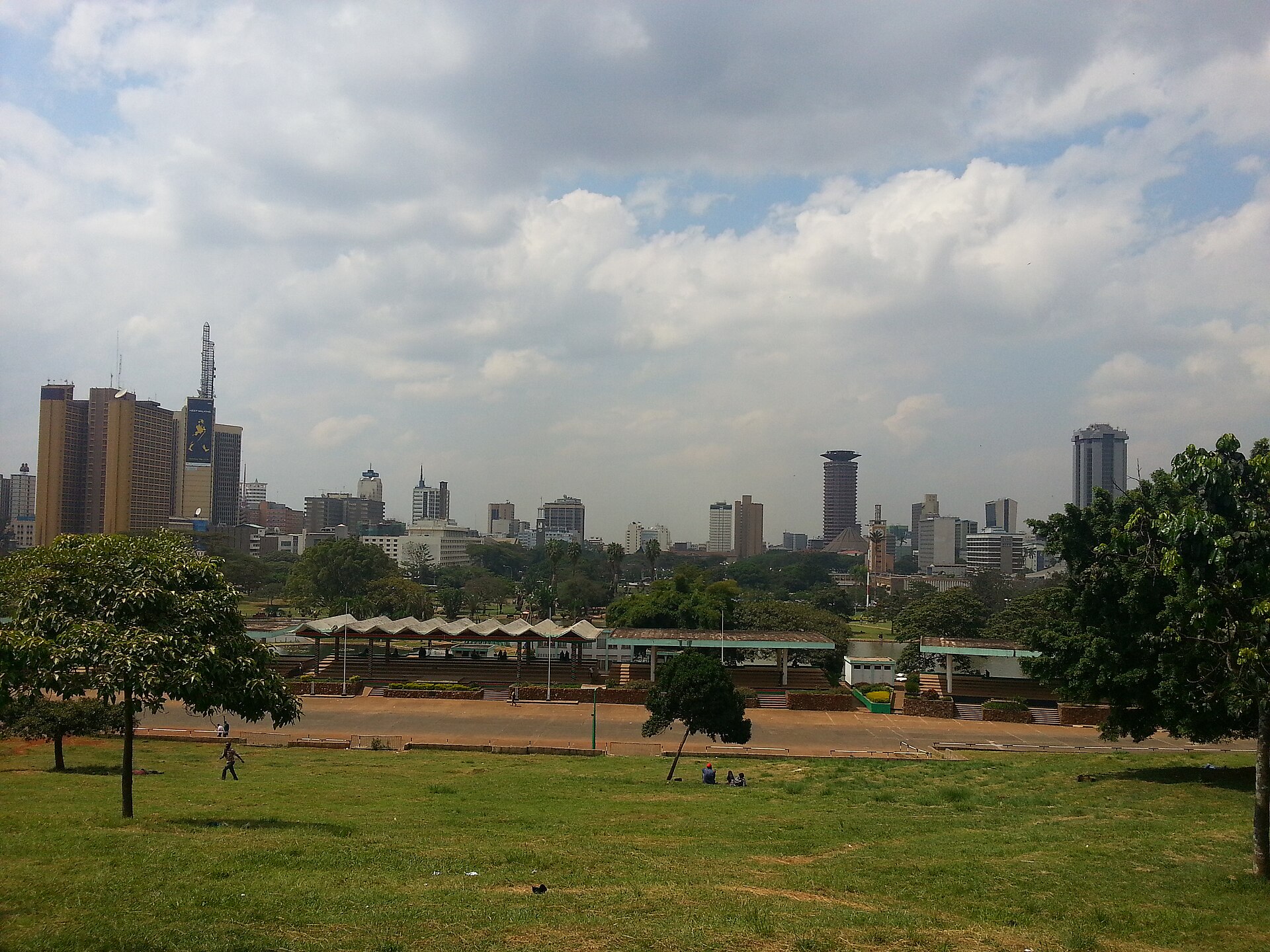
If you have a spare half-day, Nairobi National Park is genuinely worth it — a full big-game park with the city skyline on the horizon, about a 30-minute drive from the centre, and a fraction of the Mara’s entry fee.
When to go
The wildebeest migration crosses into the Mara from the Serengeti roughly between July and October, which is why that window carries both the $200 daily fee and the peak airfares. River crossings are unpredictable and cannot be scheduled — anyone promising you one is selling rather than informing.
January to March is dry, green after the short rains, excellent for predators, and half the park fee. April and May are the long rains: cheapest of all, some camps close, roads difficult, and the landscape at its most beautiful if you do not mind mud. June is the sweet spot for value, just before the fees and the crowds jump on 1 July.
Where to stay
Inside the reserve you are paying for proximity and paying the daily fee for every night. In the conservancies you generally get lower fees, fewer vehicles and more flexibility. Outside the gates near Sekenani the lodges are cheaper still, but you pay the entry fee each time you re-enter, which quietly erodes the saving.
Nairobi accommodation at either end is a separate and much cheaper problem:
Practical notes
- Park fees are usually paid cashless. Confirm with your camp how they collect it — many bundle it into the rate, and you do not want to pay twice.
- Yellow fever vaccination requirements depend on your routing; check for your itinerary rather than assuming.
- The Mara sits at around 1,500–1,800 m and mornings on a game drive are genuinely cold. Bring a fleece — this surprises people every single trip.
- Mobile coverage in the reserve is patchy but better than you would expect. Most camps have wifi in the main area.
- Tipping guides and camp staff is customary and adds up; budget for it separately.
Further reading
- Nairobi Airport Transfer Guide
- Motorbike Hire in Nairobi, Kenya
- Kilimanjaro Climb Cost Guide
- Things to Do in Cape Town
Read next: The 15-Kilogram Rule That Decides What You Can Pack for a Kenya Safari Flight