The first thing to know about San José’s airport is that it is not in San José. Juan Santamaría International (SJO) sits in Alajuela, about 20 km north-west of the capital, and for a large share of visitors the capital is not where they are going anyway.
That geography quietly decides your transfer. If your first night is in La Fortuna, Monteverde or on the Pacific coast, driving into San José to then drive back out is an hour of your life spent going the wrong way. Working out where you are sleeping on night one, before you book anything, is the whole trick.
What arrivals is actually like
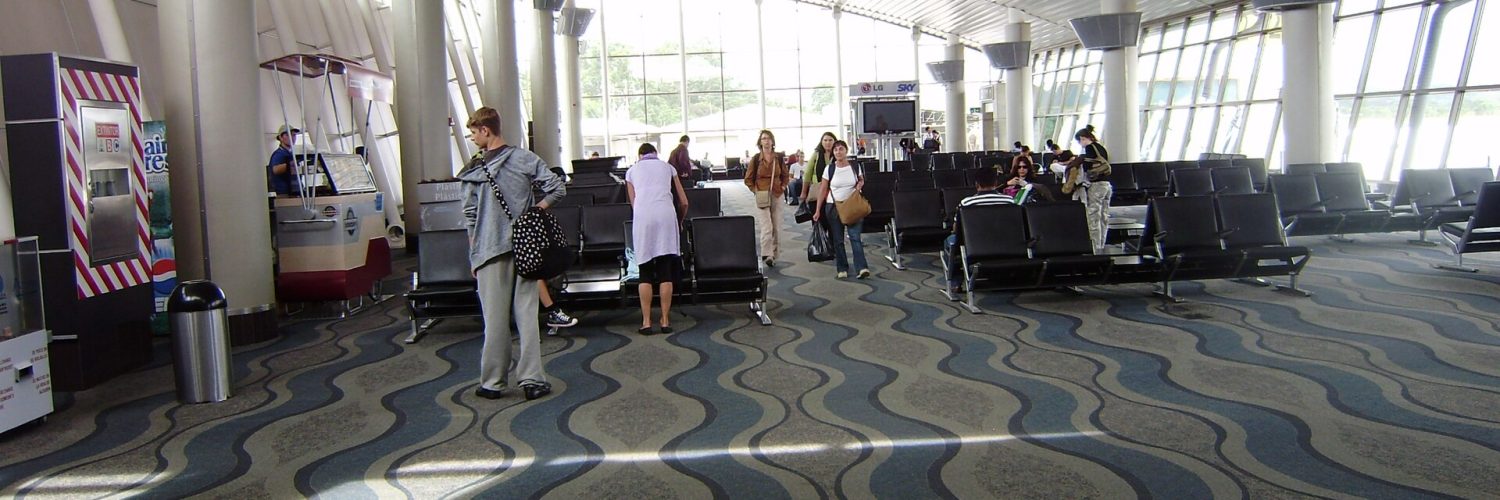
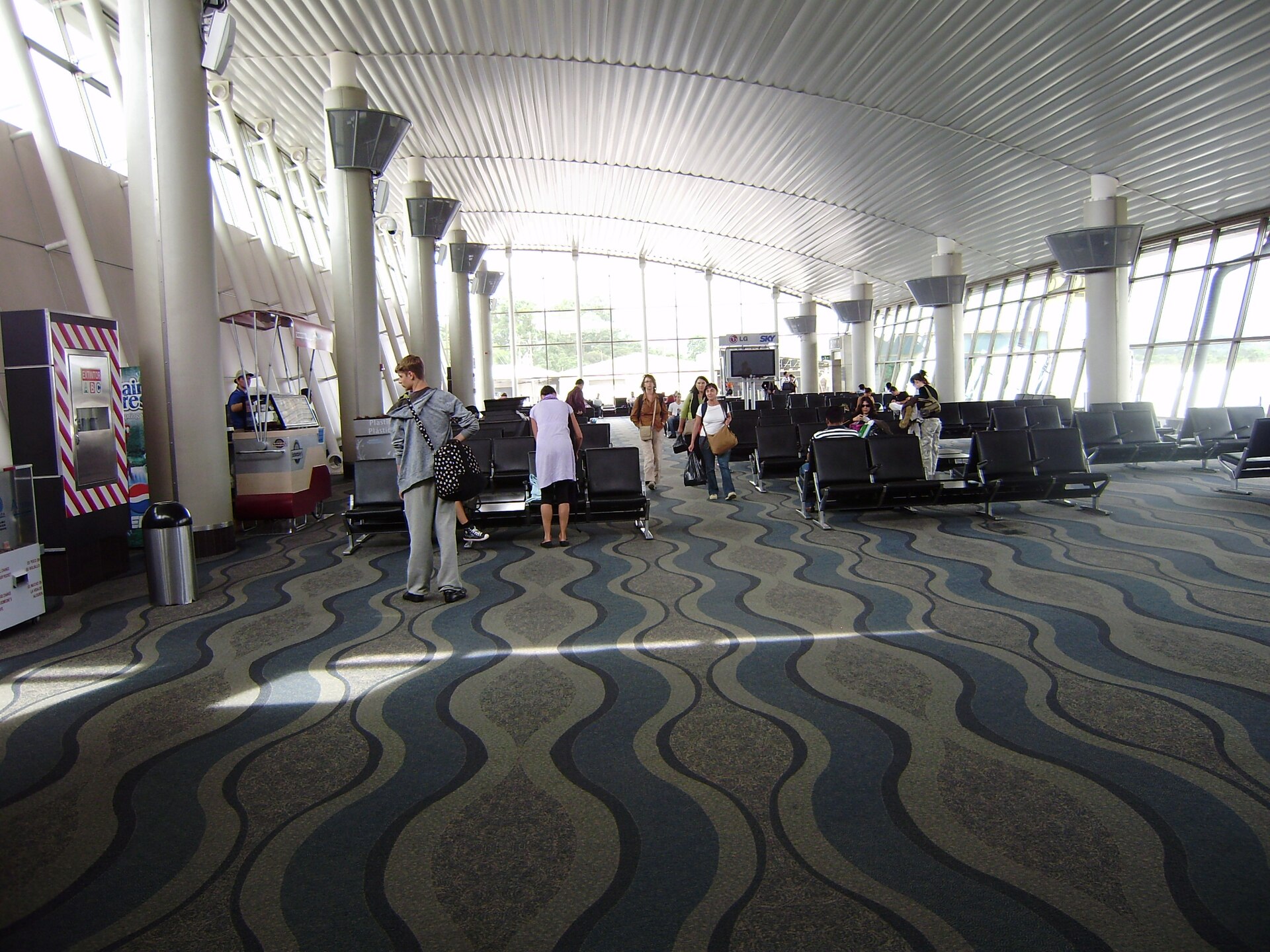
SJO is a compact airport with a single passenger terminal. Immigration can be slow when several long-haul flights land together, but the walk from gate to kerb is short. Baggage claim opens directly onto a narrow arrivals hall.
The thing to be ready for is the exit. The moment you clear customs you pass through a corridor of drivers, tour sellers and people offering to help with your bags. Most are legitimate; some are freelancers who will quote a price and then renegotiate it in the car park. Anyone who approaches you first is the one to be careful of.
Your options, in order of cost
Public bus
The cheapest way into San José by an enormous margin — a few hundred colones for the Tuasa or Station Wagon service to the centre, taking around 45 minutes to an hour depending on traffic. The stop is a short walk from the terminal. It is a genuinely fine option if you are travelling light, arriving in daylight, and staying in central San José. It is a poor option with three suitcases at 10pm.
Official red taxis and the orange airport taxis
Costa Rica’s licensed taxis are red with a yellow triangle on the door. At SJO specifically there is a dedicated airport concession running orange taxis, and these are the ones queuing at the official rank outside arrivals. They are metered — the meter is called a maría — and the meter is not optional. Expect somewhere in the region of USD 25–35 into central San José.
The rule: use the official rank. Never accept a ride from someone who approaches you inside the terminal.
Uber
Uber operates in Costa Rica and is often cheaper than the taxis, but its status at the airport is awkward — it exists in a legal grey area and drivers will typically ask you to meet them in a specific spot away from the official rank rather than at the kerb. It works, and plenty of travellers use it, but it is not the frictionless experience it is elsewhere.
Shared shuttle
Scheduled minibuses running fixed routes from the airport to the main tourist destinations. Considerably cheaper than a private van, and the standard choice for solo travellers and couples heading straight to La Fortuna or Manuel Antonio. The trade-off is departure times you do not control and stops at other hotels along the way.
Private transfer
A van and driver, door to door, leaving when your flight lands. As a rough guide to the market: an airport-to-San-José private run is around USD 70; San José to La Fortuna is in the region of USD 180; SJO direct to Manuel Antonio has been quoted around USD 200 for a small group. Split three or four ways these numbers stop looking extravagant, particularly for the long runs.
The distances nobody checks first
Costa Rica is small on a map and slow on the ground. Roads wind through mountains, trucks crawl on gradients, and average speeds are far lower than the distance suggests. Typical driving times from SJO:
- Central San José — 30 to 60 minutes, entirely traffic-dependent.
- Alajuela town — 10 to 15 minutes. Genuinely useful to know.
- La Fortuna / Arenal — around 3 hours.
- Monteverde — around 3 to 4 hours, with the final stretch on rough road.
- Manuel Antonio / Quepos — around 3 hours.
- Tamarindo and the northern Guanacaste beaches — 4 to 5 hours. If this is your destination, fly into Liberia (LIR) instead.
That last line is the most valuable sentence in this article. A great many people fly into SJO for a Guanacaste beach holiday and spend nine hours of a one-week trip in a van.
The Alajuela trick
If you land after dark — and many North American and European flights do — consider not travelling at all on arrival day. Alajuela is 10 minutes from the terminal, has a good range of guesthouses and hotels, and lets you start the long drive fresh the next morning in daylight.
This matters more in Costa Rica than in most places, because rural roads here are unlit, frequently unmarked at the edges, and shared with pedestrians, cyclists and the occasional livestock. Driving to La Fortuna at 11pm after a transatlantic flight is a bad plan even with a professional driver, and a genuinely poor one if you are driving yourself.
Should you just rent a car instead?
Often, yes — but with two Costa Rica–specific warnings.
Mandatory liability insurance. Costa Rican law requires third-party liability cover, sold by the state insurer, and it cannot be waived by your credit card. It is added at the counter. This is the single biggest source of “the price doubled at pickup” complaints in the country, and it is not a scam — it is the law. Budget for it when you compare quotes, and treat any online rate that looks impossibly cheap as one that has not included it.
Clearance matters more than 4×4. Most main routes are paved and a normal car is fine. But the roads into Monteverde, parts of the Nicoya Peninsula and many lodge driveways are gravel, steep, and cross fords in the rainy season. A high-clearance SUV is the sensible default if your itinerary leaves the paved network at all.
Also worth knowing: fuel prices are set nationally, so there is no point shopping around, and attendants pump for you. Toll roads on Route 27 towards the Pacific take cash in colones.

Booking notes
- Give your real flight number when you pre-book. Reputable operators track arrivals and will wait out a delay. Ones that do not track flights will leave.
- Confirm what “private” includes. Some quotes are per person, some per vehicle. Ask which, in writing.
- Carry some colones. USD is widely accepted for tourism services, but change is usually given in colones and often at a poor rate. Small purchases go better in local currency.
- Tipping. Not obligatory. A few dollars for a driver who handles bags is normal and appreciated.
- Do not book the cheapest shared shuttle for a 5am departure without checking the pickup window. “Between 5 and 6” often means 5.
The honest verdict
For central San José, take the official taxi or the bus — a private transfer is money wasted on a 30-minute trip. For anywhere beyond the Central Valley, the choice is between a shared shuttle and renting a car, and it comes down to whether your itinerary is one base or four. One base: shuttle in, shuttle out, skip the rental entirely. Three or more stops: rent, and accept the mandatory insurance as part of the price.
And if you are heading to Guanacaste, look again at flying into Liberia before you book anything at all.
Further reading
Our complete guide to renting cars in Costa Rica goes deeper on the insurance question, 4×4 rental in Costa Rica covers when the clearance is genuinely needed, and cheap domestic flights in Costa Rica is worth reading if the drive times above have put you off — the small-plane network can turn a five-hour transfer into forty minutes.