Most people arrive in Seville expecting a medieval Andalusian city and spend half their photographs on buildings that are younger than the New York subway. The Plaza de Espana, the Parque de Maria Luisa, the pavilions scattered through the south of the city, the wide avenues that lead to them — none of that is old Seville. It was all built for the Ibero-American Exposition, which opened on 9 May 1929 and limped on until June 1930, straight through the Wall Street Crash. The fair was a financial disaster. The city was left holding the buildings, and it turned out the buildings were the good part.
That split runs through the whole visit. Seville has a genuinely ancient core — a mosque that became a cathedral, a Muslim palace that Christian kings kept rebuilding in Muslim style for four hundred years after they took it — and then it has a stage set from 1929 wrapped around the south of it. Knowing which is which changes what you book, what you queue for, and what you can simply walk into for free.
Why Seville looks the way it does
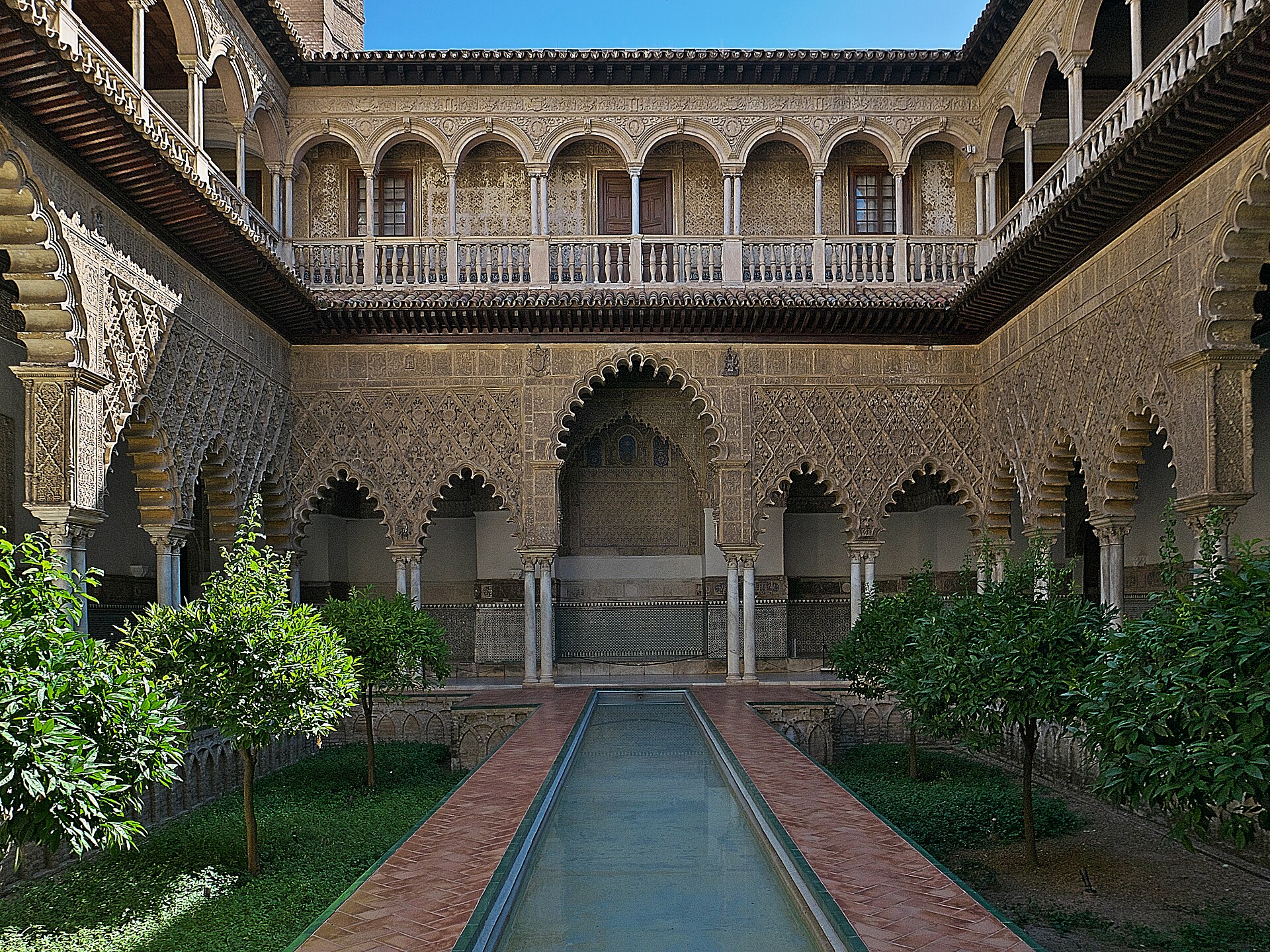
Two dates explain the map. In 1248 Ferdinand III took the city, and rather than tear down what the Almohads had built, his successors kept hiring the same craftsmen. That is why the Real Alcazar is not a Moorish palace with Christian bits added; it is a Christian palace built in the Mudejar style, on Muslim foundations, by Muslim artisans, for kings who had just conquered them. Peter I’s palace of 1364 is the heart of it, and it is the reason the place reads as older and more Islamic than it actually is.
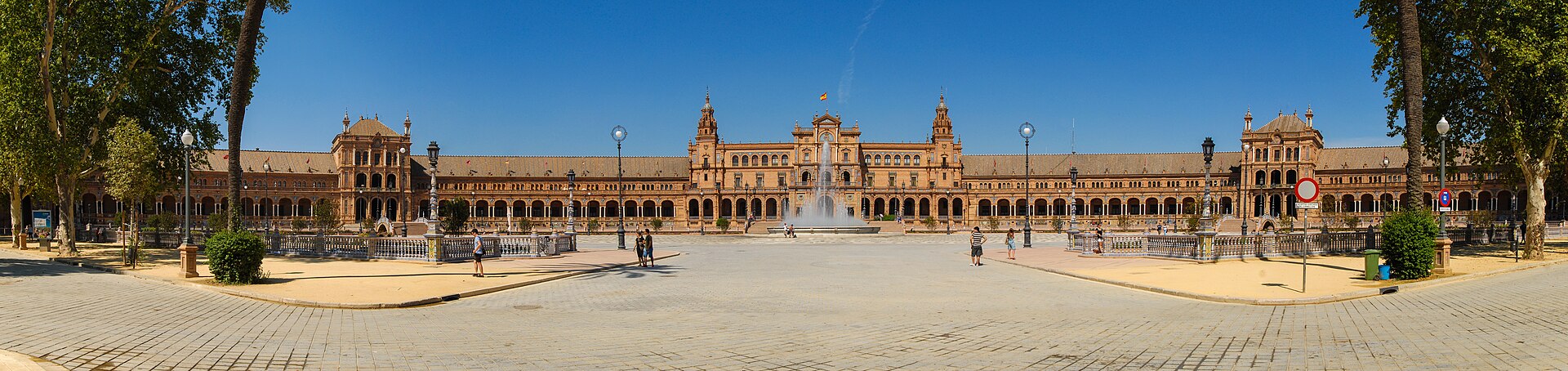
Then 1929. Anibal Gonzalez spent fifteen years building the Plaza de Espana for the Exposition — a semicircle of brick and glazed ceramic wrapped around a navigable canal, with tiled alcoves for each Spanish province. The other 1929 legacy is subtler: the whole southern district, the park, the width of the streets, and the habit of covering everything in azulejo tile. The 1992 Expo did the same trick a second time, sixty-three years later, and gave the city its bridges, its ring road and its high-speed rail link to Madrid.
Getting in from the airport
Seville airport (SVQ) sits about 10 km northeast of the centre and is small enough that you can be outside the terminal five minutes after the plane parks. The EA airport bus is the default: roughly €6 one way, about €8 for a same-day return, every 20–30 minutes, 30–45 minutes into town, stopping at Santa Justa station and Plaza de Armas. You buy on board. There is no train and no metro line to the airport.
A taxi runs a fixed airport tariff that has historically sat in the low-to-mid twenties of euros, higher at night and on holidays; confirm the flat rate with the driver before you get in rather than after. If you are landing late, arriving with a family, or staying somewhere in the old town where the streets are too narrow for a taxi to reach the door, a pre-booked transfer removes the one variable that reliably goes wrong — finding your accommodation in a maze of unmarked lanes at midnight.
What you must book ahead, and what it costs
Seville has a short list of places that sell out and a long list that never do. Getting that distinction right is most of the planning.
- Real Alcazar — around €15.50 for a standard adult ticket, plus about €1 online booking fee. Reduced entry near €8 for students aged 14–30 and over-65s; under-14s free. The Cuarto Real Alto (the upper royal apartments, still used by the royal family) is a separate timed add-on of roughly €5.50. In April and May, book four to six weeks out. In February or November you can often get a slot two days ahead.
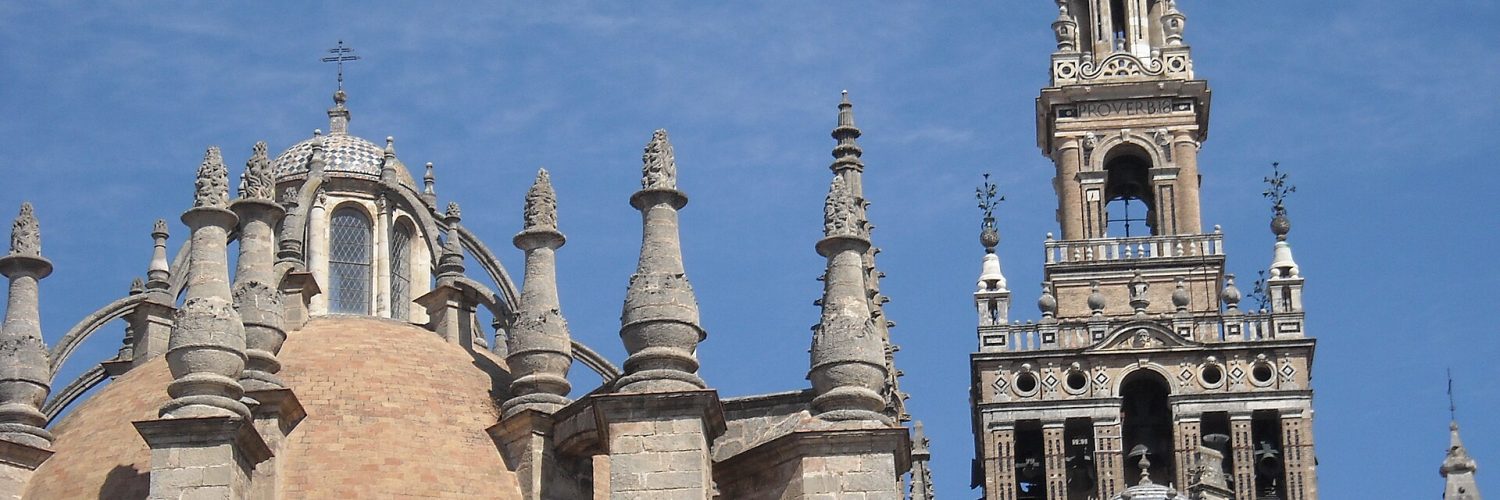
- Cathedral and Giralda — around €13 online, €14 at the door, and the ticket also covers the church of El Salvador a few streets away, which most people never use. The separate rooftop tour is around €20 and runs about 90 minutes with a cathedral guide; evening slots are the ones worth chasing, for the light more than the temperature.
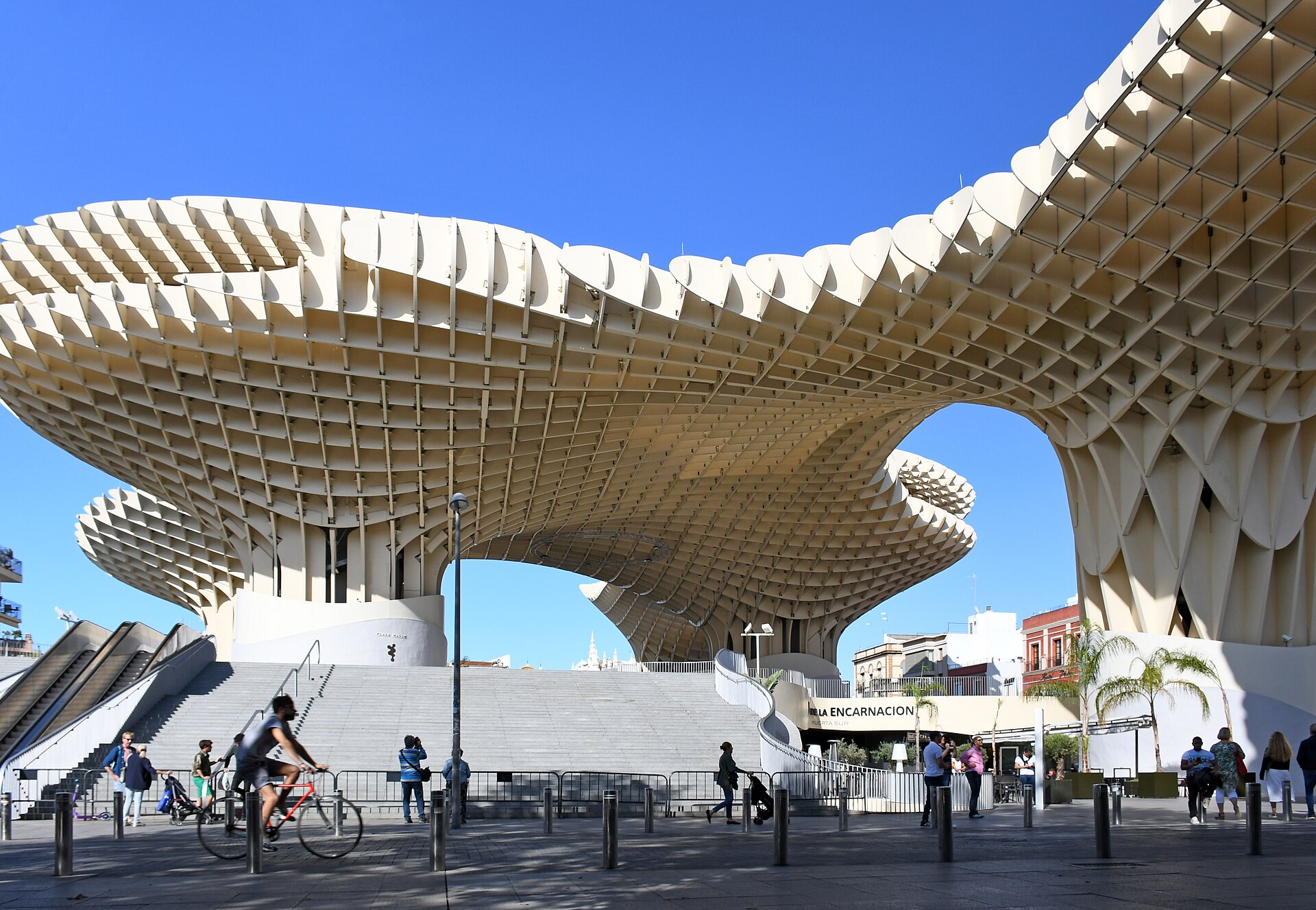
- Setas de Sevilla (Metropol Parasol) — roughly €15 for the walkway, the viewpoint and the “Feeling Sevilla” film. Rarely sells out.
- Casa de Pilatos — from about €12, and the best-value building in the city. Free on Mondays in the late afternoon.
Prices move, and several of these monuments run free windows: the Alcazar is free on Mondays for the last hour before closing (16:00–17:00 October to March, 18:00–19:00 April to September), and the Cathedral is free on Sunday afternoons with an online reservation. Those slots are released in small batches and vanish quickly, so treat them as a bonus rather than a plan.
If you would rather lock the timed entries in before you fly than gamble on the queue:
What is not worth the money
Two honest deductions. The Giralda climb is included in your cathedral ticket, so it costs nothing extra, but it is 34 ramps and no steps, it gets very hot, and the view is partly obscured by the bell chamber’s own screens — the rooftop tour is the better view if you are paying for one. And the flamenco dinner shows advertised on Calle Sierpes are, with a few exceptions, tourist product. The small tablaos in Triana and the Museo del Baile Flamenco run shorter, later, better sets for similar money.
What is free and no worse for it
The Plaza de Espana has been free since it opened, and at the time of writing it still is. The mayor announced in 2024 that visitors would be charged €3–4 to enter, with residents exempt, and has repeated since that the measure is settled — but it has not been implemented, and the plaza remains open. If you are reading this in a year when that has changed, the fee is small and the money is earmarked for the tile restoration, which the plaza badly needs.
Also free: the Parque de Maria Luisa around it, the whole of the Barrio Santa Cruz, the Alameda de Hercules in the evening, the Triana market, the riverside walk under the Puente de Isabel II, and the Plaza del Cabildo, a small semicircular arcade off Avenida de la Constitucion that almost nobody finds. The Hospital de los Venerables and the Palacio de las Duenas both charge, but modestly.
Neighbourhoods and what each is for
- Santa Cruz — the old Jewish quarter, immediately east of the cathedral. Beautiful, central, and the most heavily touristed square kilometre in Andalusia. Good for a two-night trip; wearing after four.
- El Arenal — between the cathedral and the river, the bullring and the old port. Quieter, still walkable to everything, better restaurants per street.
- Alfalfa and La Alameda — north of the Setas. Where Sevillanos actually drink. Later hours, more noise, less charm on the surface and more underneath.
- Triana — across the river, historically the gypsy and ceramics quarter and the birthplace of a large slice of flamenco. Ten minutes on foot from the cathedral and a different city.
- Nervion and Los Remedios — residential, cheaper, fine if you have a car or want space, dull if you do not.
A three-day route that does not double back
Day one — the old core. Alcazar first thing, on the earliest slot you can get; two hours inside, three if you like gardens. Lunch in El Arenal. Cathedral and Giralda in the afternoon. Evening in Santa Cruz, and then walk out of it for dinner.
Day two — 1929 Seville. Start at the Setas for the rooftop walkway before the heat, drop into the Roman remains in the basement, then walk south through the centre to the Plaza de Espana and the Parque de Maria Luisa. The Museo Arqueologico and the Museo de Artes y Costumbres Populares sit in two of the fair’s own pavilions at the far end of the park — worth entering as much for the buildings as the collections. Cross the river in the evening for Triana.
Day three — out of town, or deeper in. Either the Roman city of Italica at Santiponce, 20 minutes out by bus, where Trajan and Hadrian were born and where several Game of Thrones sequences were filmed in an amphitheatre that held 25,000; or Cordoba, 45 minutes each way by high-speed train, for the Mezquita. If you are staying in the city, this is the day for Casa de Pilatos, the Palacio de las Duenas and the Hospital de la Caridad — three houses that most three-day itineraries skip and that are, collectively, better than the Giralda climb.
Eating, and the rhythm of the day
Seville eats late even by Spanish standards: lunch from 14:30, dinner from 21:30, and in July and August a lot of the city simply does not go outside between 14:00 and 20:00. Tapas here are smaller and cheaper than in Madrid, and are ordered standing at the bar in rounds — one or two dishes, a drink, move on. Local specifics worth knowing: espinacas con garbanzos (spinach and chickpeas, a Lenten dish that stayed year-round), solomillo al whisky, carrillada (braised pork cheek), and salmorejo, which is not gazpacho — it is thicker, made only with tomato, bread, oil and garlic, and served with egg and ham.
Order una cana for a small draught beer, not una cerveza, unless you want a bottle. Tipping is rounding up, not a percentage.
Getting around inside the city
Seville is flat, compact and built for walking; almost everything above is inside a 2.5 km circle. There is one metro line, which is useful only if you are staying out towards Nervion or the university. The Tussam bus network covers the rest, with the C3 and C4 circular routes running the ring around the old town. Single fares are a couple of euros; a rechargeable tarjeta multiviaje brings that down sharply if you are making more than about eight trips.
The other option is the bike. Seville built roughly 180 km of segregated cycle lanes in the 2000s, mostly at street level and physically separated from traffic, and the Sevici public bike system plugs into it. A short-term subscription costs a few euros for a week, and the first 30 minutes of each ride is free — which is longer than almost any trip you will make.
Do not rent a car for the city itself. The old town is a restricted-traffic zone with camera enforcement and streets that were laid out for mules, and hotel parking is expensive when it exists. Rent one only if you are leaving — for the white villages of the Sierra de Grazalema, for Jerez and Cadiz, or for a run east to Granada. Even then, pick it up on the way out rather than on arrival.
Where to sleep
The trade-off in Seville is unusually stark. Inside Santa Cruz you are two minutes from the cathedral and inside a neighbourhood that empties of residents and fills with roller cases; in El Arenal or Alfalfa you are eight minutes further out and in a functioning part of the city. In August, one factor beats all others: whether the building has real air conditioning and, if it is an old casa palacio, whether the room faces the internal patio or the street.
Prices swing more than in most Spanish cities, because two weeks of the year — Semana Santa and the Feria de Abril, usually a fortnight apart in spring — can cost three to four times a normal night, and sell out six months ahead.
When to go, honestly
Seville is the hottest major city in continental Europe and does not pretend otherwise. In 2022 it became the first city in the world to name and categorise heatwaves the way meteorologists name hurricanes — the pilot system is called proMETEO Sevilla, and the first named event, Zoe, was a category 3 that ran from 22 to 27 July. The categories are set by projected health impact, not by temperature alone. That is not a marketing stunt; it is a city that has decided the heat is a public health event.
- March to mid-May — the best weather and the highest prices. Semana Santa and the Feria fall in here and are extraordinary, but they are not sightseeing weeks: monuments close, streets are impassable, and hotel rates triple.
- Late May and June — hot but manageable, orange blossom gone, crowds thinning.
- July and August — 40°C is routine and 44°C happens. Visitable if you restructure the day around it: out at 08:00, indoors from 14:00 to 20:00, out again until midnight. Hotel rates drop accordingly.
- October to February — underrated. Mild, cheap, short queues, and December to February can be genuinely cold at night. Rain is concentrated here.
Practical notes
Pickpocketing is the realistic risk, concentrated around the cathedral, the Setas and crowded buses; violent crime against visitors is rare. Watch for two specific scams: the “free” sprig of rosemary pressed into your hand near the cathedral, which is followed by a demand for money, and unmetered taxis at the Feria and around Santa Justa. Licensed Seville taxis are white with a yellow diagonal stripe.
Tap water is safe and good. Most monuments close on Monday or open late; the Alcazar and cathedral do not, but the smaller museums do. Bring a hat you are willing to be seen in — shade is scarce in the Plaza de Espana, and the Setas walkway has none at all.
Further reading
- Things to Do in Barcelona — the same honest-ranking treatment applied to Gaudi.
- Trains in Spain — three operators run the Madrid–Seville route, and the price gap between them is large.
- The best eSIM for Spain — worth sorting before you land if you plan to use timed-entry QR codes.
Seville rewards a slower trip than most people give it. The city that the 1929 fair left behind is genuinely beautiful, but it is scenery; the Alcazar, Triana and the hour before dinner are the parts you will remember.