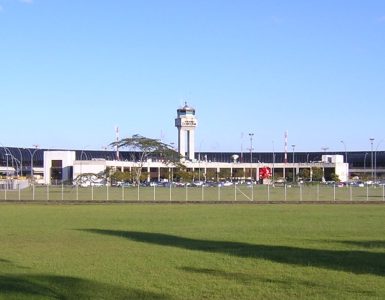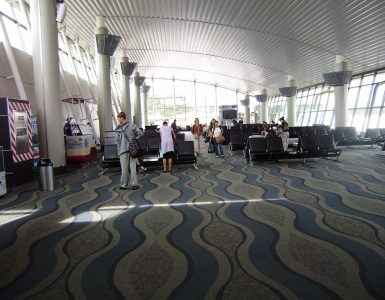
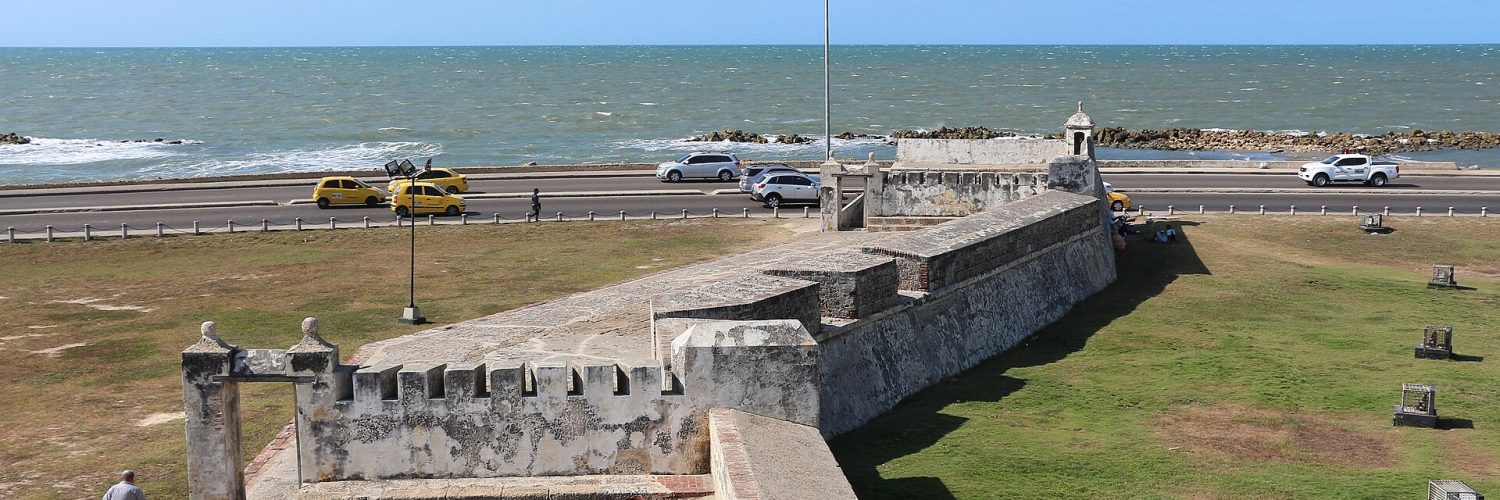
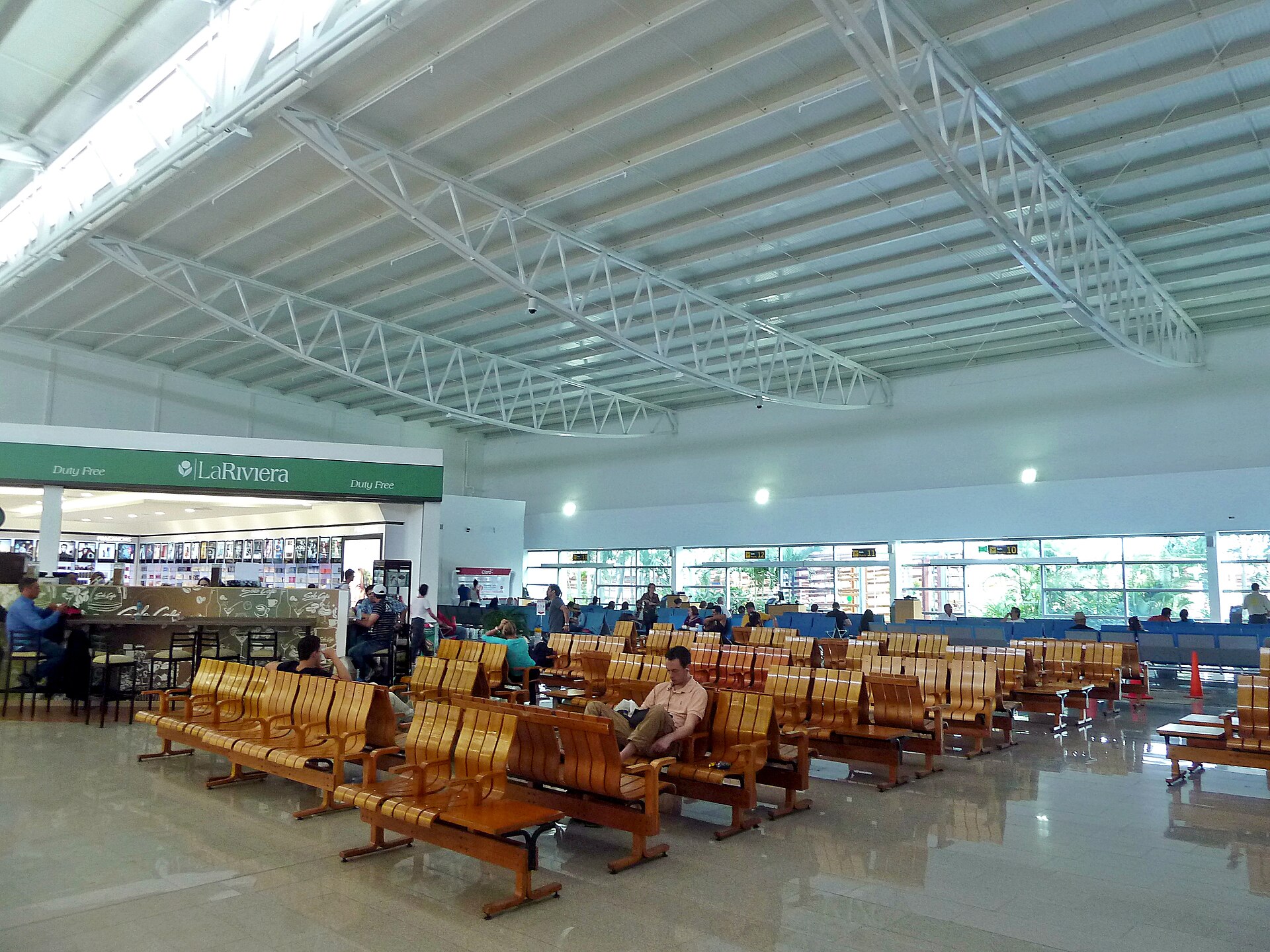
Rafael Núñez International Airport sits about three kilometres from the walls of Cartagena’s old city. That is one of the shortest airport-to-centre distances of any major tourist destination in the Americas. The drive takes ten to fifteen minutes outside rush hour, and the officially regulated taxi fare into the historic centre is around 20,200 Colombian pesos — roughly five US dollars.
And that is precisely why so many arriving visitors overpay. When a journey should cost five dollars, the difference between the correct price and a tourist price is not a margin, it is a multiple. People who would haggle hard over a forty-dollar transfer in Europe hand over twenty-five dollars here without blinking, because twenty-five dollars still sounds cheap. This guide sets out what the regulated fares actually are, how the airport taxi kiosk works, when a pre-booked transfer is genuinely the better option, and the specific scripts touts use in the arrivals hall.
The official taxi system, and how it actually works
Cartagena airport taxis do not use meters. Fares are fixed by zone under a municipal decree, most recently updated in February 2026, and the rates are displayed on a board at the kiosk. The process is deliberately simple, and it works:
- Walk out of the arrivals hall and find the taxi kiosk immediately outside. Ignore anyone who approaches you before you reach it.
- Tell the attendant your destination — the name of your hotel or the neighbourhood is enough.
- You are handed a ticket showing the destination and the fixed price.
- You are directed to an official taxi in the queue. You pay the driver in cash on arrival, not at the kiosk.
Approximate regulated fares under the 2026 decree, in Colombian pesos:
- Centro Histórico (the walled city) and Getsemaní — around 20,200 COP
- Bocagrande, Castillogrande, El Laguito — around 20,700 COP
- Manga — similar to the centre
- La Boquilla and the Zona Norte hotels — these sit north of the airport rather than south of it, so they form a separate and generally higher zone. Confirm at the kiosk.
- Minimum fare anywhere in the city — 12,250 COP
Two things follow from this. First, there is no meter to be broken, so a driver at the airport who tells you his meter is not working is not describing the system that exists. Second, because you pay on arrival rather than at the kiosk, you need small notes. Handing over a 50,000 peso note for a 20,000 peso fare invites a long conversation about change.
Rideshare apps: what works and what does not
Colombia’s rideshare picture is unusual. Uber operates in the country under a “vehicle rental with driver” classification rather than as a licensed taxi service, and a 2023 Supreme Court ruling removed the main legal challenge against it — using it will not get a passenger into trouble. But the app that actually dominates in Colombia is inDrive, where you propose a fare and drivers accept or counter, and in Cartagena it usually undercuts both Uber and the fixed airport rate.
The friction is at the airport itself. Because app drivers are not part of the official airport queue, pickups happen in a grey area: a driver may ask you to walk out to a road, may ask you to sit in the front seat so the trip looks like a private arrangement, or may cancel if airport staff are watching. None of that is dangerous, but it is inconvenient with luggage after a long flight. The honest recommendation is to use the kiosk on arrival, when you are tired and unfamiliar, and to use inDrive for the rest of the week once you know the city.
When a pre-booked private transfer is the right call
For a solo traveller landing at midday with a backpack, the kiosk taxi is unbeatable and nothing else is worth considering. A private transfer earns its higher price in four specific situations:
- Late-night arrivals. Several international flights land after 22:00. The kiosk operates on flight schedules, but the queue thins out and the walk-and-negotiate options disappear.
- Groups of three or more with luggage. A standard Cartagena taxi is small. Two people with large cases is already tight, and four people plus bags means two taxis, which erases the price advantage.
- Families with car seats. Airport taxis do not carry them.
- Onward journeys. If you are not staying in Cartagena at all but heading to Santa Marta, Barranquilla or the Tayrona area, a fixed-price door-to-door car booked in advance is far simpler than negotiating an intercity taxi at the kerb.
Whatever you book, look for a fixed total price in Colombian pesos, a named meeting point inside the terminal, and a free cancellation window. Anything quoted only in US dollars with a vague “driver will find you” is a worse deal than the kiosk.
TransCaribe and the cheap option nobody mentions
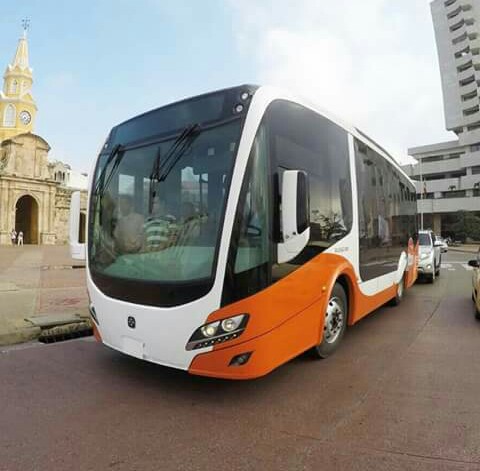
Cartagena has a bus rapid transit system, TransCaribe, with a trunk line running through the city and feeder routes fanning out from it. Fares are a small fraction of a taxi — in the low thousands of pesos — and it is how most of the city actually moves.
Being straightforward about it: TransCaribe is not designed for airport arrivals. There is no dedicated terminal at Rafael Núñez, the connection involves walking out to a public road with your bags, and the buses are crowded and have no luggage space. If you are travelling very light, staying several weeks, and counting every peso, it is viable. For a normal week-long holiday, saving four US dollars is not worth beginning your trip that way. Learn the system on day two instead, when it is genuinely useful for getting to Bocagrande or La Boquilla.
The scripts to recognise in the arrivals hall
- “Taxi, my friend?” before the kiosk. Anyone soliciting inside the terminal or between the door and the kiosk is not part of the regulated system. The official drivers wait in the queue and do not approach you.
- “The meter is broken.” There are no meters on airport runs. Fares are fixed by zone.
- Quoting in dollars. A price given as “twenty dollars” is roughly four times the regulated peso fare. Ask for the price in pesos and compare it to the board.
- The peso zero. Colombian notes have a lot of zeros. 20,000 and 200,000 look similar in a dim car at night. Count notes before handing them over, and say the number out loud.
- “Your hotel is closed / has changed owner.” A commission scam. Your booking is fine; ask to be taken to the address you gave.
- Airport currency exchange. The rates in the terminal are poor. Withdraw pesos from a bank ATM instead, and always decline the machine’s offer to convert for you.
Where you are going changes the answer
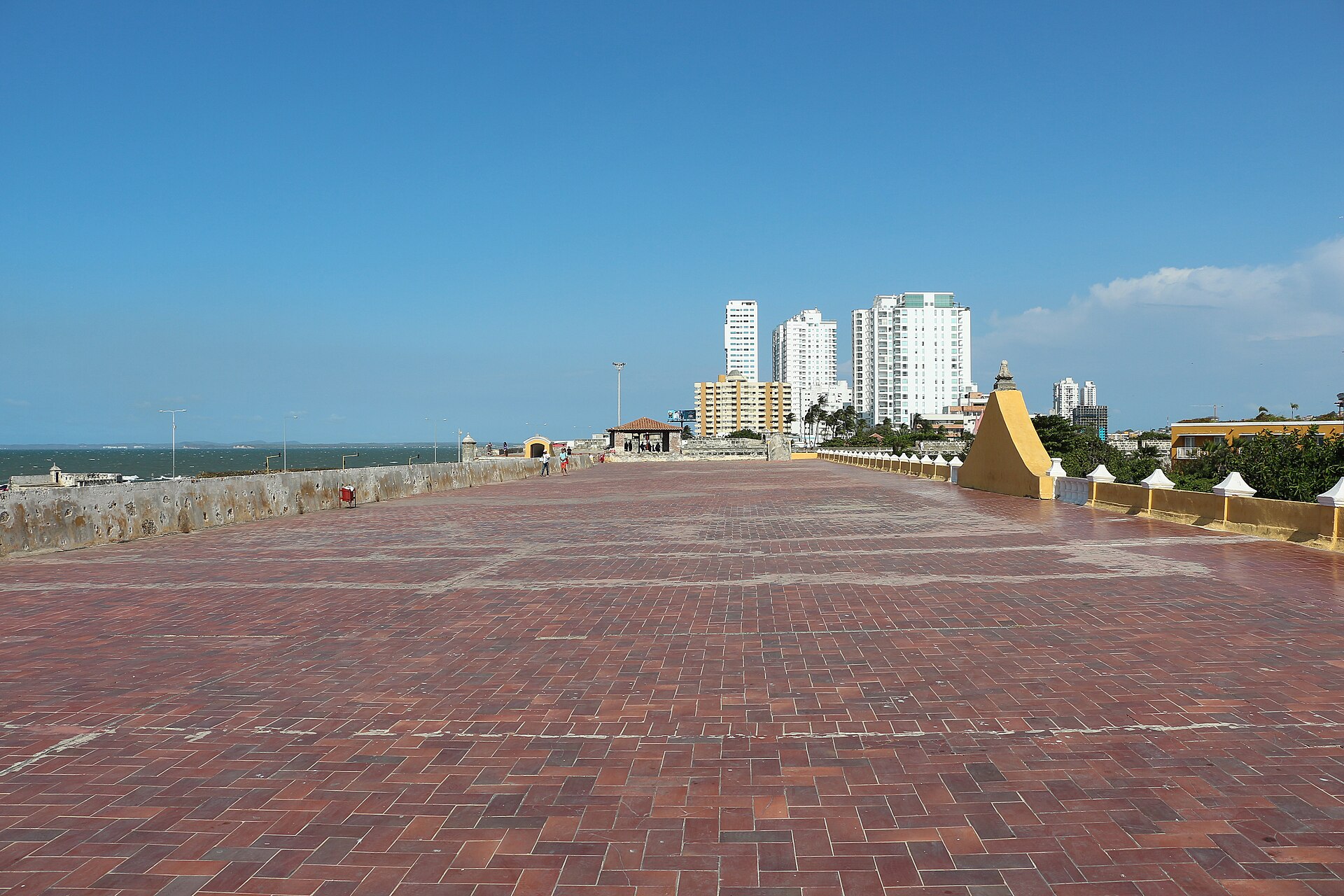
- Centro Histórico — inside the walls. Ten minutes from the airport, and the one caveat is that some streets are pedestrianised or too narrow for a car to reach your door. Expect a short walk at the end.
- Getsemaní — just outside the walls, cheaper, louder, better nightlife. Same fare zone as the centre.
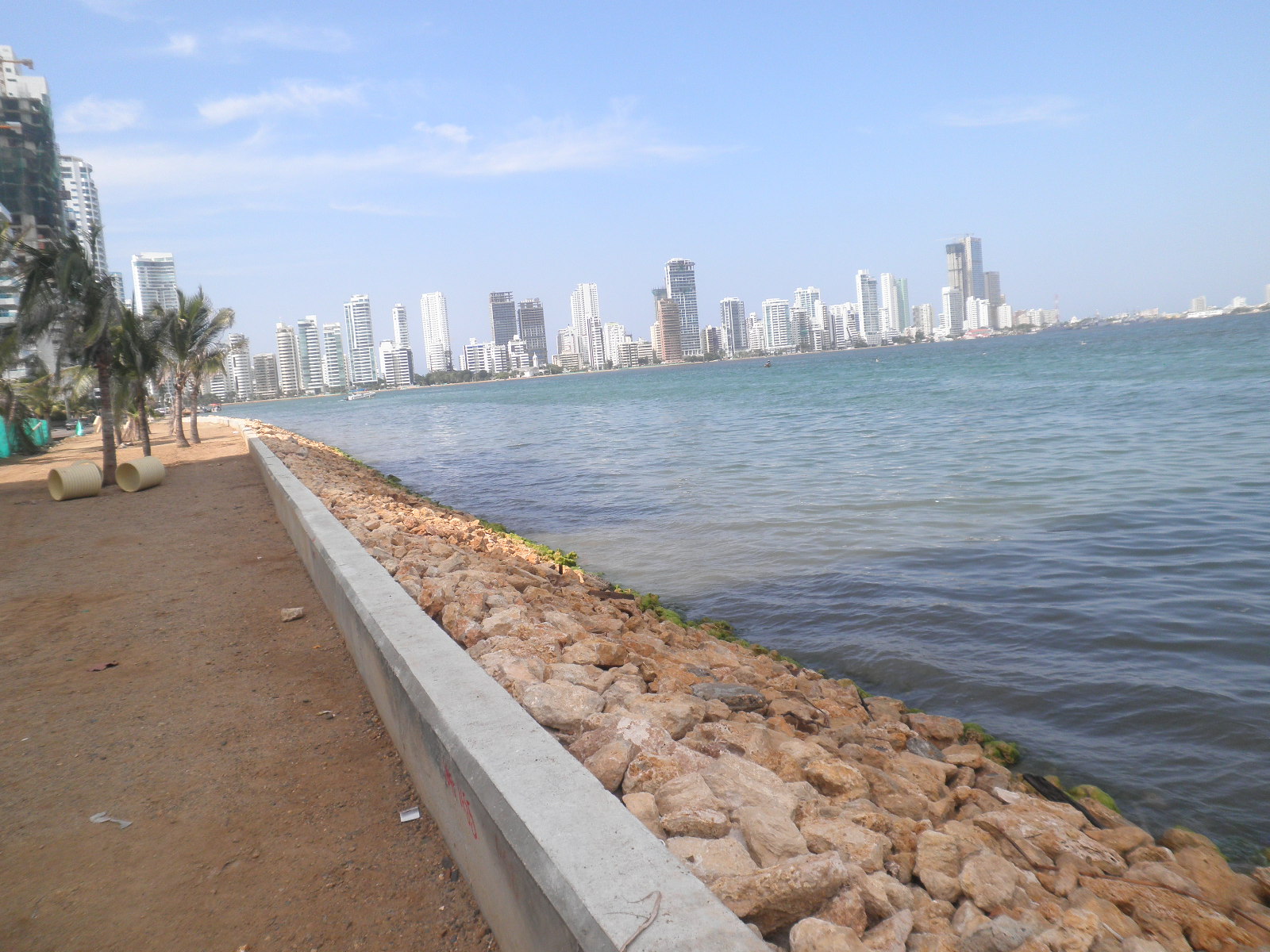
- Bocagrande and Castillogrande — the high-rise strip on the peninsula. Fifteen to twenty-five minutes depending on traffic along Avenida San Martín.
- Manga — residential, quieter, a bridge away from the centre, and popular for longer stays.
- La Boquilla and the Zona Norte — north of the airport. Counterintuitively these resorts are closer to the terminal than the old city is, but they are usually priced as a separate zone.
Should you rent a car in Cartagena?
For the city itself, almost certainly not. The historic centre is a colonial grid of one-way lanes with very little parking, traffic on the Bocagrande peninsula is slow, and taxis and inDrive are cheap enough that a rental sits unused. Cartagena is also a walking city — the entire walled town is about one kilometre across.
A car makes sense for exactly one kind of trip: leaving. The Caribbean coast east of Cartagena is where a rental pays for itself — the four-hour run to Santa Marta, the Tayrona national park entrances, Barranquilla, the mud volcano at Totumo, and the fishing villages along the Vía al Mar. Book it for the days you actually leave the city rather than for the whole stay.
Where to stay, and how that affects your arrival
If it is a first visit of under a week, stay inside or immediately beside the walls. You will walk almost everywhere and the airport run is the shortest in the city. Getsemaní gives you the same location at a lower nightly rate in exchange for noise. Bocagrande is for people who want a beach and a balcony more than they want colonial streets, and it adds ten to fifteen minutes to every trip into the old town.
Rates climb sharply over Christmas and New Year, during the Independence festivities in mid-November, and around Easter. Outside those windows Cartagena is reasonably priced by Caribbean standards, and the gap between a boutique hotel inside the walls and a chain tower in Bocagrande is often smaller than it looks.
Practical notes for the first hour
- Cash. Withdraw pesos from a bank ATM in the terminal rather than using an exchange booth, and decline dynamic currency conversion. Ask for an amount that produces some smaller notes.
- Heat. Cartagena sits at sea level in the tropics and is humid year-round. If you land in the afternoon, the walk from a taxi drop-off to your door in the old town will be hotter than you expect.
- SIM and data. An eSIM bought before departure removes the need to find a shop on day one, and there is coverage across the whole city.
- Time. Colombia does not observe daylight saving. Local time is UTC−5 all year.
- Emergency number. 123.