The Algarve is one of the few places in Europe where a rental car is not a luxury but a requirement. The good beaches are the ones with no bus stop, the best seafood is in villages the tour coaches skip, and the coastline runs 155 kilometres from Vila Real de Santo Antonio to Sagres with no single road that ties it together for tourists. So you rent a car. And then, somewhere between the counter at Faro Airport and the moment you drop the keys, the bill grows.
Not because anyone stole from you. Because the Algarve rental market runs on a very specific business model: advertise a headline price of 6 to 12 euros a day in shoulder season, then make the actual margin at the desk. Here are the nine places it happens, what each one costs, and how to sidestep it.
1. The insurance conversation at the counter
This is the big one, and everything else on this list is small change by comparison. Your booking includes Collision Damage Waiver with an excess, typically between 900 and 1,800 euros on an economy car. At the desk you will be offered Super CDW to reduce that excess to zero. In the Algarve in summer this is quoted at roughly 18 to 30 euros per day. On a ten-day rental that is 180 to 300 euros on top of a car you may have booked for 90.
The alternative is third-party excess insurance, which you buy separately for around 40 to 70 euros for an annual policy covering all your rentals worldwide. The catch is real and you should understand it: the rental company will still block the full excess on your credit card, and if there is damage they will charge it and you claim it back afterwards with receipts. That means you need a real credit card with 1,500 to 2,000 euros of available limit, not a debit card. If you cannot handle the hold, buying the desk product is a legitimate choice, not a failure.
Booking through a broker that bundles full coverage in the quoted price sidesteps the argument entirely. Compare Faro Airport rates with cover included before you assume the cheapest headline number is the cheapest total.
2. Fuel policy: full-to-empty is a tax
Two policies exist. Full-to-full means you collect a full tank and return it full, paying only for what you use. Full-to-empty (sometimes marketed as prepaid fuel) means you buy a tank at the counter at a price above pump rate and return the car as empty as you dare.
A 45-litre tank at an inflated rate typically costs 15 to 25 euros more than the pump, and nobody returns a car truly empty, so you gift back another 10 to 20 euros of unused fuel. Call it 30 to 40 euros lost. Full-to-full is available from every major supplier at Faro. Filter for it before you book, because you cannot change it at the desk.
3. The A22 toll panic that is now obsolete
For over a decade the single most confusing thing about driving in the Algarve was the A22 (Via do Infante), the electronic-only motorway running parallel to the coast. No booths, no cash, cameras only. Tourists were routinely stung by unpaid-toll notices arriving months later with administration fees attached.
That changed in early 2025, when tolls on the A22 were abolished. You can now drive Lagos to Portimao to Albufeira to Faro to the Spanish border without paying a cent on that motorway. This is genuinely new and a lot of guidance online has not caught up.
What has not changed: the A2 heading north towards Lisbon and Setubal still carries tolls, as do several other motorways. If you plan a day trip to Lisbon or the Alentejo, you still need a solution. Most Algarve rentals now come with a Via Verde transponder either fitted or offered. Expect an activation or daily fee of roughly 1.50 to 2.50 euros per rental day, capped in some cases, plus the tolls themselves. If you are staying entirely within the Algarve, decline it and save the fee.
4. Off-airport suppliers and the shuttle you did not budget for
Faro Airport rental desks split into two groups. In-terminal operators hand you keys and you walk to the car park. Off-airport operators — often the ones with the lowest headline prices — require a shuttle from a designated pickup point to an industrial estate a few kilometres away.
The cost is not money, it is time and risk. Budget 30 to 75 minutes each way, longer on peak summer Saturdays when three flights land within an hour. On return, you need to leave for the airport a full hour earlier than you would otherwise. If you have a 06:45 departure, that is a meaningfully worse holiday. Read the pickup instructions on the booking page, not the reviews.
5. Automatic transmission is a genuine scarcity item
Portugal is a manual-transmission country. Automatics are perhaps 15 to 20 percent of the Algarve rental fleet and they are priced accordingly: expect to pay 40 to 100 percent more than the equivalent manual, and in July and August expect them to be sold out entirely six weeks ahead.
If you cannot drive a manual, book an automatic in January for an August trip. That is not an exaggeration. If you can drive a manual but have not for years, the Algarve is a forgiving place to relearn — the roads are wide, the traffic outside Albufeira is light, and the hills are gentle compared with, say, Madeira.
6. Cross-border into Spain without telling anyone
Seville is 2 hours from Faro. Huelva is 90 minutes. Plenty of people drive over for a day, and the rental agreement usually permits it — but often only if you declare it, and often for a cross-border fee of 30 to 60 euros. Driving into Spain undeclared can void your insurance entirely, which is a spectacular way to turn a fender-bender into a five-figure problem.
Declare it at booking. It is cheaper than at the counter and it takes thirty seconds.
7. The second driver fee that quietly doubles
Adding a second driver typically runs 5 to 9 euros per day at Faro, uncapped. On a two-week rental that is 70 to 126 euros for a person who might drive twice. Some brokers include one additional driver free — it is worth filtering for if you genuinely plan to share the driving. If you do not, do not add them. An undeclared driver behind the wheel invalidates cover.
8. Parking in Albufeira, Lagos and Faro old town in August
This is the cost nobody warns you about because it is not on the rental invoice. In peak season, Albufeira Old Town and Lagos both operate paid parking that runs roughly 1 to 2 euros per hour, and the free street spots near the beaches are gone by 09:30. Budget 8 to 15 euros a day in parking if you are staying in a town centre.
The practical fix is to choose accommodation with included parking. It is a filter on every booking site and it is worth 20 euros a night of price difference. Search Albufeira stays with free parking rather than assuming you will find a space.
9. Returning the car at an unstaffed hour
Faro Airport handles a lot of early-morning departures to the UK, Ireland and Germany. If your flight leaves at 06:30 and your supplier does not staff the desk until 08:00, you will be asked to use a key drop. Out-of-hours return fees of 25 to 40 euros are common, and more importantly you are liable for the vehicle until an employee inspects it. Photograph everything — all four corners, the roof, the interior, the fuel gauge, the odometer, with a timestamp — before you walk away.
Book it properly: compare before you commit
The Algarve market has enough suppliers that comparison genuinely pays. Filter for full-to-full fuel, in-terminal pickup, and cover you understand.
What a realistic Algarve week actually costs
For two adults in shoulder season (May or early October), driving an economy manual:
- Car, 7 days, booked 8 weeks out: 90 to 170 euros
- Excess insurance (annual third-party policy, amortised): 10 to 20 euros
- Fuel, roughly 450 km of coastal and inland driving: 45 to 60 euros
- Tolls, if you stay in the Algarve: zero
- Parking: 30 to 60 euros
Total transport for the week: roughly 175 to 310 euros. In July and August, expect the car line alone to triple.
Do you even need the car for the whole trip?
A pattern that works well: fly into Faro, take a private transfer to your base, spend three days on foot and on the beach, then rent a car for the four days you actually want to explore Sagres, Monchique and the Costa Vicentina. You skip four days of parking fees and four days of rental. Pre-book a Faro Airport transfer for the arrival leg and compare it against a week of car hire — for short stays in one town it often wins.
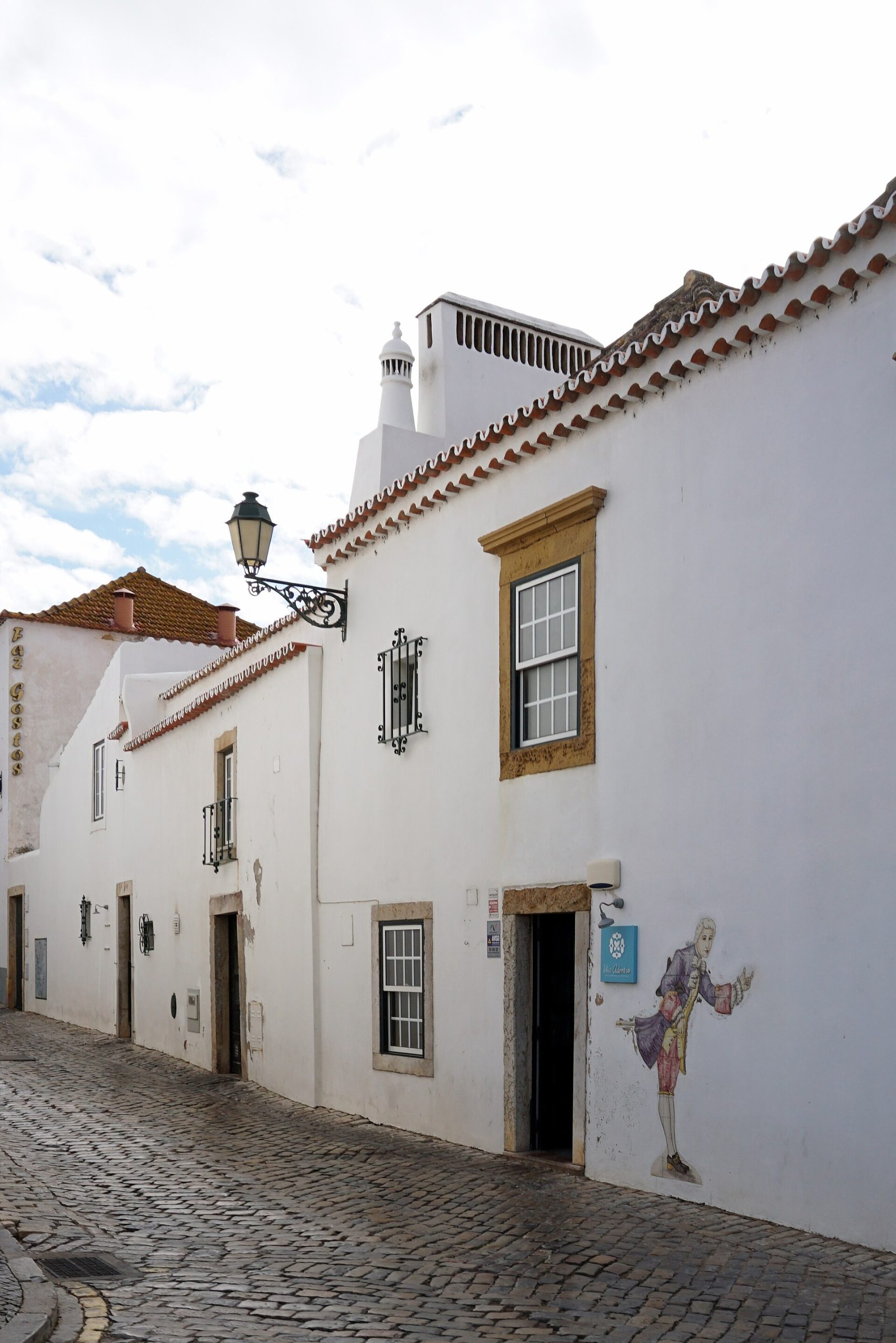
Practical driving notes for the Algarve
- Speed limits: 50 km/h in towns, 90 on open roads, 120 on motorways. Fixed cameras on the A22 and the N125 are well marked and actively enforced.
- The N125 is the old coastal trunk road. Now that the A22 is free there is no reason to use the N125 for distance — it is slower, busier and has a worse accident record.
- Roundabouts: Portuguese practice is to signal on exit, not entry. Expect people to change lanes inside the roundabout.
- Alcohol limit is 0.5 g/l, and 0.2 for drivers licensed under three years. Enforcement in resort areas at night is real.
- Fuel: Gasolineras on the A22 are more expensive than supermarket stations in Albufeira, Portimao or Lagos. Fill up before you get on the motorway.
Staying connected while you drive
Offline maps are fine until you need to re-route around a closed coastal road or find a garage. If your plan does not include EU roaming, an eSIM is the cheapest fix — a few gigabytes for Portugal runs a handful of euros and installs before you fly. Portugal eSIM options are worth 15 minutes of setup at home.
The short version
Book eight weeks ahead. Insist on full-to-full fuel and in-terminal pickup. Sort your excess cover before you land so the counter conversation takes two minutes instead of twenty. Decline the transponder if you are staying in the Algarve, because the A22 is now free. Declare Spain if you are going. Photograph the car twice. Do that and the price you booked is roughly the price you pay, which in this market counts as a win.
Related reading
Prices are indicative for 2026 and vary by season, supplier and how far ahead you book. Some links on this page are affiliate links; using them costs you nothing and helps keep this site running.