
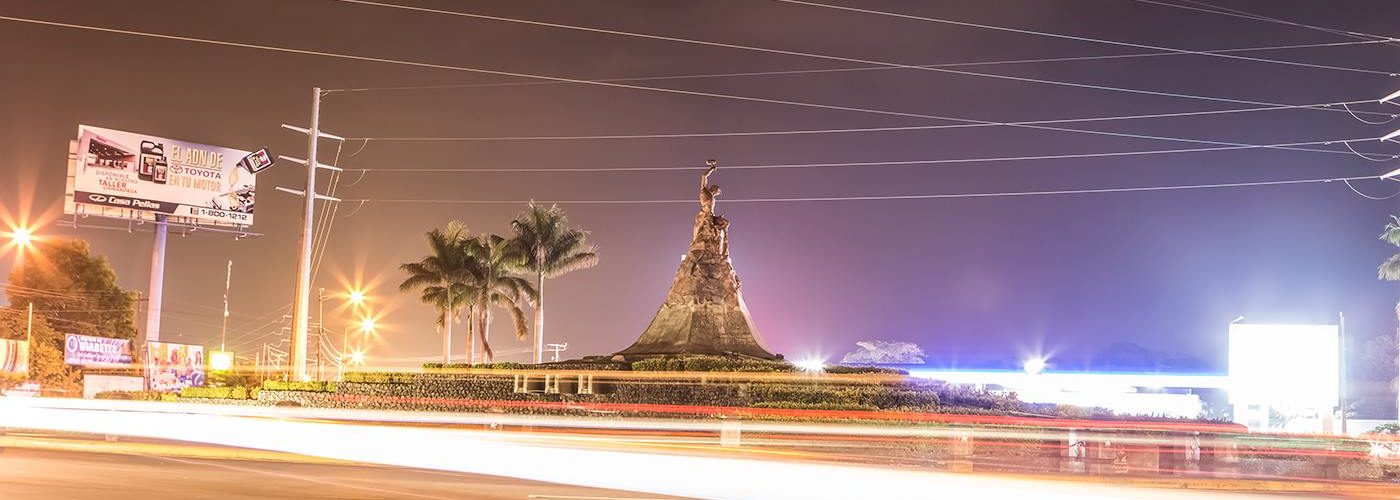
Chinandega is the departmental capital of Nicaragua’s northwest, about 135 kilometres from Managua, and it is not a destination so much as a base. What surrounds it is: the Maribios volcanic chain, including San Cristóbal at 1,745 metres, Nicaragua’s highest; the near-empty Pacific beaches at Jiquilillo and Aposentillo; the mangrove estuary at Padre Ramos; the Cosigüina Peninsula with its crater lake and views across the Gulf of Fonseca to El Salvador and Honduras.
Almost none of that is served by useful public transport. Chicken buses run between towns on their own schedule and stop nowhere near the estuary or the crater rim. A rental car is what turns this region from a place you pass through into a place you visit.
What renting actually costs in Nicaragua
Headline rates look cheap and the real number is higher, for one specific reason worth understanding before you book.
- Economy hatchback: US$25–45 per day
- Compact SUV: US$45–70 per day
- 4×4 pickup or full SUV: US$60–100 per day
- Mandatory local liability insurance: US$12–20 per day, on top, non-negotiable
- Security deposit: US$500–1,500 held on a credit card
- Fuel: roughly US$1.20–1.45 per litre, among the higher prices in Central America
That mandatory insurance line is the thing that surprises people. Nicaraguan law requires rental vehicles to carry local third-party liability cover purchased through the rental company. Your credit card’s collision coverage does not replace it, and no amount of arguing at the counter changes it. Budget for it — a US$30 daily rate is realistically US$45 all-in.
What your credit card cover can replace is the additional collision damage waiver, which agencies will push hard. Bring a letter of coverage from your card issuer if you intend to decline it, and expect the deposit hold to be at the higher end.
Compare Nicaragua rental rates and inclusions before you arrive, and read what each quote includes — the brokers that display the mandatory insurance inside the quoted price are far easier to budget against than the ones that add it at the desk.
Where to pick the car up
There are few rental options in Chinandega itself. The realistic choices are:
Managua Airport (MGA) has all the major agencies and the widest fleet. The drive to Chinandega is roughly 2 to 2.5 hours on the CA-3 via León — paved, well-surfaced and straightforward in daylight.
León has a handful of local agencies and is 70 km from Chinandega, an hour on good road. If León is on your itinerary anyway (and it should be), picking up there after a couple of car-free days in the city saves you two days of rental and two nights of parking.
If you land late, do not drive. Night driving in Nicaragua is genuinely hazardous — unlit bicycles, livestock on the carriageway, vehicles with no working rear lights, and pedestrians walking the shoulder. Take a pre-booked transfer from Managua Airport to León, sleep, and collect the car in the morning.
Which vehicle you need
This depends entirely on whether you are staying on pavement.
An economy car is enough for Managua–León–Chinandega–Corinto and the main highway north to the Guasaule border. These roads are paved and in decent condition.
You want a 4×4 or at minimum high clearance for the coast road to Jiquilillo and Padre Ramos, the tracks around Aposentillo, and anything on the Cosigüina Peninsula. These are unpaved, deeply rutted in the May-to-November wet season, and dusty and washboarded the rest of the year. A low-clearance sedan will make it to Jiquilillo in the dry season and will not enjoy it.
The road up to the Cosigüina crater rim in particular requires a proper 4×4 or a hired guide with a pickup. Do not attempt it in a rental sedan; recovering a stuck vehicle out there is expensive and slow.
The drives worth doing from Chinandega
Chinandega to Jiquilillo and Padre Ramos — 45 km, 1 to 1.5 hours
North-west through El Viejo, then out to a long grey-sand Pacific beach with almost nobody on it. Padre Ramos Estuary Natural Reserve nearby is one of Central America’s better-preserved mangrove systems and can be paddled by kayak. This is the single best reason to have a car in the region.
Chinandega to Corinto — 20 km, 25 minutes
Nicaragua’s main Pacific port, on an island connected by causeway. Not beautiful, genuinely interesting, and Paso Caballos beach nearby is where locals go.
Chinandega to León — 70 km, 1 hour
Paved the whole way. León is the intellectual and revolutionary heart of the country, with the largest cathedral in Central America, excellent street food and a much stronger visitor infrastructure than Chinandega. León accommodation ranges from hostels at a few dollars to restored colonial hotels.
León to Cerro Negro — 25 km, 45 minutes on rough road
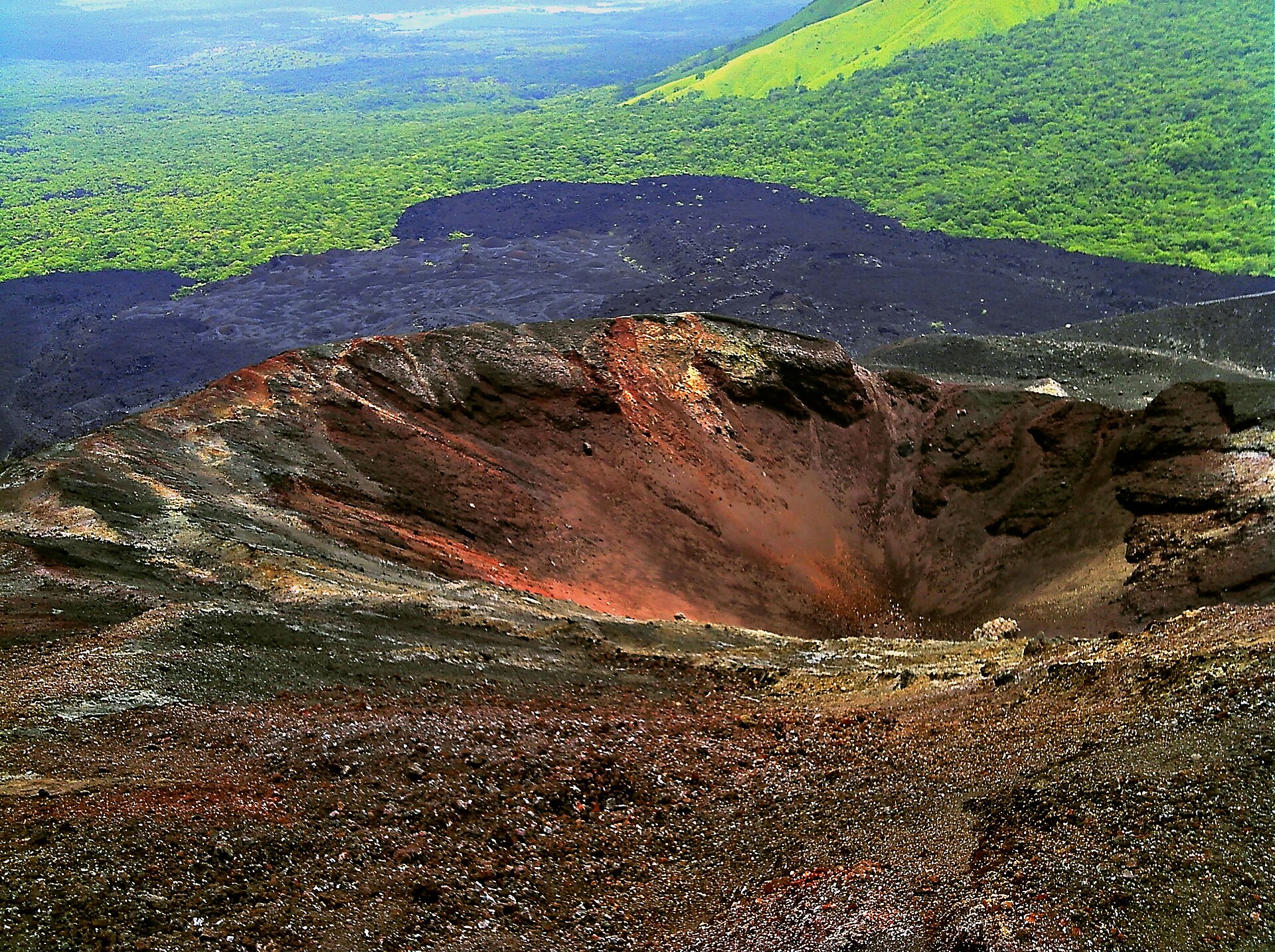
The volcano boarding one. Cerro Negro last erupted in 1999, is Central America’s youngest volcano, and sliding down its black scree on a plywood board is the thing everyone comes to León for. The access road needs clearance.
San Cristóbal and the Maribios chain
San Cristóbal is Nicaragua’s highest volcano at 1,745 m and dominates the view from Chinandega. Climbing it is a serious full-day hike with a guide, not a casual outing. The drive along the base of the chain, however, is superb and entirely doable in a normal car.
Driving rules and realities
- Licence: your home licence is valid for up to 30 days from entry. An International Driving Permit is not legally required for most nationalities but is genuinely useful at checkpoints and with rental agencies.
- Documents: carry your passport, licence, rental agreement and insurance certificate at all times. Police checkpoints are routine on the CA-3 and CA-1, and they will ask.
- Speed limits: 45 km/h in towns, 60 on secondary roads, 100 on the main highways. Speed bumps (túmulos) appear without warning at village entrances and are brutal.
- Fuel: stations are attended, cash and cards both work in cities, cash only in rural areas. Fill up in Chinandega or León before heading to the coast.
- Currency: the córdoba, at roughly 36–37 to the US dollar. Dollars are widely accepted in tourist contexts; you will want córdobas for fuel, food and tolls.
- Parking: use guarded lots (parqueo vigilado) overnight in cities. They cost a couple of dollars and are worth it.
- Accidents: Nicaraguan law historically required vehicles to remain in place until police arrive. Do not move the car after a collision; call the rental company first.
Wet season versus dry season
The dry season runs roughly December to April. Roads are at their best, the volcanoes are visible, and Chinandega lives up to its reputation as the hottest city in Nicaragua — 35 to 38 °C in the afternoons is normal.
The wet season, May to November, brings afternoon downpours, greener landscapes and unpaved roads that turn to churned mud. September and October are the wettest and coincide with peak Atlantic hurricane season. If you are travelling then, a 4×4 stops being a preference.
Before you book anything
Nicaragua’s political situation has affected travel advisories from several governments over recent years, and conditions change. Check your own foreign ministry’s current advice before committing, and confirm that your travel insurance is valid for the destination — some policies exclude countries under certain advisory levels, which would leave you uninsured for a road trip on unpaved roads.
Staying connected
Claro and Tigo both have decent 4G along the highway corridor and in the towns. Coverage on the Cosigüina Peninsula and around Padre Ramos is patchy to non-existent. Download offline maps for the whole northwest before you leave Chinandega. A local eSIM is cheaper than roaming — Nicaragua eSIM options handle the setup before you land, which matters when you are collecting a car and need to navigate immediately.
The verdict
Pick the car up at Managua Airport or in León rather than expecting a fleet in Chinandega. Budget the mandatory liability insurance into your daily rate from the start. Take high clearance if the coast or the volcanoes are on the list, which is the only reason to be here. And do not drive at night — the roads are fine, everything else on them is the problem.
Related reading
- Car rental at El Salvador airport
- 4×4 rental in Costa Rica
- Where to stay in Mexico City
Updated August 2026. Prices are indicative in US dollars and vary by season and supplier. Check current government travel advice for Nicaragua before booking. Some links on this page are affiliate links; using them costs you nothing and helps keep this site running.


Add comment