Almost every guide to Marrakech opens with the same sentence about a city of colour and chaos. Here is a more useful one: the medina has no functioning street addresses. Buildings inside the walls are numbered by derb (alley) rather than by street, alleys are unsigned, and the numbering restarts constantly. That single administrative fact decides more about your trip than any list of top ten sights — it decides whether a taxi can drop you at your door, whether food delivery can find you, how long you will spend lost on your first evening, and how much you will pay someone to walk you 200 metres.
This guide is built around that reality. It covers what to book before arrival, what genuinely costs money and what is free, how to move between the walled city and the new town, and which day trips justify a rental car. Prices are in Moroccan dirham (MAD); at the time of writing roughly 10 MAD is about one US dollar.
Why Marrakech looks the way it does
Marrakech was founded around 1070 by the Almoravids, a Saharan dynasty, and it was laid out as a caravan terminus rather than as a Mediterranean port city. That matters. Fez and Tetouan look inward toward Andalusian craft traditions; Marrakech looks south toward the desert and the mountains that feed it water. The city sits on a dry plain, and it survived for centuries on the khettara — underground irrigation channels tapping the water table beneath the Atlas foothills. Gardens like the Menara and the Agdal are not decoration, they are the visible end of a hydraulic system.
The colour comes from the same geology. The ramparts and most of the old city are built of pisé, rammed earth mixed with lime, taken from the red soil around the city. Nineteen kilometres of that wall still stand, and they define the medina as a hard-edged container: everything inside is pedestrian-scaled and medieval, everything outside was planned in the twentieth century for cars. Travellers who understand that the wall is a genuine boundary — not a picturesque leftover — stop being surprised by how abruptly the city changes character.
Getting in from the airport
Menara Airport (RAK) sits about 6 km from Jemaa el-Fnaa, which is close enough that the drive is genuinely short and far enough that walking is not an option with luggage. The problem is not distance, it is pricing: metered taxis exist but drivers frequently refuse the meter for airport runs, and the gap between the regulated fare and what tourists are quoted is large. We covered the numbers and the workarounds in detail in our guide to the Marrakech airport transfer, including what the ride should actually cost and why a pre-booked car often ends up cheaper than negotiating at the rank at midnight.
One practical point specific to the medina: whichever transport you choose, the car cannot reach most riads. Drivers stop at the nearest gate — Bab Doukkala, Bab Laksour, Bab Agnaou — and a porter with a handcart takes your bags the rest of the way. Agree that fee (20–30 MAD is normal) before the cart moves, and ask your riad in advance which gate they use.
What you should book before you arrive
Marrakech is not a city where everything needs a reservation, but a few things do. Timed-entry ticketing has spread to the busiest monuments, guided desert and Atlas day trips sell out in high season, and the hammams worth visiting take bookings days ahead. Below is the live availability for the main Marrakech attractions and tours, so you can see current pricing rather than a figure that was accurate two years ago.
Realistic entry fees for the paid monuments cluster around 70 MAD each at the time of writing — Bahia Palace, the Saadian Tombs and Jardin Majorelle all sit at roughly that level, with Majorelle charging separately for the Yves Saint Laurent museum next door. Budget 300–400 MAD per person for a day of monument-hopping including a guide.
Being honest about value: the Saadian Tombs are historically significant but physically small, and in peak season you may queue 40 minutes to shuffle past one chamber. If your time in the city is short, Bahia Palace and the Ben Youssef Madrasa give more square metres of actual architecture per dirham. Jardin Majorelle is beautiful and completely overrun between 10:00 and 15:00; go at opening or skip it.
What is free and no worse for it
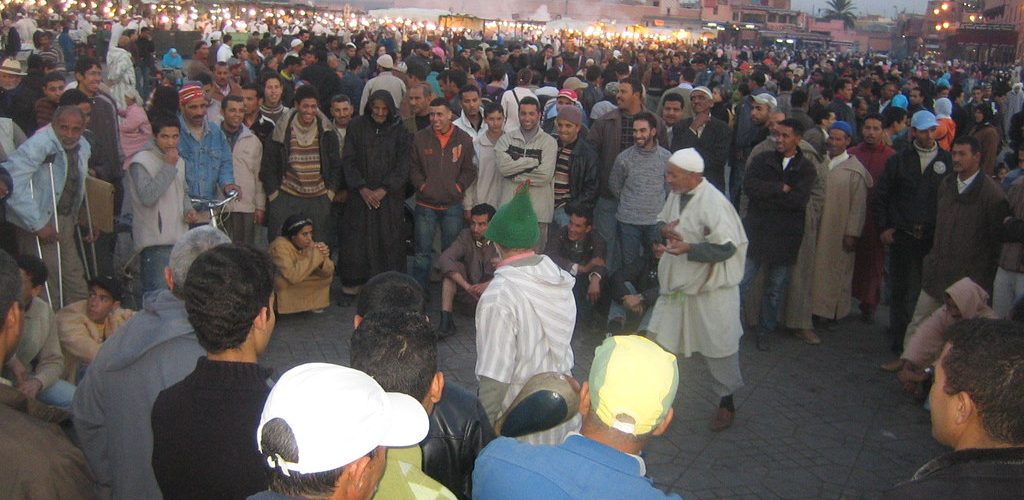
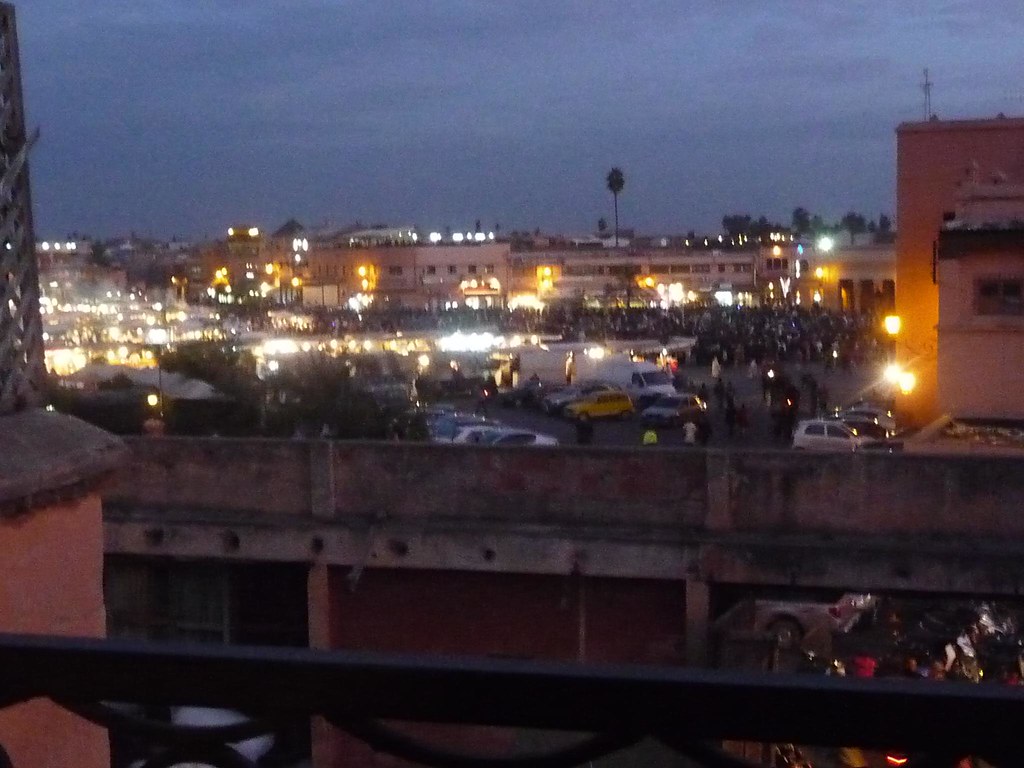
A surprising share of the best hours in Marrakech cost nothing. The ramparts themselves are free to walk, and the stretch between Bab Agnaou and Bab Ksiba at sunset is the single best introduction to the city’s scale. Jemaa el-Fnaa costs nothing to cross, though a mint tea on a terrace overlooking it will run 25–40 MAD and is worth it once. The Koutoubia gardens, the Mellah’s alleyways, the Sunday morning quiet of Rue Riad Zitoun el-Jdid, and the entire experience of getting lost in the souks are unpriced.
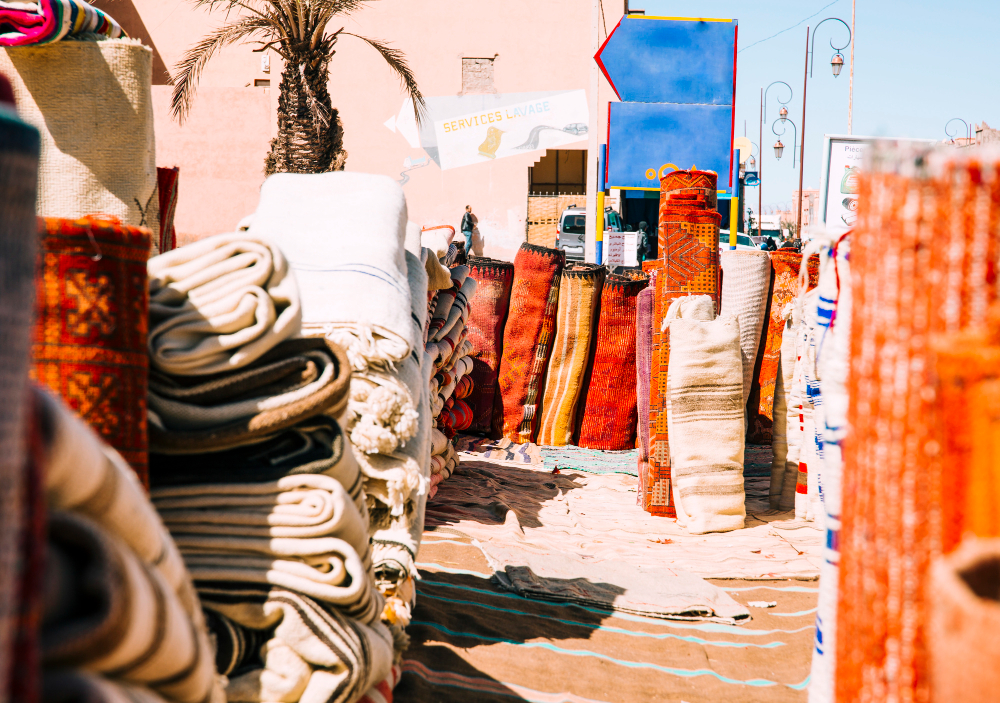
The souks deserve a warning as well as a recommendation. Prices are not marked, the opening ask for tourists is commonly three to five times the local price, and there is no shame in walking away. Photography of people and stalls without asking causes real friction — and in Jemaa el-Fnaa, photographing the snake charmers or the monkey handlers is treated as consent to pay, usually 50 MAD or more.
The neighbourhoods, and what each one is for
The medina is where you sleep if you want to be inside the experience. It is loud, it is confusing, motorbikes use the alleys at speed, and it is unquestionably the reason people come. Gueliz, the French-planned new town west of the walls, is where you go for restaurants with wine lists, contemporary galleries, pavements and predictable taxis; it is also where residents actually shop. Hivernage sits between them and is essentially a hotel district — quiet, green, and slightly characterless. The Palmeraie, north-east of the city, is resort country: large properties, pools, and a 20-minute drive from anything, which is a real cost if you plan to be in the medina daily.
The Mellah, the old Jewish quarter in the south-east of the medina, is worth a deliberate half-day. Its spice market is less aggressive than the central souks, the Lazama Synagogue is open to visitors, and the adjoining cemetery is one of the quietest places inside the walls.
A workable three to four day plan
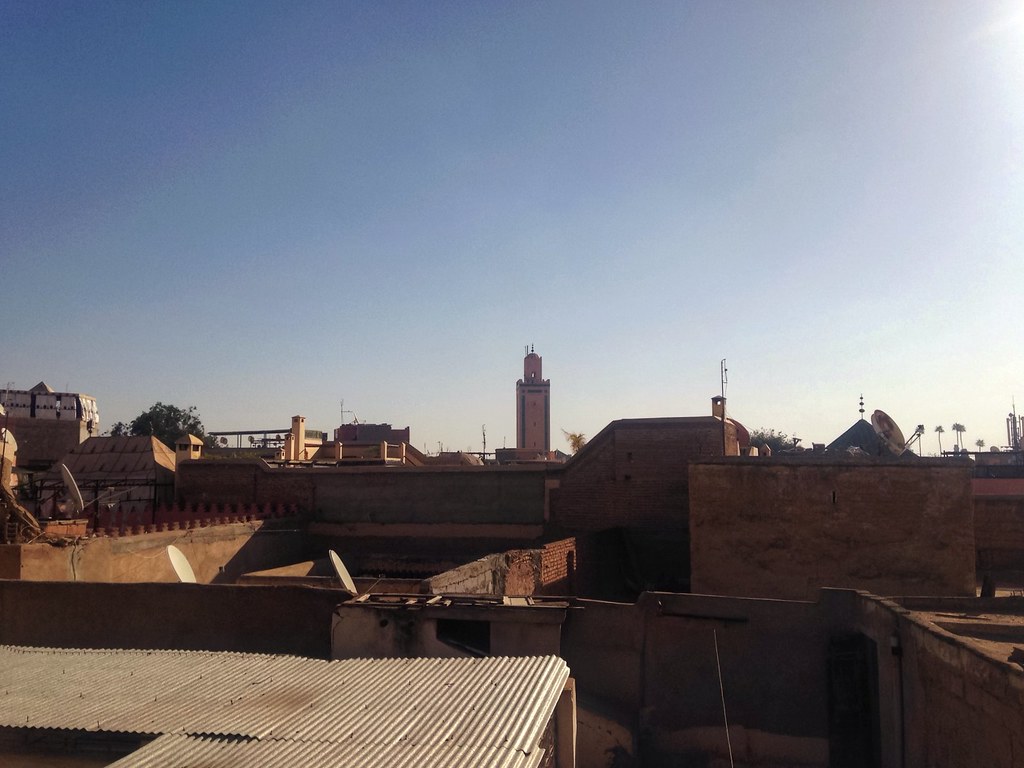
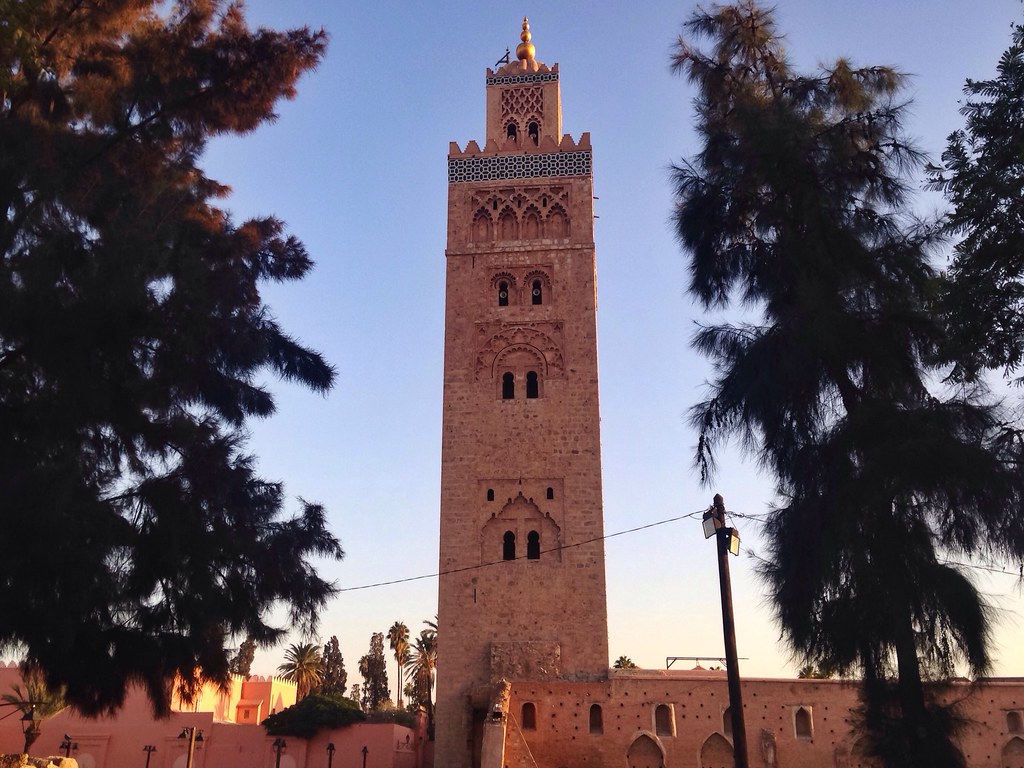
Day one — orientation. Arrive, drop bags, and walk the Koutoubia gardens before doing anything else; the minaret is visible from most of the medina and functions as your compass for the rest of the trip. Late afternoon in Jemaa el-Fnaa, dinner at a rooftop above the square.
Day two — monuments. Bahia Palace at opening, then the Saadian Tombs and the Kasbah quarter, then the Ben Youssef Madrasa in the afternoon. This is a full day of walking on uneven ground; wear real shoes.
Day three — new town and hammam. Morning in Gueliz, Jardin Majorelle at opening or not at all, and an afternoon hammam. A public hammam costs 15–20 MAD plus a few dirhams for the attendant; a spa hammam in a riad runs 350–700 MAD. Both are legitimate, they are just different experiences.
Day four — out of the city. The Atlas foothills, the Ourika valley, the Agafay stone desert, or Essaouira on the coast. More on how to do this below.
Eating, and the tanjia rule
Marrakech’s signature dish is not tagine — it is tanjia, meat slow-cooked in a clay urn buried in the ashes of a hammam furnace, traditionally a bachelor’s dish cooked by men. Ordering it is the fastest way to eat something the city actually invented rather than something assembled for visitors. Beyond that: harira soup in the evening for a few dirhams, grilled brochettes in the food stalls of Jemaa el-Fnaa (pick a stall with locals and visible turnover), and msemen or beghrir pancakes from a bakery for breakfast.
Alcohol is restricted rather than banned: licensed restaurants and hotels in Gueliz and Hivernage serve it, most medina establishments do not, and buying it retail means a supermarket like Carrefour in the new town. Ramadan changes the rhythm of the whole city — daytime service shrinks, evenings become extraordinary — and is worth checking against your dates.
Getting around inside the city
Walking covers the medina completely; nothing inside the walls is more than about 25 minutes from anything else on foot, even allowing for wrong turns. For the gap between the medina and Gueliz, small beige petit taxis are the standard option. They are metered by law, the meter is often “broken”, and the realistic fare for a medina–Gueliz hop is 20–30 MAD by day and roughly double after dark. Agree the price before getting in, or insist on the meter and be willing to take the next car.
Careem and inDrive both operate in Marrakech and remove the negotiation entirely, which is worth a lot on arrival day. They cannot enter the medina, so the pickup point is a gate. Buses run to the airport and around the new town for a few dirhams but are slow and rarely worth it for short stays. Renting a car for use inside Marrakech is a mistake — you will pay for parking, get stuck in unsigned one-way systems, and walk to the medina anyway.
A data connection removes most of the friction here, because offline maps plus a ride-hailing app cover both the “no addresses” problem and the taxi negotiation. If you have not sorted that already, see our notes on choosing an eSIM for Morocco.
Where to sleep
The riad-versus-hotel question is really a question about mornings. A riad is a converted courtyard house — typically six to ten rooms, breakfast on the terrace, staff who will walk you out of the alleys the first time. A hotel in Hivernage or Gueliz gives you a lift, a gym, a pool with room to swim in it, and a car that reaches the front door. Both are defensible; what is not defensible is booking a Palmeraie resort and then planning six days of medina sightseeing.
We go deeper into specific areas and price bands in where to stay in Marrakech. For current rates and availability across all four districts, search here:
Day trips, and when a car earns its keep
Four day trips are worth the drive. The Ourika Valley (about an hour south) is the easy one — river, waterfalls, Berber villages, cool air in summer. The Agafay desert (45 minutes) is stone rather than sand, and honest guides say so; it photographs like the Sahara but is not it. Aït Benhaddou and Ouarzazate over the Tizi n’Tichka pass is a long day — four hours each way on a mountain road — and is far better as an overnight. Essaouira on the Atlantic is two and a half hours of flat road and a completely different climate.
For Ourika, Agafay and Essaouira, a rental car makes sense: the roads are good, parking outside the medina is manageable, and you avoid the group-tour pace and the obligatory argan-oil co-operative stop. For the Tizi n’Tichka crossing to Aït Benhaddou, think carefully — it is a genuinely demanding mountain road with switchbacks, trucks and no shoulder, and a driver or an organised tour is a reasonable call if you are not confident. Compare rates before you commit; the desk price at the airport is rarely the best one.
If you want something with clearance for the piste tracks beyond the Ourika, our guide to SUV rental in Morocco covers what the extra money actually buys. Two-wheel options are also popular here — see motorcycle rental in Marrakech — though we would not recommend a first-time visitor’s first ride be through the medina gates.
When to go
March to May and September to November are the good windows: daytime highs in the twenties Celsius, cold evenings in the shoulder months, and manageable crowds. June through August routinely passes 40°C, and while riads are built to stay cool, walking the souks at 2pm in July is genuinely unpleasant. December and January are mild by day and cold at night — many riads heat poorly, and a room with a working heater is worth asking about specifically. Easter week and the two Eid holidays fill the city and push riad prices up sharply.
Practical notes
- Cash. Dirham is a closed currency; you cannot buy it meaningfully outside Morocco and you should not carry much out. ATMs are everywhere in Gueliz and around Jemaa el-Fnaa; small notes matter enormously in the souks.
- Guides. Unofficial “helpers” who attach themselves to lost tourists expect payment. A licensed guide booked through your riad costs 300–500 MAD for a half day and eliminates the problem entirely.
- Dress. No formal requirement, but covered shoulders and knees attract markedly less attention, particularly outside the tourist core.
- Friday. Many workshops and some monuments run reduced hours around midday prayers. Plan Friday as a slow day.
- Over-tourism is real. Central medina rents have risen sharply as riads replaced homes, and locals will tell you so if asked. Spending money in the Mellah, Gueliz and neighbourhood bakeries rather than only in the eight blocks around the square is a small but genuine correction.
Further reading
- Marrakech airport to the medina: what the taxi should cost
- Where to stay in Marrakech
- SUV rental in Morocco
- Domestic flights in Morocco
- eSIM for Morocco