
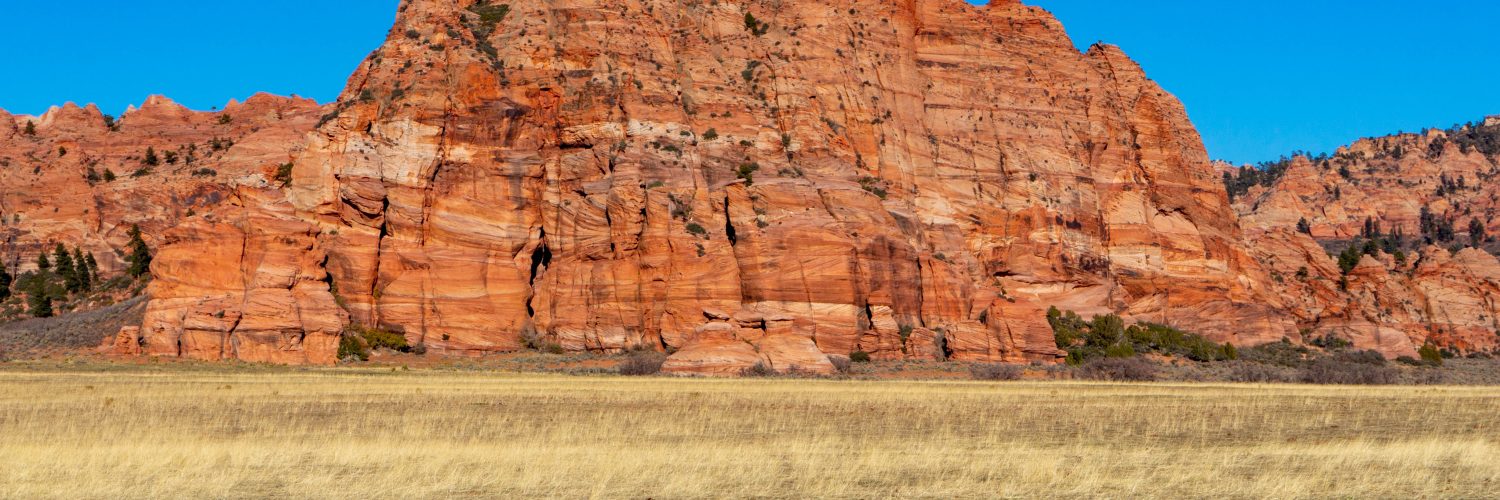
Every itinerary for Utah’s Mighty 5 opens with the same photo: a chunky SUV parked on red rock with a canyon behind it. That photo has sold a lot of unnecessary upgrades. The honest version is that all five Utah national parks — Zion, Bryce Canyon, Capitol Reef, Arches and Canyonlands — are connected and served entirely by paved road, and a rental compact will reach every viewpoint the SUV reaches. What will change your budget in 2026 is a fee rule most overseas visitors have never heard of, and it can cost a family of four more than the car itself.
The $100 rule that decides your rental budget
From 1 January 2026, non-US residents aged 16 and over pay a $100 nonresident fee per person, on top of the normal entrance fee, at eleven high-demand national parks. Two of them are in Utah: Zion and Bryce Canyon. That is $400 in surcharges for two couples in one car before anyone has bought a coffee.
The escape hatch is the pass. Holding an America the Beautiful pass — or a park annual pass — exempts you from the surcharge. For non-residents the annual version costs $250 and covers a full private vehicle (or the holder plus three adults where fees are per person). US citizens and residents pay $80 for the same pass and are not subject to the surcharge at all.
- Two non-resident adults visiting Zion and Bryce: $200 in surcharges plus roughly $70 in entry fees, versus one $250 pass that also opens Arches, Canyonlands and Capitol Reef. The pass wins immediately.
- Solo non-resident doing only Arches and Canyonlands: no surcharge applies at those two parks, so the $55-ish Southeast Utah Parks annual pass (Arches, Canyonlands, Natural Bridges, Hovenweep) is the cheaper play.
- US residents doing three or more parks: the $80 pass beats paying $20–35 per park at the gate.
Also note that from 2026 the free-entrance days apply to US citizens and residents only. Always confirm current numbers on nps.gov before you travel — the fee structure changed recently and gate staff apply it strictly.
Does the road actually require an SUV? No
Zion’s Scenic Drive, the Bryce rim road, Capitol Reef’s Scenic Drive, Arches’ main road and the Island in the Sky road in Canyonlands are all sealed two-lane highway, gently graded and maintained year-round. A 1.6-litre sedan does the whole loop without complaint and will cost you 25–35% less in fuel across a thousand miles.
The exceptions are genuine but specific. Shafer Trail and the White Rim below Island in the Sky, Cathedral Valley in northern Capitol Reef, and the unpaved section of the Burr Trail all want real ground clearance, and the rental contract you signed almost certainly forbids unpaved roads anyway. If those routes are your reason for coming, book a purpose-built 4×4 from a Moab specialist rather than arguing with an airport desk about your damage waiver.
Why a big vehicle is sometimes a liability
Two Utah quirks punish size. First, Zion Canyon is shuttle-only for most of the year: private vehicles are barred from the Scenic Drive while the shuttle runs, roughly March to late November. Your car spends those days hunting for a space in Springdale, where the bays are tight and the free town shuttle is the sane option. A large SUV is pure disadvantage there.
Second, Arches uses timed-entry reservations in peak season, booked in advance on recreation.gov for a small processing fee. Miss your window and you wait; the size of your vehicle is irrelevant. Where a bigger car does earn its money is four adults with hard suitcases, or anyone travelling in July when a strong air-conditioning compressor in 100°F Moab heat stops being a luxury.
What you should actually pay in 2026
Salt Lake City (SLC) and Las Vegas (LAS) are the two logical pickup points; Vegas is usually 15–25% cheaper and puts you 165 miles from Zion.
- Compact/intermediate sedan: $45–65 per day in summer, $32–45 in shoulder season
- Mid-size SUV (RAV4/Equinox class): $75–110 per day summer
- Full-size SUV (Tahoe class): $130–190 per day — rarely justified
- One-way Las Vegas to Salt Lake City: typically a $50–150 drop fee, often worth it to avoid 300 miles of backtracking
- Fuel for the full loop (about 1,000 miles): $110–150 in a sedan, $180–230 in a full-size SUV
Comparison platforms are the fastest way to see who actually has stock, because Vegas and SLC fleets swing wildly between weekdays and weekends. Running the same dates through DiscoverCars usually surfaces off-airport suppliers that undercut the terminal desks by 20% or more — just factor in the shuttle ride.
Distances, and the fuel gaps nobody warns you about
A realistic clockwise loop from Las Vegas: Zion 165 miles, Zion to Bryce 85 miles, Bryce to Capitol Reef 120 miles on Scenic Byway 12, Capitol Reef to Moab 145 miles, Moab back to Vegas 460 miles. Byway 12 over Boulder Mountain is the single best hour of driving in the state and also the emptiest — fill up in Escalante or Torrey, because the stretch through Hanksville has long gaps and stations that close early. Mobile coverage disappears entirely between Boulder and Torrey, so download offline maps before you leave Bryce.
Season changes the car you want
Summer (June–August): Moab and Arches routinely exceed 100°F while Bryce, at 8,000–9,100 feet, drops to 40°F overnight. Prioritise air conditioning over ground clearance and start hikes before 8am.
Autumn (September–October): the sweet spot. Rates fall roughly 30%, Byway 12 turns gold, and Arches timed entry is easier to secure.
Winter (December–March): Bryce under snow is extraordinary and nearly empty, but the rim road can close briefly after storms and rental fleets in Utah do not fit winter tyres as standard. All-wheel drive genuinely helps here — it is the one season where paying up for it makes sense.
Spring: beautiful, but Zion shuttle queues start in March and Angels Landing permits are a separate lottery on recreation.gov.
Landing at Salt Lake or Las Vegas without the car
The Mighty 5 loop is usually flown into Las Vegas (closest to Zion, about 2h45m) or Salt Lake City (closest to Moab, about 3h45m, and the better choice if you are running the loop anticlockwise). Both airports put the rental desks a shuttle ride from the terminal, and both have long counter queues at the standard arrival banks.
There is a case for not collecting the car immediately. If you land late, spending the first night in the arrival city and picking the vehicle up the next morning avoids a mountain or desert drive in the dark, saves a day of rental on a vehicle that sits in a hotel car park, and — at Las Vegas in particular — lets you skip the worst of the counter queue. In that scenario a fixed-price airport transfer to the hotel is the cheaper half of the equation:
Either way, book the vehicle itself well ahead. Utah rental supply is thin in shoulder season and prices spike hard around the national park summer peak.
Where to sleep, and why it affects the rental
Springdale (Zion), Bryce Canyon City, Torrey (Capitol Reef) and Moab (Arches and Canyonlands) are the four bases. Springdale and Moab book out months ahead in summer and their prices climb faster than anything else on this trip; Torrey and Bryce Canyon City stay reasonable. If you cannot get Springdale, Hurricane and La Verkin sit 25 minutes west at half the price — which is exactly when having your own car beats relying on shuttles. Rooms across all four towns are easiest to compare on Booking.com, and free-cancellation rates are worth locking early given how fast Moab fills.
Because the room is the variable that moves most on this trip, price the four gateway towns against each other before you lock the route — an extra 40 minutes of driving from Kanab or Hurricane can halve a Springdale rate in July. Check what is available on your dates:
If you are flying in and out of different cities, our guides to San Diego and Chicago cover the equivalent trade-offs on either coast of that itinerary.
Common questions, quickly
Do I need an International Driving Permit? Utah accepts a valid foreign licence in the Latin alphabet; an IDP is cheap insurance if yours is not. Can I do all five in a week? Yes, but it is 1,000 miles — four parks in seven days is far more enjoyable. Is toll or congestion charging an issue? No, southern Utah has essentially none. What about EVs? Charging exists in St George, Moab and SLC but is thin between Bryce and Torrey; possible, but you will plan around it. Is the rental insurance excess high? Standard US contracts often carry $500–1,000 — check whether your credit card already covers collision damage before buying the desk product.
Watch before you go
Compare Utah rental prices for your dates
Vegas and Salt Lake City fleets move fast in summer, and the gap between suppliers on identical cars is routinely 30%. Checking early costs nothing:
Compare Utah car and SUV rental prices across all major suppliers →
Planning more driving? Our guides to the Iceland Ring Road, Scotland’s NC500 and minivan rental in Orlando run the same maths for other road trips.


Add comment