Do you actually need a 4×4 to drive from Marrakech over the Atlas to the Sahara? The honest answer is no — and that answer costs a lot of people a good trip anyway, because the reason to book one has almost nothing to do with the surface of the road.
The route everyone means is the N9 over the Tizi n Tichka pass, then east through Ouarzazate, the Dades and Todra gorges and out to Merzouga at the edge of Erg Chebbi. Every metre of it is sealed tarmac. A Dacia Logan will physically complete the drive. What a Logan will not do is climb a 2,260-metre pass with four adults and luggage without the engine screaming, clear the speed bumps and unpaved shoulders in the villages, or give you the ground clearance to reach the auberge that sits 400 metres off the tarmac on packed sand.
So the question is not “is the road paved”. It is “what does the last kilometre look like, and how many people are in the car”.
What the roads are actually like
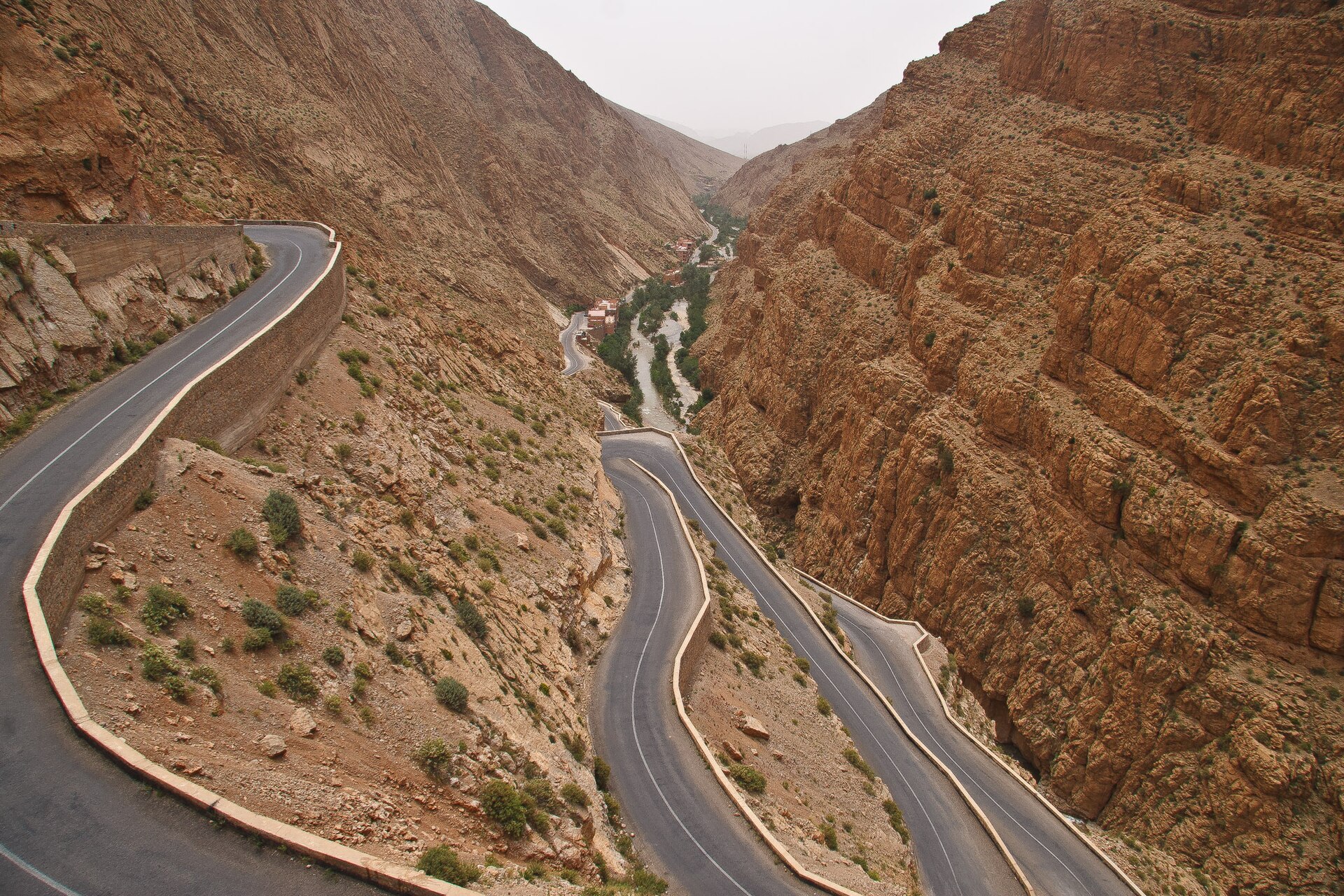
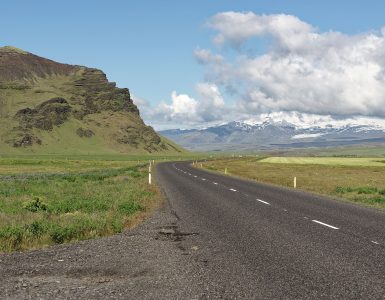
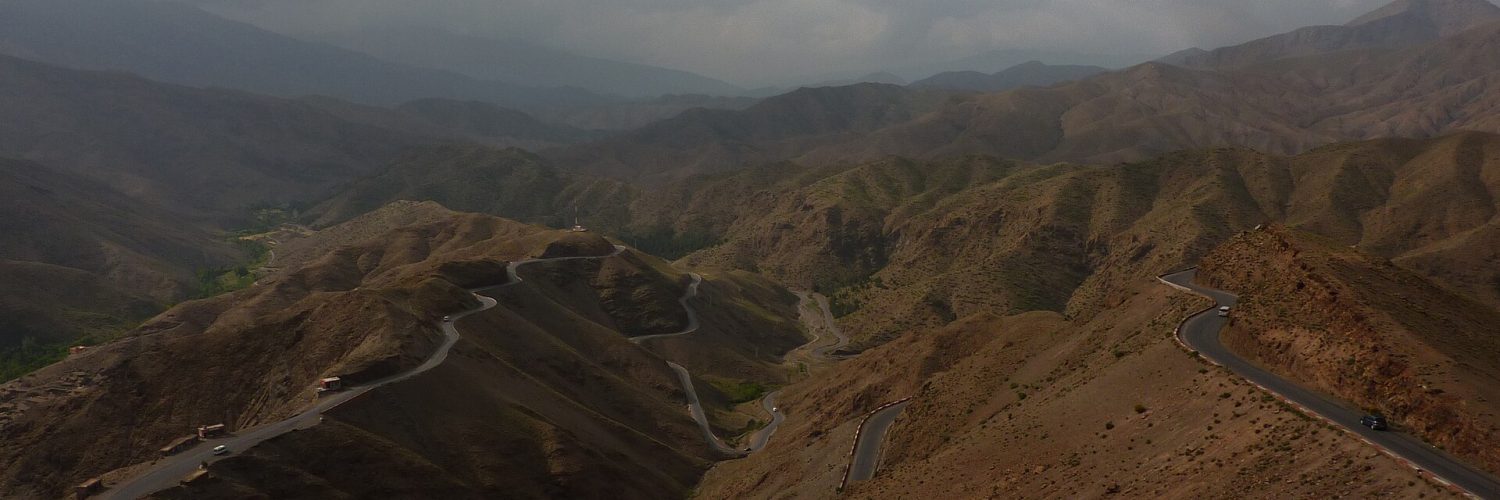
Tizi n Tichka (N9). Fully sealed, comprehensively rebuilt and widened over the last decade, and still a serious mountain road: continuous switchbacks, sheer drops, slow trucks and no crash barrier in long stretches. Allow four hours from Marrakech to Ouarzazate rather than the three that a map app will promise. Between December and February snow and ice close or restrict it occasionally, and chains are sometimes required.
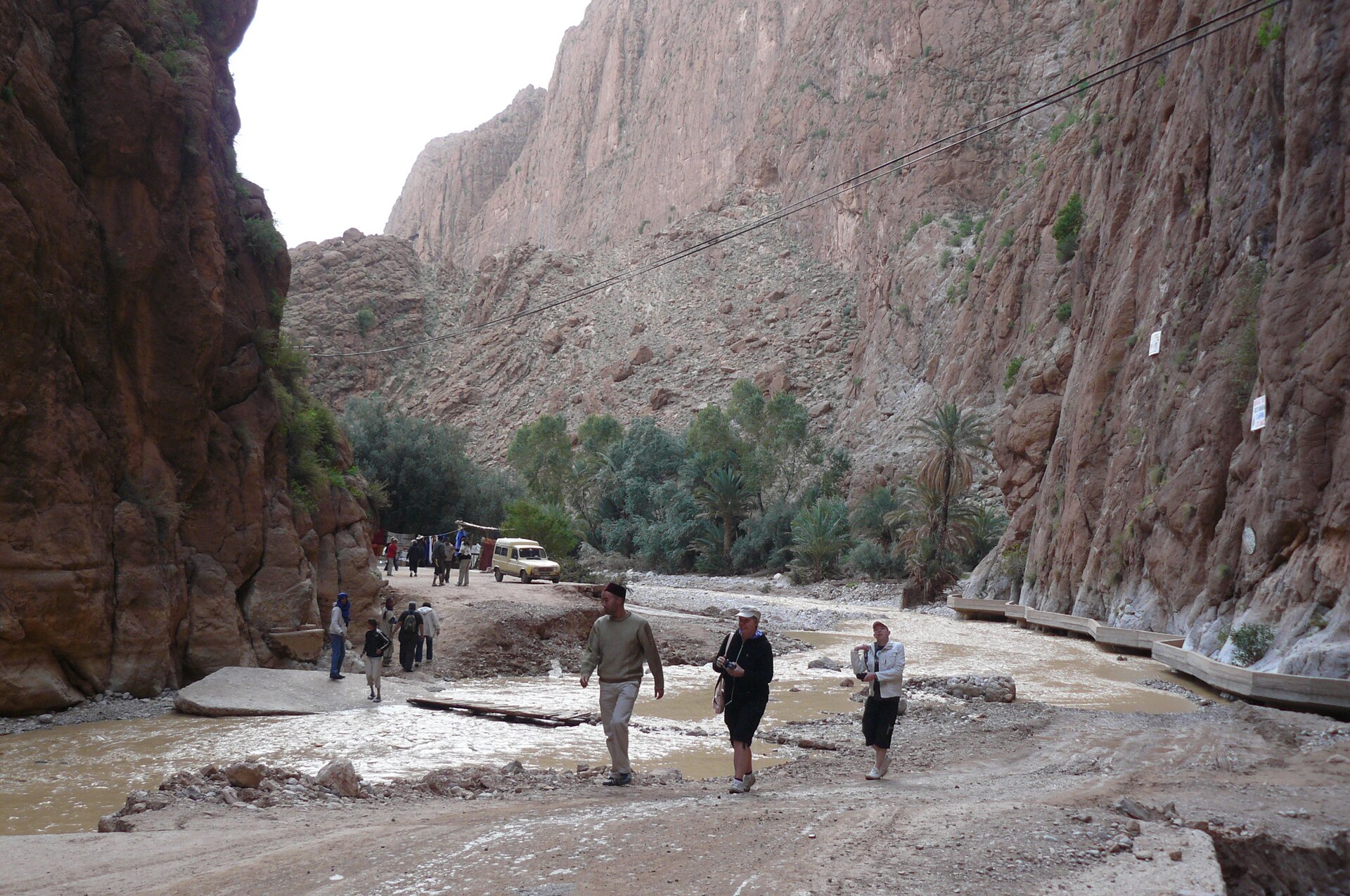
The Dades and Todra gorges. Sealed roads run up both. The famous hairpin section above Dades is narrow, steep and entirely tarmac. Beyond the last village in each gorge the surface degrades to gravel — that is where a normal car genuinely stops.
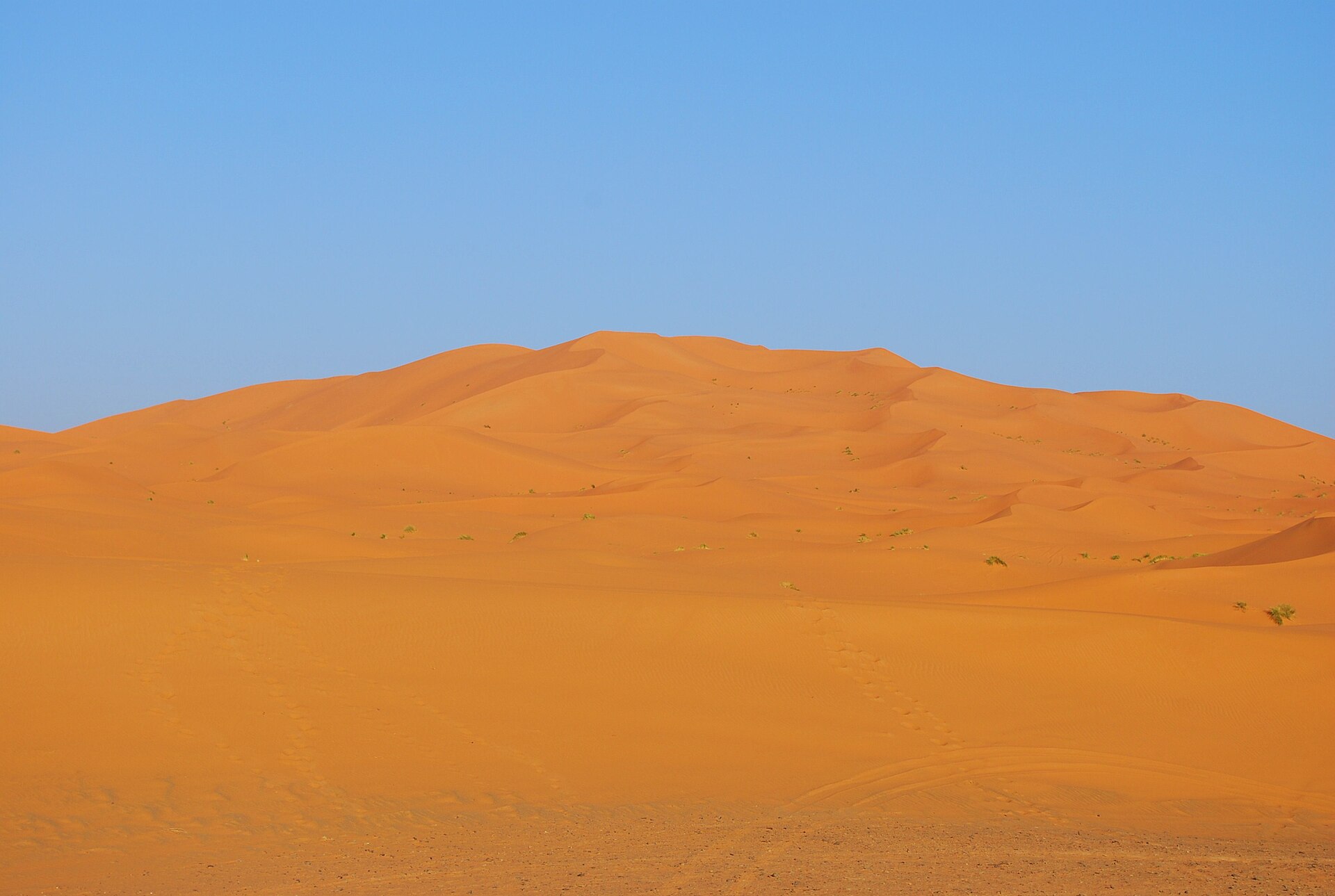
The road to Merzouga. Sealed all the way into the village. Sand blows across it in places, which looks alarming and is not. The desert camps beyond the village are a different matter: reaching them means driving on sand, and that is a 4×4 job or, more commonly, a transfer arranged by the camp in their own vehicle.
So which vehicle?
Two people, hotels and riads only, main routes: a compact car is fine and cheapest. You will save real money and lose nothing.
Two to four people, Atlas plus gorges plus Merzouga village: a small SUV or crossover — Dacia Duster, Hyundai Creta, Renault Captur. Enough clearance for rough shoulders and unpaved auberge driveways, enough engine for the pass, and typically €45–70 per day depending on season and how far ahead you book.
Four or more with luggage, or any plan involving sand, remote pistes or the Draa valley south of Zagora: a genuine 4×4 — Duster 4WD, Toyota Land Cruiser Prado, Mitsubishi Pajero. Expect €80–150 per day.
The trap is booking a 4×4 and assuming it entitles you to drive off-road. Almost every Moroccan rental contract prohibits leaving sealed roads, and the insurance is void the moment you do. If you intend to drive pistes, you need a company that explicitly permits it in writing, and you should expect a higher deposit.
Paperwork, deposits and insurance
You need a full licence held for at least a year, a passport and a credit card in the driver’s name. An International Driving Permit is not legally required for most licence holders but is strongly recommended, and it is close to essential if your licence is not in Latin script. It costs around US$20 from an issuing motoring association at home and takes ten minutes; it is a translation and must be carried alongside your own licence, not instead of it.
Deposits are large: €600–1,500 blocked on a credit card is normal, and more for a 4×4. Basic third-party insurance is included by law; the collision damage waiver almost always carries an excess of €600–1,200. Tyres, windscreen and the underside of the car are usually excluded from every level of cover, which matters a great deal on gravel.
Photograph the entire car before you leave the lot — all four sides, the roof, the wheels, the windscreen and the spare. Check that there is a spare, that it is inflated, and that the jack and wheel brace are present. This is the single highest-value ten minutes of the whole rental.
Driving rules that are enforced
- Drive on the right. Speed limits are generally 60 km/h in built-up areas, 100 km/h on open roads and 120 km/h on motorways unless posted otherwise.
- Radar and gendarmerie checkpoints are constant, especially on the approach to and exit from every town. Fines are typically issued and paid on the spot, in cash, with a receipt. Ask for the receipt.
- Speed bumps — often unpainted, unlit and immediately before a village — are the most common cause of damage to rental cars in Morocco. Slow down at every village sign.
- Motorway tolls are cheap and paid in cash at barriers: Casablanca to Marrakech runs roughly 83–89 MAD for a car. The Jawaz electronic tag is aimed at residents; visitors just use the cash lanes.
- Avoid driving at night outside cities. Unlit vehicles, animals on the carriageway, pedestrians on the shoulder and unmarked bumps combine badly. Plan to arrive before dusk, every day.
- Fuel is Sans Plomb 95 (petrol) and Gasoil (diesel), widely available on main routes. Between Rissani and Merzouga, and anywhere south of Zagora, fill up whenever you see a station — 100km gaps are real.
A seven-day loop that works
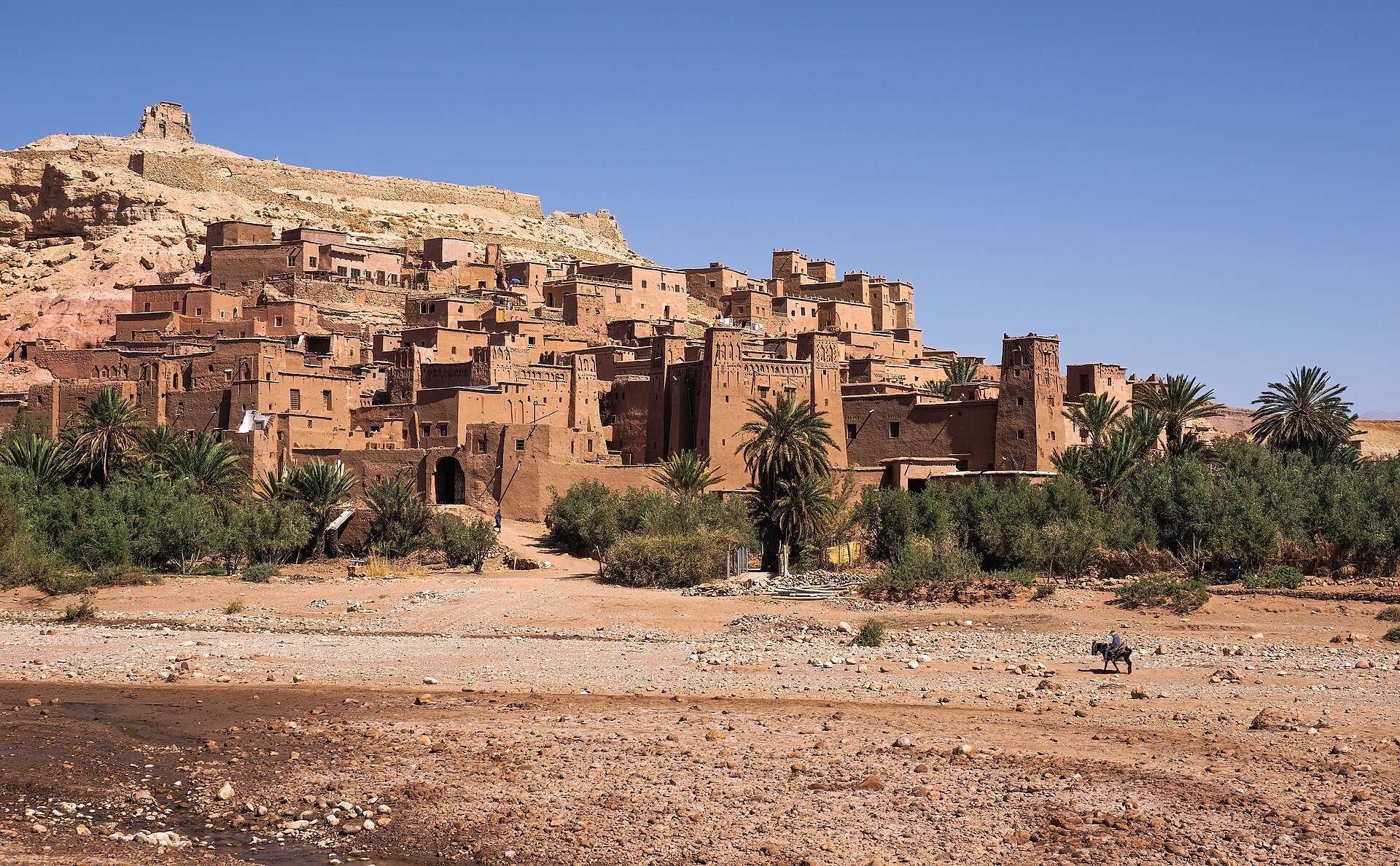
Day 1 — Marrakech to Ait Benhaddou (about 4.5 hours with stops). Over the Tichka, lunch at the pass, afternoon at the ksar. Sleep in Ait Benhaddou rather than Ouarzazate; it is far more atmospheric at dawn.
Day 2 — Ait Benhaddou to Dades (about 3 hours). Ouarzazate film studios in the morning if that appeals, then the Valley of the Roses and up into the Dades gorge for the night.
Day 3 — Dades to Merzouga (about 4.5 hours) via Todra. Arrive with light to spare; the camel transfer to the desert camps leaves in the late afternoon.
Day 4 — Erg Chebbi. Sunrise in the dunes, a slow day, and either a second night in the desert or back to a village auberge.
Day 5 — Merzouga to Skoura or Agdz via the Draa valley palm groves.
Days 6–7 — back over the Atlas, with an optional night in Ait Bougmez or Imlil if you want mountains rather than desert on the return leg.
Doing this loop in four days is possible and unpleasant. Seven is comfortable. Ten lets you add Fes or the Atlantic coast.
Where to base yourself, and where to sleep on the road
Marrakech is the natural start and end point — the widest choice of rental desks, the cheapest flights and the best onward connections. Ouarzazate airport is an alternative if you want to skip the pass in one direction. Fes works if you are running the loop anticlockwise.
On the road, the accommodation that makes this trip is not hotels but kasbahs and family-run auberges: converted earthen buildings with courtyards, half board included, and prices between €40 and €90 a night for a double. Book Merzouga and Dades ahead in spring and autumn; everywhere else you can generally find something on the day outside peak weeks.
התיקון: לעטוף כל ווידג’ט 4038 בשני div — חיצוני נגלל אופקית, פנימי עם min-width 620px: