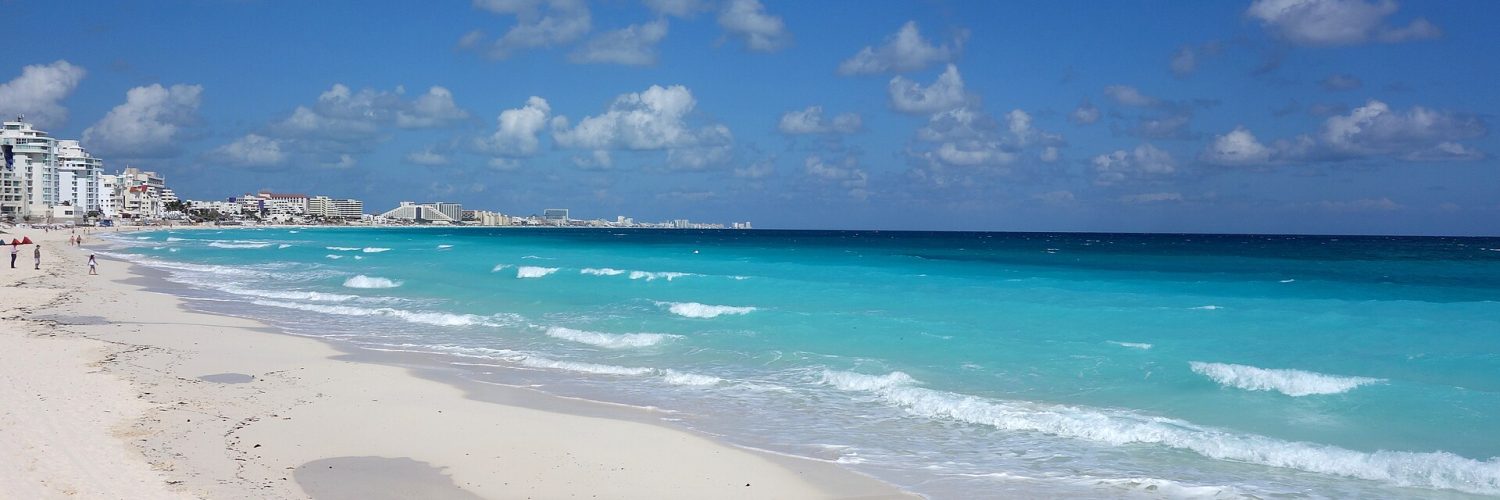
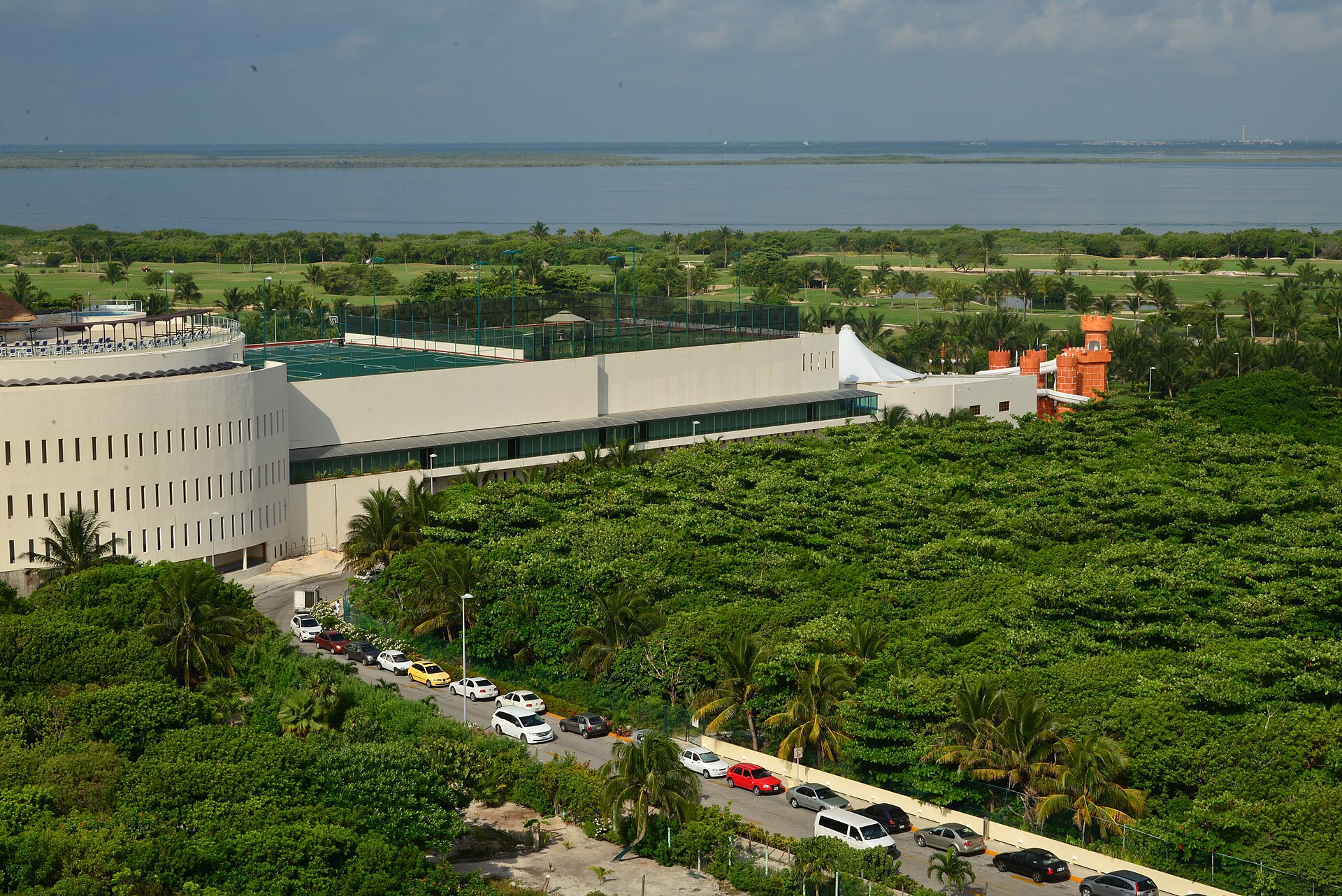
Cancun is not an old town that grew into a resort. It is a resort that the Mexican government decided to build. In 1970 a federal development agency ran a study to find the best place on the Caribbean coast to manufacture a tourism industry from nothing, and the answer was a barrier island off a fishing settlement of a few hundred people. Everything you see on the strip today, all 22 kilometres of it, was drawn on a plan before it existed.
That single fact explains almost every frustration visitors have with Cancun. The Hotel Zone is a sandbar shaped roughly like the number seven, with the Caribbean on one side and the Nichupte Lagoon on the other, and there is precisely one road down it. There is no old quarter because there was never an old town. The actual Mexican city, Cancun Centro, is inland and most visitors never see it.
Understanding that layout is what turns Cancun from a place you tolerate into a place you can use properly. Here is what there is to do, what each thing costs in 2026, and where the money quietly leaks.
The taxes and fees nobody mentions in the brochure
Start here, because these land before you have done anything.
- Visitax. Quintana Roo charges foreign visitors a state tourist tax, currently around 280 to 300 pesos per person, roughly 15 to 18 US dollars. It did not increase for 2026. It is paid separately from your hotel bill, online, and enforcement at the airport has tightened. Pay it through the official state portal only. There are copycat sites charging several times the real amount.
- Resort fees and hotel taxes. Quoted room rates frequently exclude these. Check the total before booking, not the headline.
- The taxi premium. This is the big one and it deserves its own section.
Getting in from the airport, and the taxi problem
Cancun International is about 20 km south of the Hotel Zone. It is also the site of a long-running and occasionally ugly dispute between the local taxi union and ride-hailing apps.
The current position: Uber has not been granted a concession to pick up at the airport, though court rulings have repeatedly protected trips already in progress. In practice, apps work reliably for drop-offs at the airport and are legally murky for pickups. Airport taxis are permitted and expensive, often several times what the same journey costs in the other direction.
The straightforward alternatives:
- ADO buses. The intercity coach company runs from the airport terminals to downtown Cancun for around 140 pesos, and direct to Playa del Carmen for roughly 250 pesos. Comfortable, air conditioned, no negotiation. If your hotel is in the Hotel Zone you will need a short onward hop.
- A pre-booked private transfer. Fixed price agreed before you land, a driver who is expecting you, and no kerbside argument at midnight. For a family with luggage this is usually cheaper than a taxi anyway. Local operators quote by zone rather than per person — OMY TRANSFER Cancun is US$45 per vehicle to the Hotel Zone, downtown or Moon Palace for up to seven passengers with taxes included, which is roughly what a single airport taxi fare costs for the same trip.
We cover the full comparison in our Cancun airport transfer guide.
Once you are in the Hotel Zone, the R-1 and R-2 buses run the length of the strip and on into downtown for a flat fare of about 12 pesos, roughly one US dollar, however far you go. They run constantly, they are safe, and they are the single biggest cost saving available to anyone staying on the strip. Tourists routinely spend 300 pesos on a taxi for a journey the bus does for 12.
What to book ahead, and what it costs
Two categories genuinely need advance booking in high season: Chichen Itza tours that leave early enough to beat the heat and the crowds, and any small-boat trip to Isla Mujeres or the reef.
Concrete 2026 prices worth knowing:
- Chichen Itza: about 697 pesos for foreign adults, roughly 35 to 40 US dollars. It is collected at the gate as two separate tickets, a federal INAH fee of around 105 pesos and a Yucatan state CULTUR fee of around 592 pesos. Budget tours that quote you a low price often exclude the entry fee entirely, so read what is included.
- Tulum ruins: considerably cheaper than Chichen Itza and set on a cliff above the sea, which is the better photograph even if it is the lesser ruin.
- Isla Mujeres ferry: the Ultramar and Winjet services from Puerto Juarez run every half hour and cost a fraction of what the Hotel Zone catamaran day trips charge. You can do the island independently for the price of the ferry plus a golf cart.
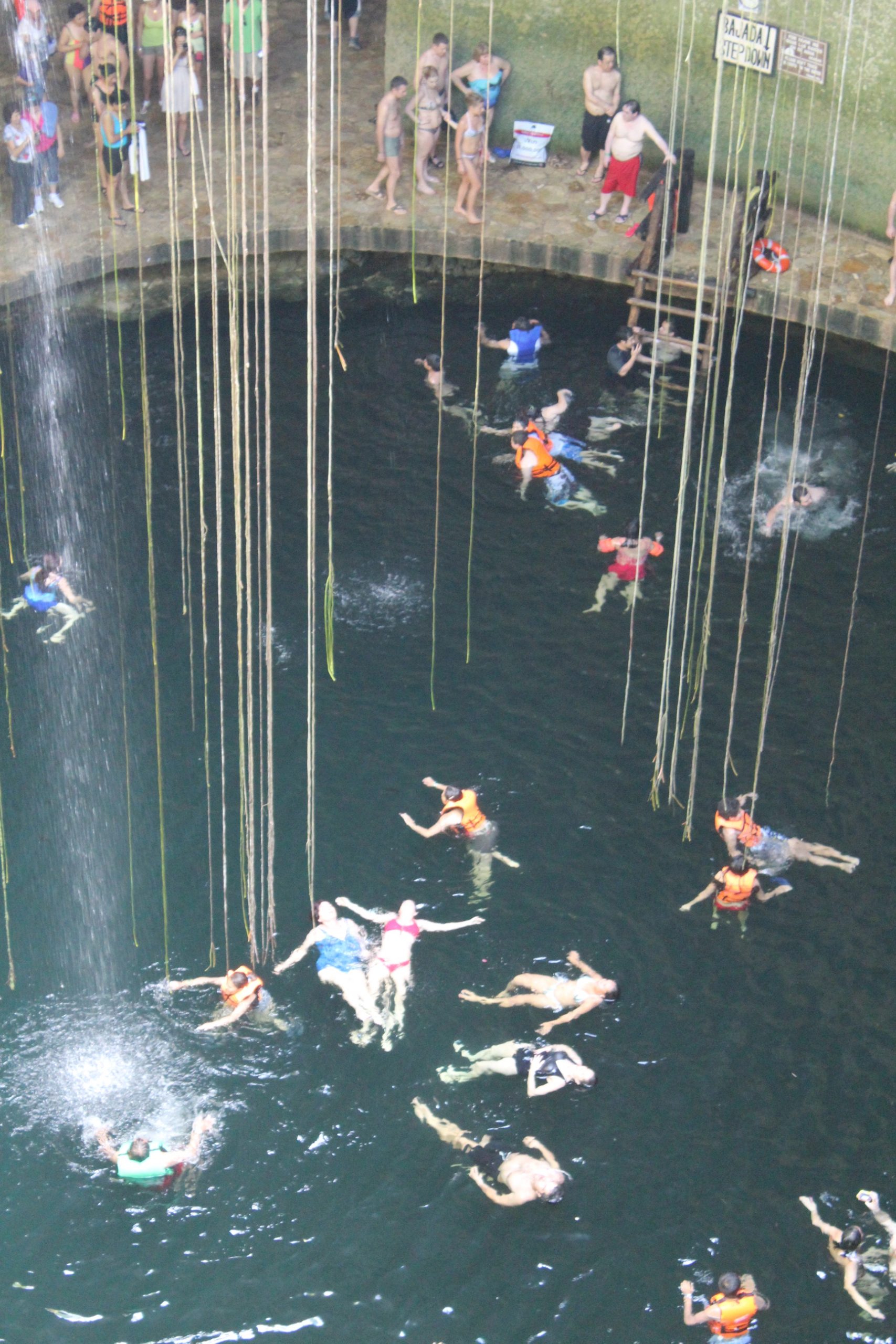
- Cenotes: entry to most run between 100 and 400 pesos. Ik Kil, next to Chichen Itza, is the famous one and consequently the busiest.

What is free, and better than several paid things
Every beach in Mexico is federal property and legally public. Hotels can own the buildings and the loungers; they cannot own the sand. Playa Delfines, at the far southern end of the Hotel Zone, is the largest public beach with no hotel behind it, and it has the best view of the open Caribbean on the strip. Playa Las Perlas and Playa Tortugas are the calmer, shallower public beaches on the northern hook.
The El Rey archaeological site sits directly on the Hotel Zone strip and charges very little. It is small, it is full of iguanas, and it takes 40 minutes. Almost nobody staying 200 metres away goes.
Downtown Cancun, around Parque de las Palapas, is free and is where you eat well. This is where people who live in Cancun spend their evenings.
Sargassum: the thing that will actually shape your trip
Sargassum is the brown seaweed that washes onto Caribbean beaches in mats, sometimes ankle deep, and rots. It is not pollution and it is not a hotel’s fault, but it can make swimming unpleasant.
The season runs roughly April to October, with the heaviest landings from June through August. November to February is typically clear. This matters more than usual right now: the University of South Florida’s monitoring lab has projected 2026 as likely the largest sargassum year on record.
Practical responses: the north-facing beaches on the hook of the seven, such as Playa Las Perlas, Langosta and Tortugas, catch far less than the east-facing ones because the seaweed arrives on the easterly current. Isla Mujeres’ Playa Norte faces north and is often clear when the mainland is not. And if the forecast is bad, plan a cenote-and-ruins trip rather than a beach week.
Four days that use the place properly
Day one. Beach and orientation. Ride the R-1 the length of the strip to Playa Delfines, walk back along the sand, and eat downtown at Parque de las Palapas in the evening.
Day two. Isla Mujeres, independently. Ferry from Puerto Juarez, rent a golf cart, circle the island, swim at Playa Norte, and take a late-afternoon boat back. This costs a small fraction of the organised catamaran version and you control the day.
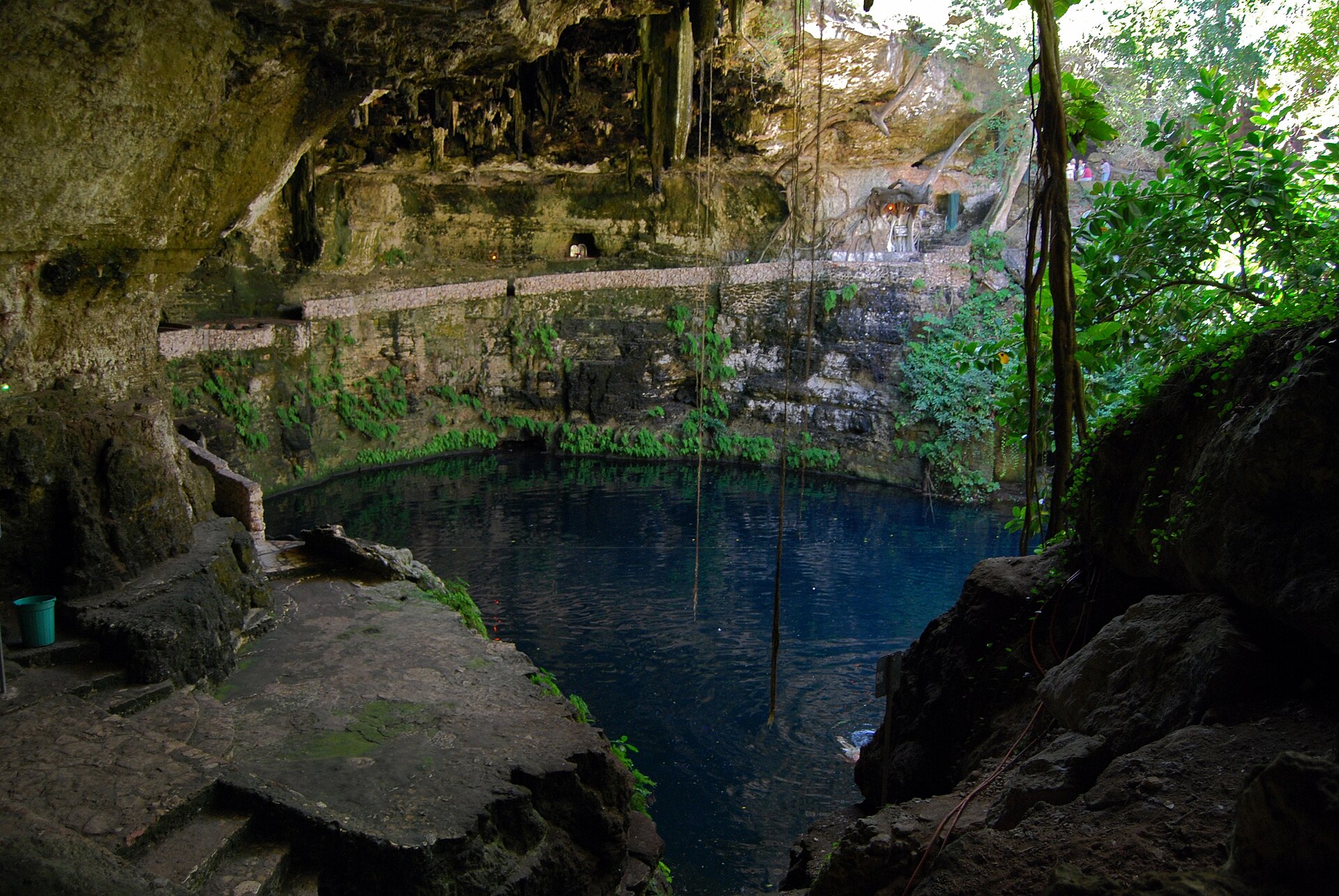
Day three. Chichen Itza with a cenote stop, or Valladolid. Leaving before 7am is the difference between a great morning and a hot queue. Consider staying overnight in Valladolid, which is a lovely colonial town with the Cenote Zaci in the middle of it, and doing the ruins at opening the next day.
Day four. Either Tulum and a beach cenote, or the Museo Maya de Cancun and the adjoining San Miguelito ruins, which is the best museum on the strip and reliably empty.
Renting a car, and whether you should
Inside the Hotel Zone a car is a liability: one road, limited parking, and a bus every three minutes. For the Yucatan interior it is transformative. Valladolid, Ek Balam, Rio Lagartos, Coba and the smaller cenotes are all far easier with your own vehicle, and the toll road west is fast and in good condition.
Two warnings specific to Mexico. First, Mexican third-party liability insurance is mandatory and is not covered by your credit card, whatever the card issuer implies. Rentals advertised at very low daily rates almost always add it at the counter, and the final figure can be several times the quoted price. Compare the total including compulsory insurance, not the headline. Second, there is no legal requirement to accept the desk’s most expensive package; know what you actually need before you arrive.
If you want to see current availability and totals across the local suppliers, you can compare Cancun car rental prices here.
Where to stay, and the honest trade-off
The Hotel Zone gives you beach access, predictability and a bus route. It gives you almost no contact with Mexico. Downtown Cancun costs a third as much, feeds you far better and has no beach. Puerto Morelos, 30 minutes south, is the compromise many repeat visitors settle on: a real village, a reef 500 metres offshore, and prices between the two.
All-inclusives make sense if you genuinely intend to stay put. They stop making sense the moment you plan day trips, because you are paying for meals you will not eat.
When to go
December to April is the dry season and the peak: reliable sun, low sargassum, high prices, and December through early January is the most expensive fortnight of the year.
May and November are the useful shoulders. Hurricane season officially runs June to November, with the highest risk in September and October, which is also when rates collapse. A direct hit is unlikely in any given week, but travel insurance that covers weather disruption is worth the money in those two months specifically.
Practical notes
- Pay in pesos. Card terminals that offer to charge you in your home currency apply a poor exchange rate. Always decline and pay in the local currency.
- Timeshare touts are in the airport arrivals hall and outside the OXXO stores on the strip, usually offering free tours or discounted transport. Politely decline and keep moving.
- Reef-safe sunscreen is required at most cenotes and eco-parks, and many will make you shower before entry.
- Currents at Playa Delfines are genuinely strong. Flags are not decorative; a black or red flag means stay out.
- What is not worth it: the Hotel Zone catamaran party boats, which are expensive and spend most of the day at anchor, and the swim-with-dolphins attractions. If you want the reef, take a small-boat snorkel trip from Puerto Morelos instead.
Further reading
- Cancun airport transfer options and prices
- Things to do in Mexico City
- Bike rental in Cancun
- Domestic flights within Mexico