Singapore is 50 kilometres wide and has well over a hundred MRT stations. That combination breaks the rule that governs hotel choice in almost every other city, which is “stay in the centre or lose an hour a day”. Here, you can sleep six stops from the tourist core, pay 40% less, and lose eleven minutes.
Which means the real question is not how close your hotel is to Marina Bay. It is what you want to walk out into at 8am, and whether you have understood how Singapore prices rooms — because the swing between a normal Tuesday and a Formula 1 Saturday is larger here than the difference between neighbourhoods.
The two things that actually set the price
Singapore’s citywide average sits around S$250 a night, with hostels and capsule hotels from about S$80 and Marina Bay five-stars running S$350–800. But the average is close to meaningless, because two factors move the number far more than location does.
The first is the events calendar. Singapore is a small island that hosts very large events, and rooms respond violently. Formula 1 weekend is the extreme case: the 2026 Singapore Grand Prix runs 9–11 October at the Marina Bay Street Circuit, this year with a Sprint added on the Saturday, and rates near the circuit typically go to two or three times normal with the good rooms gone four to six months out. Big stadium concerts, the Shangri-La Dialogue and the major trade shows at Marina Bay Sands Expo do smaller versions of the same thing. Before you book anything, check whether your dates collide with something. Moving a trip by four days can halve the bill.
The second is the “++”. Singapore hotels and restaurants routinely quote prices before a 10% service charge and 9% GST, written as S$200++. The two do not simply add to 19%, because GST is charged on the total after service charge is applied. The shortcut is to multiply by 1.199. A room advertised at S$200++ costs S$239.80. A rate quoted as “S$200 nett” already includes both. When you compare two hotels, make sure you are comparing the same kind of number, because otherwise you are wrong by a fifth.
Getting in from Changi
Changi is 20 km from the centre and connects straight to the MRT. The East West Line from Changi Airport station reaches Raffles Place in 30–40 minutes for roughly S$2.10 — one of the cheapest airport transfers of any major city, and it involves one change at Tanah Merah.
Contactless bank cards work directly at the gates, so most visitors need no ticket at all. If you want a stored-value card, an EZ-Link costs about S$12 including S$7 of credit. The Singapore Tourist Pass is S$17 for one day, S$24 for two, S$29 for three, S$37 for four and S$45 for five — and for most travellers it does not pay. Individual adult fares run about S$1.28 to S$2.57, so a one-day pass needs somewhere around eight to thirteen journeys before it breaks even. Buy it only if you genuinely plan to ride all day.
Two caveats. The MRT stops running around midnight and starts around 5:30am, so a red-eye arrival means a taxi or a pre-booked transfer. And with heavy luggage, small children or a hotel that is a ten-minute walk from the station in 32°C and 85% humidity, the train stops being the obvious answer. A fixed-price private transfer avoids the airport queue and the surge pricing that Grab applies at peak arrival banks.

The neighbourhoods, and who each one is for
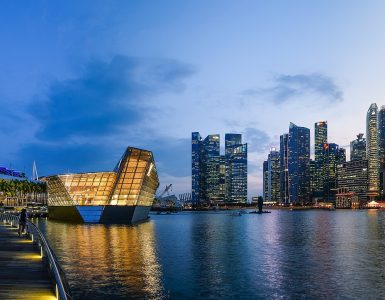
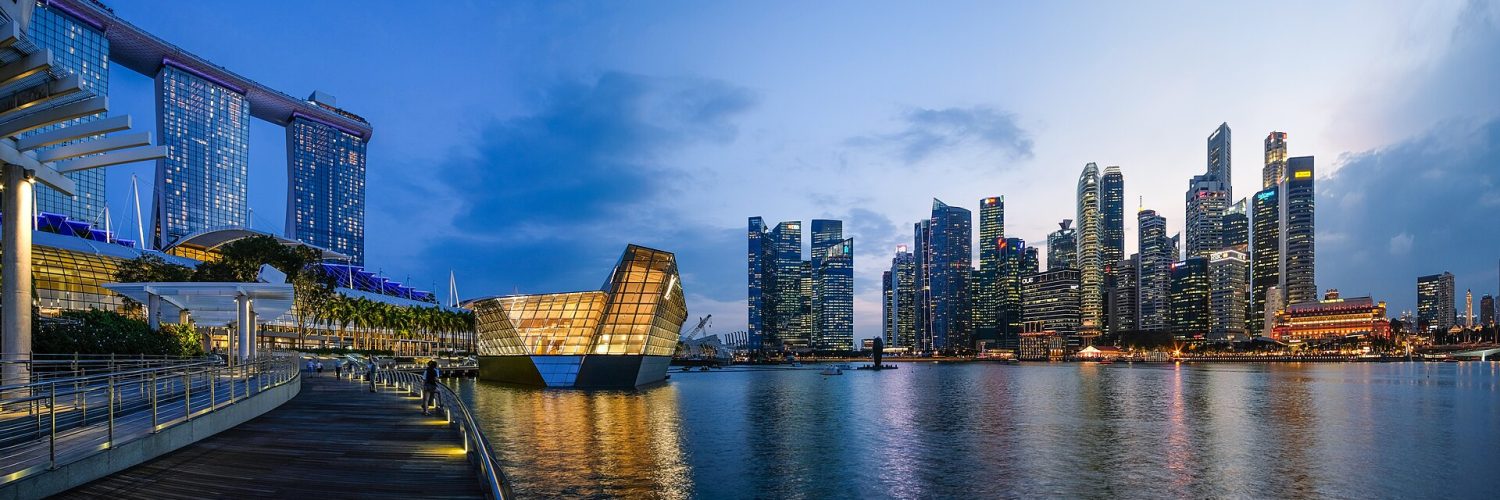
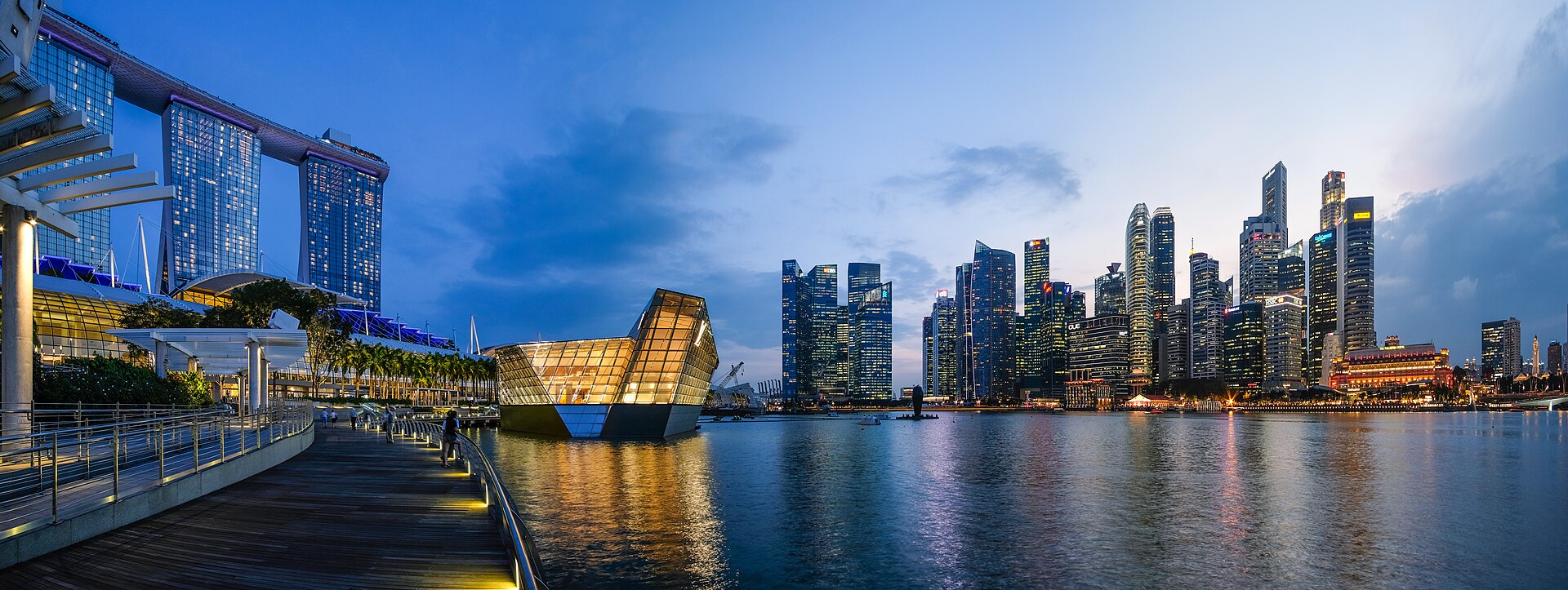
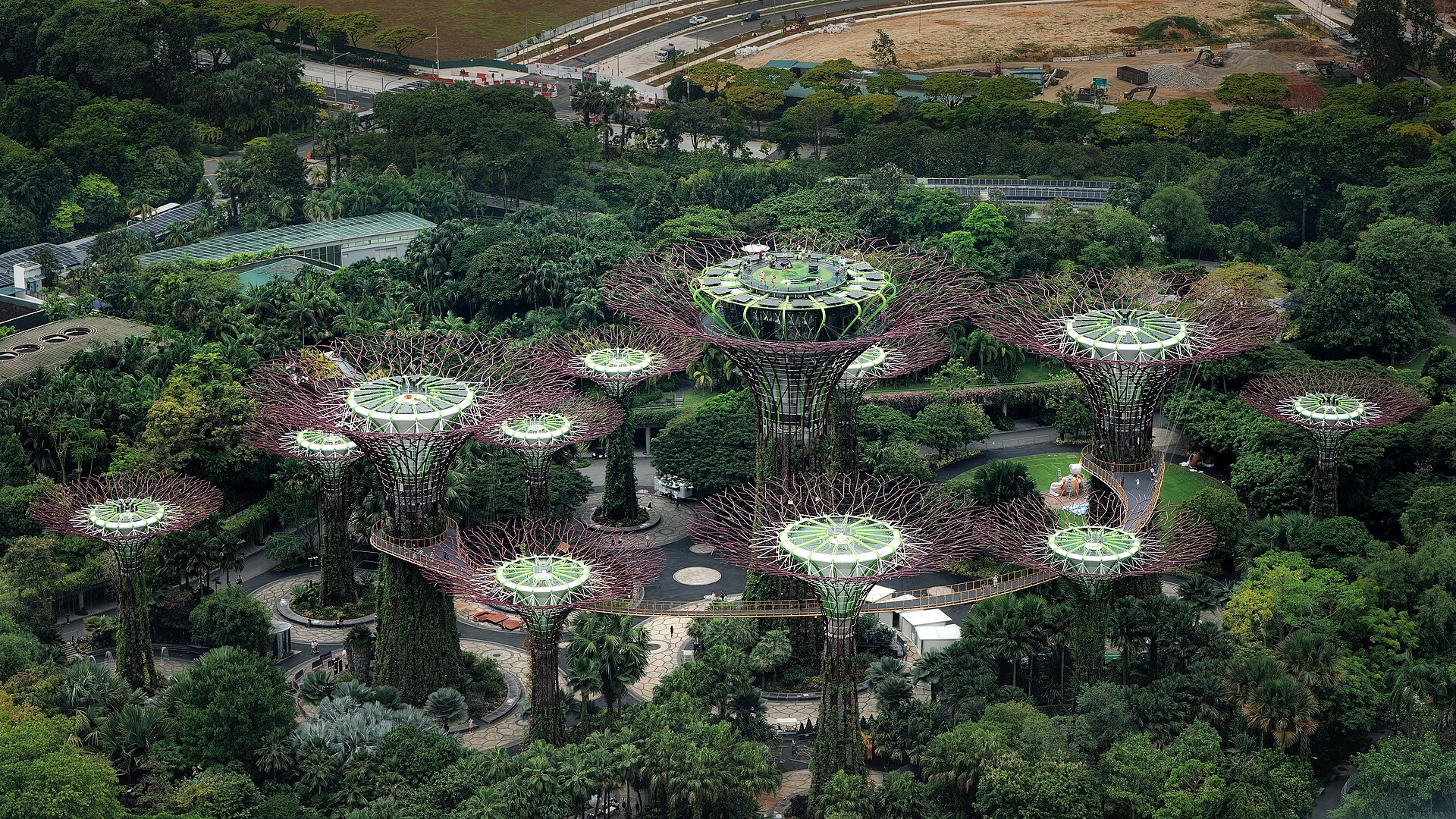
Marina Bay. The postcard. Marina Bay Sands, Gardens by the Bay, the Merlion, the ArtScience Museum, and the F1 circuit. Five-star properties here average S$350–800. What you get is the view and a very short walk to the two or three images you came for. What you do not get is a neighbourhood: it empties after the offices close, and dinner means a mall. Right for a short first trip, a special occasion, or race weekend. Wrong for a week.
Chinatown. The best all-round value in central Singapore. Mid-range rooms sit around S$150–300, you are two MRT stops from Marina Bay, and you walk out into shophouses, Buddha Tooth Relic Temple, Maxwell Food Centre and some of the best cheap eating in the city. It is also the most convenient base for the North East and Downtown lines. If you are unsure, book here.
Kampong Glam and Bugis. The most interesting streets in Singapore to be staying on. Sultan Mosque, Arab Street’s textile shops, Haji Lane’s bars and boutiques, and Malay and Middle Eastern food that is better than the tourist volume suggests. Cheaper than Chinatown, with genuine hostel options from around S$30. Slightly further from Marina Bay, which does not matter.
Little India. The cheapest central option and the loudest. Tekka Centre, Mustafa Centre open around the clock, and food that is worth the trip on its own. Busy, dense, and not for light sleepers, particularly on Sunday evenings.
Orchard Road. Shopping, and a lot of solid four-star hotels at reasonable rates because there are so many of them. Well connected, comfortable, and largely devoid of character. A sensible choice for a business trip or a family that wants predictability.
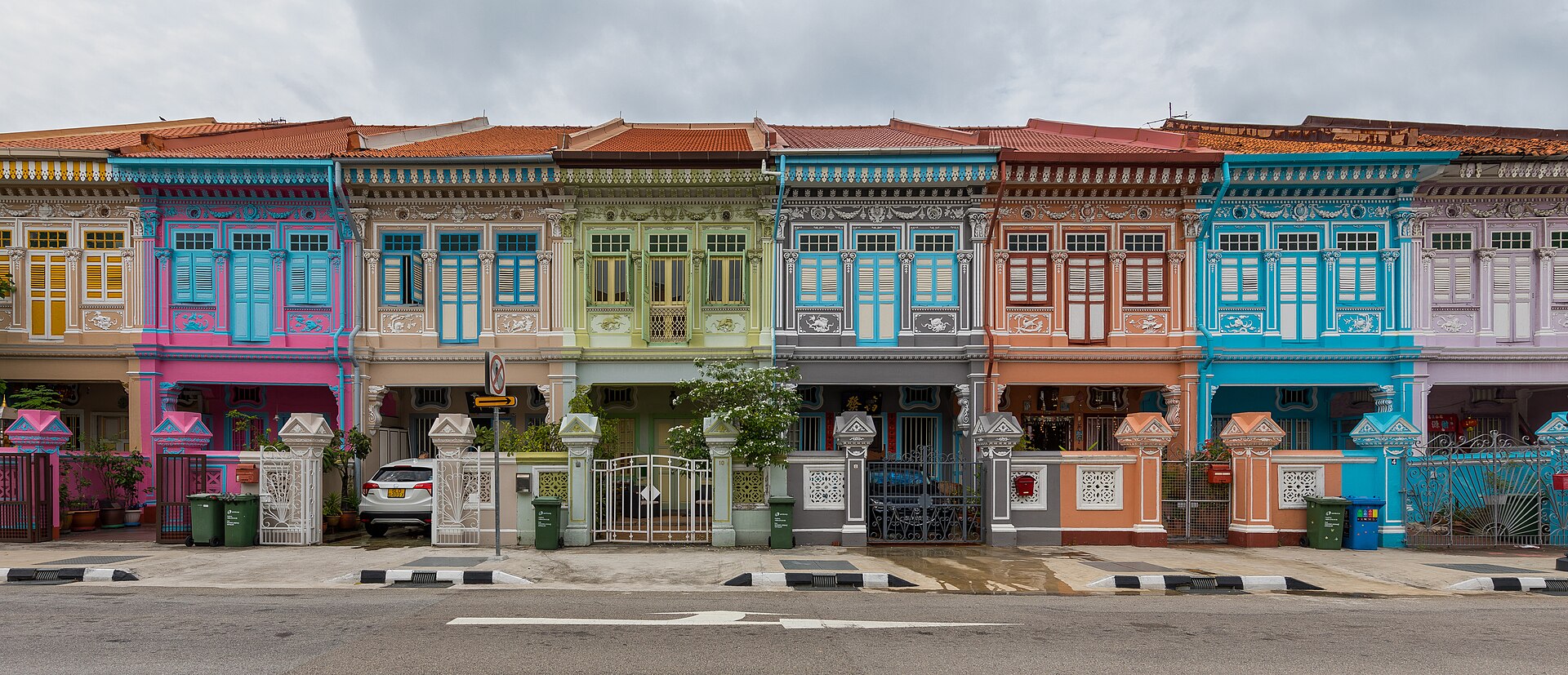
Katong and Joo Chiat. The one to consider if you have been to Singapore before. Peranakan shophouses on Koon Seng Road, laksa that people argue about, and an actual residential rhythm. It is not on the MRT in the way the others are — you will use buses or the Thomson-East Coast Line at Marine Parade — and rooms are cheaper for exactly that reason.
Sentosa. Resorts, Universal Studios, artificial beaches. Right if the island is the trip and you have children. Wrong if you want to see Singapore, because getting on and off adds friction to every single day.
Comparing rates without getting it wrong
Three habits save real money here. Compare nett prices, not “++” prices. Check your dates against the events calendar before you fall in love with a hotel. And search a two or three-stop radius rather than a single neighbourhood, because in Singapore that radius costs you almost nothing in time.
February, straight after Chinese New Year, and the June to August window are generally the softest months. Year-end holidays and the October race weekend are the hardest. There is no monsoon-driven low season worth planning around: it rains hard, briefly, most of the year, and the temperature barely moves.
What to know about the rooms themselves
Singapore rooms are small. Land is the constraint, and a four-star room here is often physically smaller than a three-star room in Kuala Lumpur or Bangkok at a similar price. Read the square-metre figure in the listing rather than the star rating; many listings state it, and the ones that do not are usually the ones with something to hide.
A few practical points. Most mid-range and up have a pool, and in this climate that is a real amenity rather than a decorative one. Check whether breakfast is included and whether it is nett, because a S$35++ buffet is S$42 a head. Rooms described as “windowless” or “interior” in the older shophouse conversions are exactly that. And “walking distance to MRT” is doing heavy lifting in listings — at midday, 700 metres in Singapore’s humidity is not the same walk as 700 metres in Lisbon.
Eating, which is the real reason to pick a neighbourhood
Singapore is one of the few cities where your hotel’s location determines the quality of your dinners more than your budget does. Hawker centres are the point: Maxwell and Chinatown Complex in Chinatown, Tekka in Little India, Old Airport Road east of the centre, Tiong Bahru Market, and Lau Pa Sat in the CBD. Dishes run roughly S$4–8, the hygiene grades are posted on every stall, and several hawker stalls hold Michelin recognition.
Two things to be aware of. Hawker centres and coffee shops are mostly cash-light but not cash-free — carry small notes. And alcohol is expensive because of duty: a beer that costs S$4 in Bangkok is S$12–16 here, and the public drinking ban between 22:30 and 07:00 is real and enforced. If drinking is part of your evening, factor it in as a genuine line item rather than a rounding error.
Getting around once you are settled
The MRT covers six lines and more than 130 stations, runs about 5:30am to midnight, and is air-conditioned, punctual and clean. Buses fill the gaps and cost about the same. Grab is the dominant ride-hailing app and is reasonable outside peak surge; street taxis are metered and honest, which is not true everywhere in the region.
Do not rent a car. Between the Certificate of Entitlement system, Electronic Road Pricing gantries and parking costs, driving in Singapore is among the most expensive in the world, and it buys you nothing an MRT ride does not.
One rule that catches visitors: eating, drinking — including water — and durian are all prohibited on the MRT, and the fines are posted and applied.
Honest downsides
Singapore is expensive, and the gap between it and its neighbours is widest exactly where travellers spend: alcohol, taxis and hotel rooms. It is also relentlessly hot and humid, which changes how much walking you will actually do — plan indoor blocks in the middle of the day and save the outdoor sights for early morning and after dark.
And it is a heavily regulated place. Fines apply to things that are not fined elsewhere: littering, jaywalking, smoking outside designated areas, importing chewing gum for resale, and drinking in public late at night. None of this is a problem if you know about it, and all of it is a problem if you assume the rules are decorative.
Further reading
For the arrival end of the trip, see our guide to Singapore airport transfers. If you are building a wider Southeast Asia route, our guides to things to do in Kuala Lumpur and things to do in Bangkok cover the two cities most often paired with Singapore, and eSIM options for the region are worth sorting before you fly.