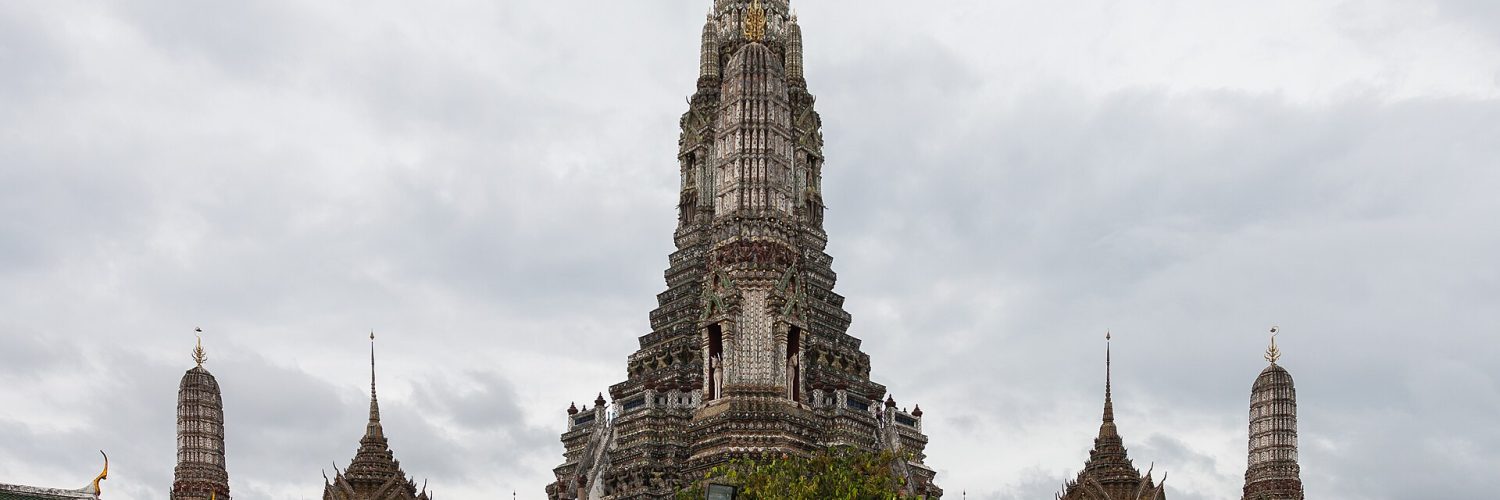
The single most visited place in Bangkok does not have a train station. The Grand Palace, Wat Pho, Wat Arun and the whole of the old royal island of Rattanakosin sit outside the reach of the BTS Skytrain and, until you count a long walk from MRT Sanam Chai, largely outside the reach of the metro too. Meanwhile the Skytrain runs beautifully through Siam, Sukhumvit and Silom — the shopping and office city, none of which you flew here to see.
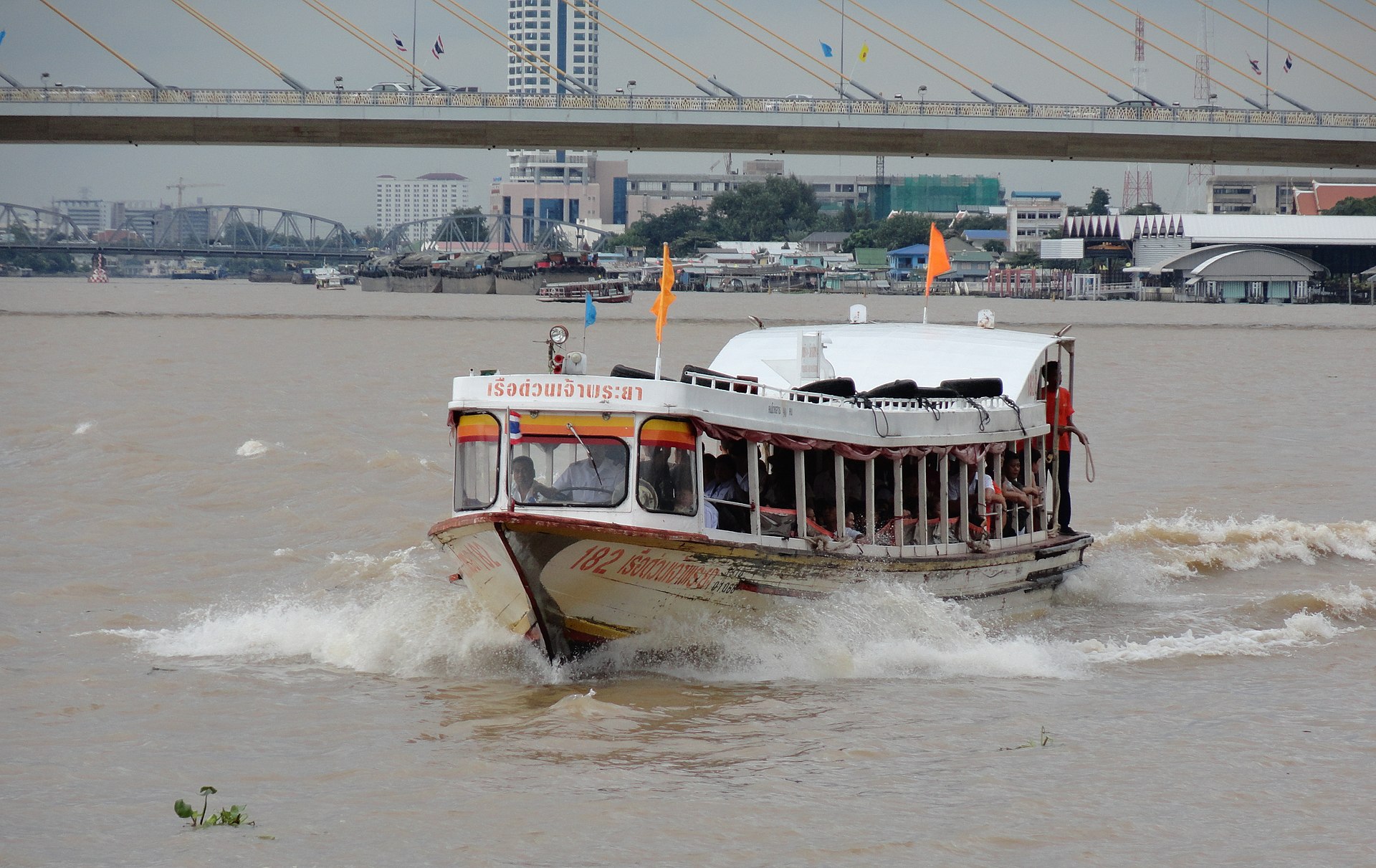
This is not an oversight. Bangkok’s rail network was built to move commuters into the modern commercial districts, and the old city was already dense and protected when it was planned. The practical consequence is that first-time visitors spend a fortune on taxis crawling through traffic to reach temples that are, in fact, best reached by boat. The Chao Phraya river is the metro line for old Bangkok, and it costs less than a bottle of water.
Get that one thing right and the city stops feeling like a fight.
Why Bangkok is shaped like this
Bangkok was a canal city. When the capital moved here in 1782, transport was by water — the Chao Phraya and a dense network of khlongs that functioned as streets. Roads came later and were built on top of, or alongside, that water network rather than replacing it. That is why the city has no grid: the main roads follow old waterways and property lines, and the residential lanes that branch off them — the soi — are dead ends far more often than through-routes.
Two addresses 300 metres apart as the crow flies can therefore be a 20-minute journey, because there is no connection between their sois and you have to go out to the main road and back in. Any map app will tell you this if you ask it; almost nobody asks it before booking a hotel.
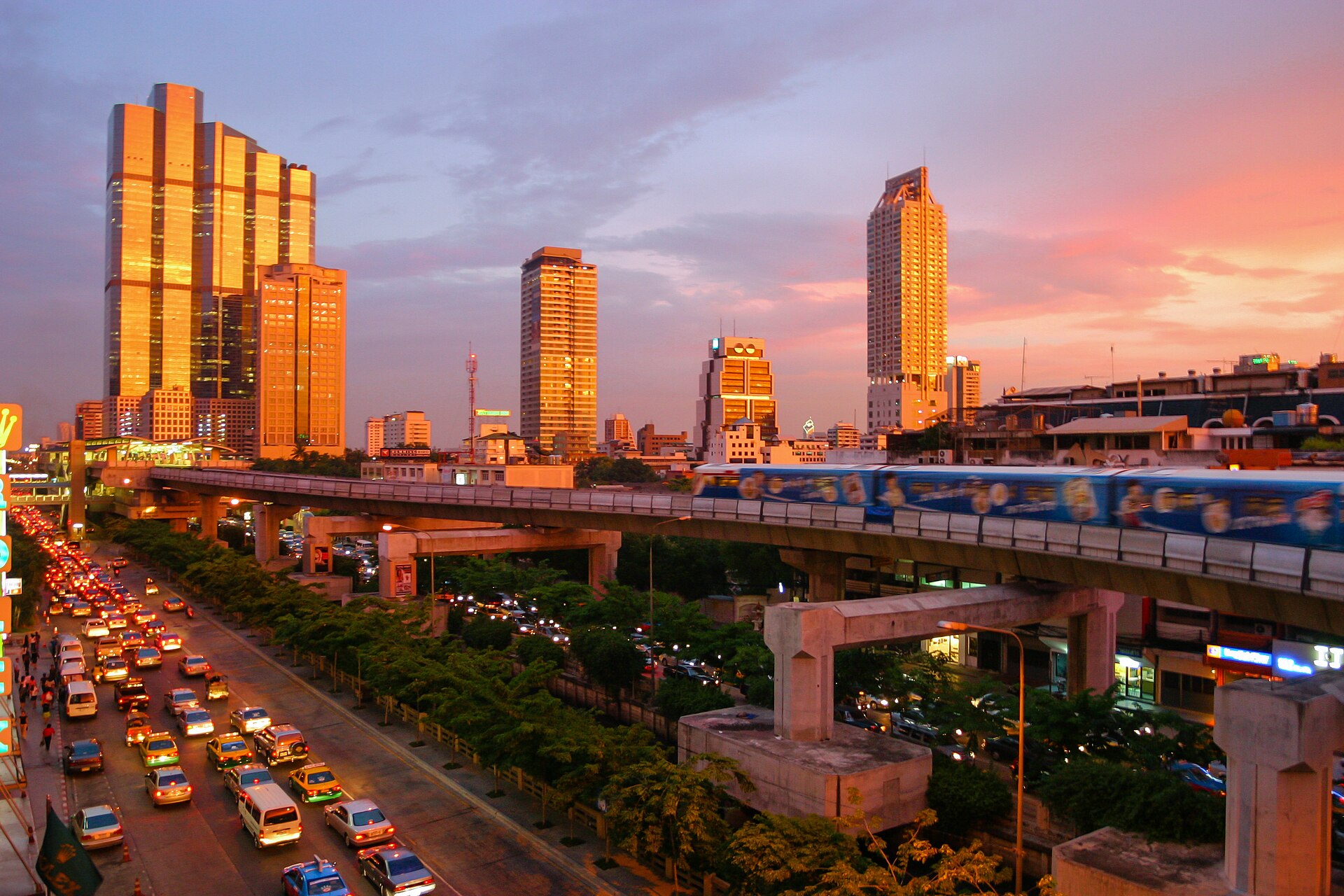
The second consequence is vertical. With no room to spread and land values in the commercial core among the highest in Southeast Asia, Bangkok went up — hence the rooftop bars, the skywalks and the elevated rail network that lets you walk from Siam to Chit Lom without ever touching a pavement.
Getting in from the airport
Most long-haul flights land at Suvarnabhumi (BKK), about 30km east of the centre. Budget and regional carriers often use Don Mueang (DMK) to the north. They are not close to each other, so check which one you are flying into before booking a hotel.
From Suvarnabhumi the Airport Rail Link runs to Phaya Thai in around 26 minutes for a fare in the ฿15–45 range depending on distance — ฿45 for the full run. It connects to the BTS at Phaya Thai and to the MRT at Makkasan/Phetchaburi. It is fast, air-conditioned and by far the cheapest option, and it is useless if you have three suitcases and a toddler.
A metered taxi from the official rank is roughly ฿250–400 on the meter to central Bangkok, plus a ฿50 airport surcharge and ฿25–75 in expressway tolls that you pay in cash as you go. Call it ฿400–500 all in, and 45–90 minutes depending on when you land. Only use the official rank downstairs — the drivers who approach you in arrivals with a laminated price card are not a bargain.
If you are landing after a 12-hour flight and would rather not negotiate anything, a pre-booked private transfer with a fixed price and a driver holding a sign is the low-friction version:
We go through every option, including Don Mueang, in detail in our Bangkok airport transfer guide.
What to book ahead, and what it costs
Bangkok has fewer timed-entry bottlenecks than European capitals, but a few things genuinely benefit from booking.
The Grand Palace and Wat Phra Kaew — ฿500 for foreign visitors, and the ticket office closes at 15:30 even though the grounds stay open a little later. Arrive before 09:00 or after 14:00; the middle of the day is both hottest and busiest. Thai nationals enter free with ID.
Wat Pho — ฿300, three minutes’ walk from the Grand Palace exit, home of the 46-metre reclining Buddha and the country’s most respected traditional massage school. The massage is bookable on the spot and is not a tourist gimmick.
Wat Arun — ฿200, reached by a cross-river ferry from Tha Tien pier that costs a handful of baht and takes about three minutes. Go late afternoon; the temple faces east, so the light is on it in the second half of the day despite the name.
Mahanakhon SkyWalk — the glass-floored observation deck on Thailand’s tallest tower, typically ฿850–1,000 depending on package and time slot. This is one where an advance ticket is meaningfully cheaper than the walk-up price.
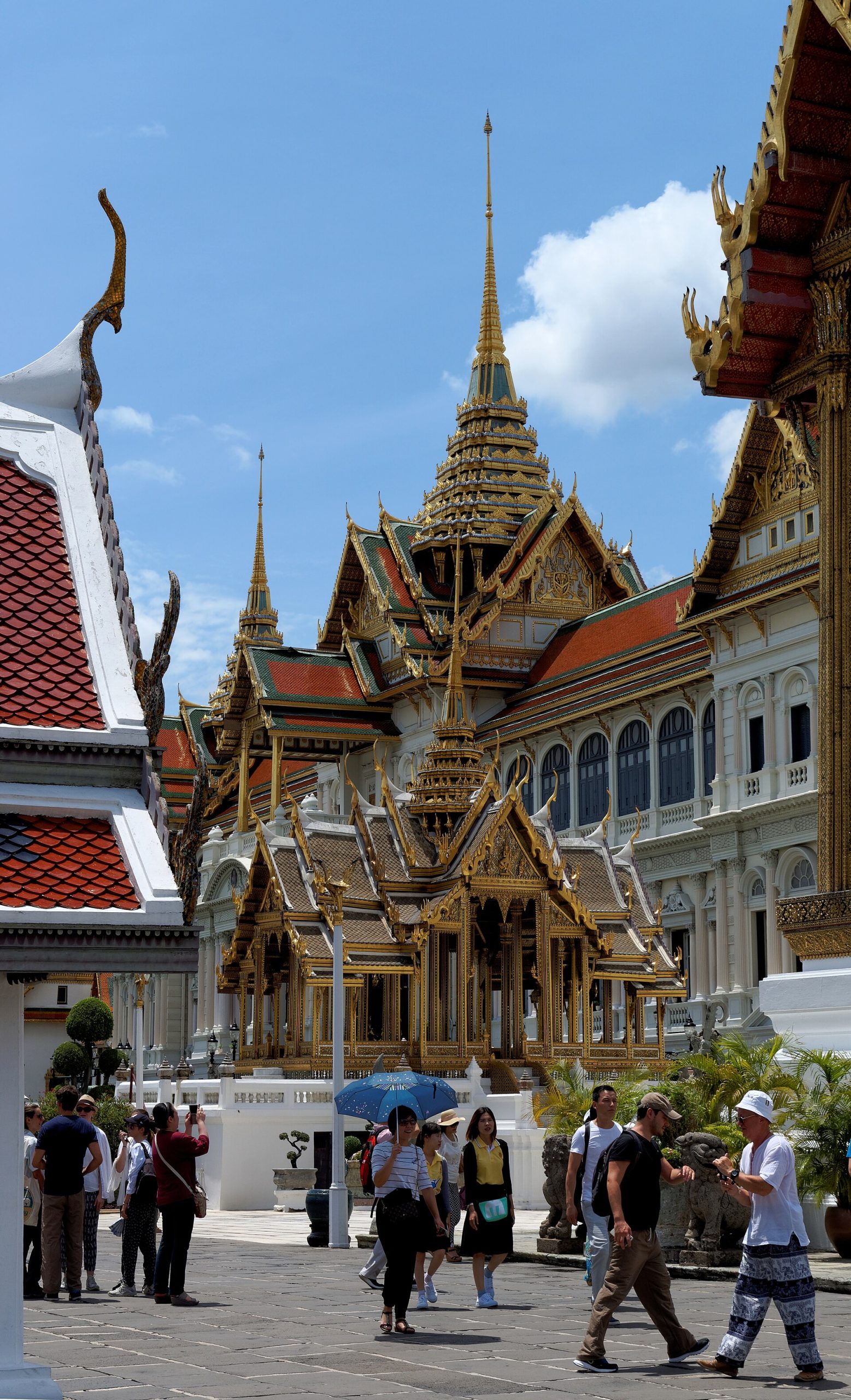
The dress code is enforced, not suggested. Shoulders and knees covered at the Grand Palace and Wat Phra Kaew, for men and women. There is a rental counter, the queue for it is long, and it is the single most common reason people lose an hour at the entrance. Wear the right clothes and walk straight in.
Live availability and prices for Bangkok attractions and day trips:
What is free, and what is better than the paid version
The Chao Phraya Express Boat is not free but it is close — the orange-flag service runs the length of the tourist stretch for around ฿18 a trip, and it is a better river tour than most river tours. It stops at Tha Tien for the Grand Palace and Wat Pho, at Tha Chang, at Wang Lang for the street food market, and at Sathorn for the BTS.
Lumphini Park at dawn is free and genuinely strange in the best way: aerobics classes, monitor lizards the size of dogs, and a city that has not yet started shouting. Wat Saket, the Golden Mount, charges a token amount for the final climb and gives you a 360-degree view of the old city. Talad Rot Fai Ratchada and the Chatuchak weekend market cost nothing to walk through.
And the temples that are not on the tourist list — Wat Suthat, Wat Ratchanatdaram, Wat Benchamabophit — are mostly free or nearly so, and empty by comparison.
Neighbourhoods, and what each one is for
Rattanakosin (Old City) — the palace, the big temples, the museums. Atmospheric, low-rise, poorly served by rail, and quiet after dark. Best for a first visit if you accept the transport trade-off.
Silom and Sathorn — business district by day, night markets and bars after. On both BTS and MRT, plus the river boat at Sathorn pier. The best-connected base in the city.
Siam — the shopping core and the interchange point of the BTS network. Convenient, expensive, and largely a set of air-conditioned malls.
Sukhumvit — a very long road with a very different character every kilometre. Lower sois are polished and international; higher sois are residential and much cheaper. Everything hangs off the BTS.
Thonburi — the west bank. Canals, Wat Arun, local markets and noticeably lower prices, at the cost of fewer rail links.
Khao San — backpacker Bangkok. Cheap, loud, and now more of a nightlife destination for young Thais than for foreigners.
A four-day route that works with the traffic
Day 1 — the old city, early. Boat to Tha Chang, Grand Palace at opening, Wat Pho by late morning, lunch, ferry across to Wat Arun for the afternoon light. Back on the boat at dusk.
Day 2 — modern Bangkok. Jim Thompson House in the morning, Siam for lunch, then the Skytrain south to Silom, Lumphini in the late afternoon and a rooftop or the Mahanakhon SkyWalk at sunset.
Day 3 — markets and canals. Chatuchak if it is a weekend, otherwise a long-tail boat through the Thonburi khlongs and Wang Lang market. Yaowarat — Chinatown — for dinner, which is the best eating in the city and only really starts after 18:00.
Day 4 — out of town. Ayutthaya by train or minivan, the floating markets at Damnoen Saduak or Amphawa, or Ancient Siam out east. Ayutthaya is the one that repays the effort most.
Eating
Street food is the point. The rule of thumb that actually works: eat where there is a queue of locals and a high turnover, and prefer stalls that do one dish. A plate of pad krapow, boat noodles or khao man gai runs ฿50–80. A sit-down meal in an air-conditioned restaurant is ฿200–400. A tasting menu at one of the city’s Michelin-starred Thai restaurants is a different universe and worth booking weeks out.
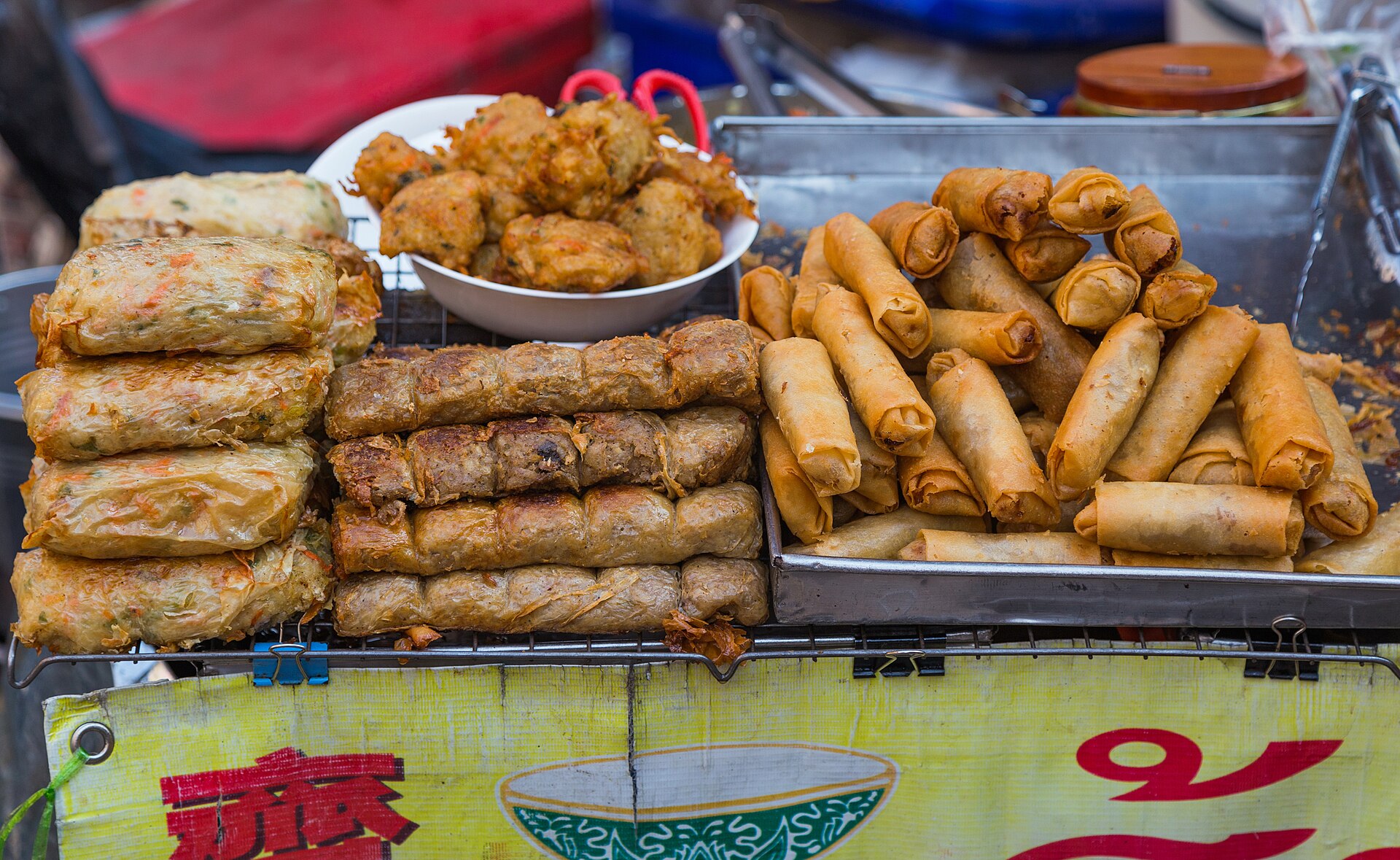
Yaowarat is the highest concentration of good street food in Bangkok. Or Tor Kor market is the cleanest and most expensive produce market in the country and a good soft landing if you are nervous about stalls. And the food courts on the top floors of the big malls are cheap, safe and much better than that description suggests.
Getting around
The BTS Skytrain runs ฿16–59 depending on distance; the MRT is similar. Both take contactless cards and both are air-conditioned, punctual and easy. The Chao Phraya boats cover the river. Between them they reach most of what you want, with the notable gap already discussed.
For everything else, use the ride-hailing apps rather than hailing a taxi off the street — the price is fixed, there is no meter conversation, and motorbike taxis on the same apps will get you through gridlock in a way no car can. Tuk-tuks are a novelty ride, not transport; agree the price before you get in and expect to pay more than a taxi would cost.
Renting your own two wheels in Bangkok itself is not something we would recommend to a first-timer — the traffic is genuinely unforgiving. Save it for the islands, where scooter rental in Phuket makes a lot more sense.
Where to sleep
Bangkok has the best value hotel market of any major Asian capital. Clean, well-located four-star doubles start around ฿1,800–2,500 (roughly €45–65) outside peak season, and the five-star river hotels are a fraction of what an equivalent property costs in Singapore or Tokyo. The variable that matters most is not the star rating but the walk to a BTS or MRT station — check it on a map before booking, and remember the soi problem.
התיקון: לעטוף כל ווידג’ט 4038 בשני div — חיצוני נגלל אופקית, פנימי עם min-width 620px: