

Rio de Janeiro doesn’t have a center. It can’t. Two granite domes and a knot of smaller peaks push up through the middle of the city, and the sea closes in from three sides, so instead of one downtown you get a string of separate pockets — Copacabana, Ipanema, Santa Teresa, Centro — each wedged into whatever flat ground was left over. Google Maps makes Rio look like one city. On the ground it behaves like six small towns that happen to share a metro line, and picking the wrong one to sleep in is the single most common way first-time visitors end up disappointed.
Why the city is shaped like this
The domes aren’t hills that eroded into shape — they’re the opposite. Corcovado, Sugarloaf, and the granite fists around Tijuca are what’s left after roughly 500 million years of much softer surrounding rock wore away, leaving these near-vertical cores of gneiss and granite standing alone. There was never a wide plain for Rio to spread across in a grid the way São Paulo or Buenos Aires did. Colonial Rio filled the scraps of flat land between the rock and the water, and every expansion since — the beach neighborhoods carved out through the 19th and 20th centuries, the tunnels blasted through the granite to connect them — has been a negotiation with the same stone. That’s also why the views are so vertical and so close: Christ the Redeemer looks directly down on a Maracanã-sized chunk of city because there’s nowhere else for the mountain to be.

Getting in from the airport
Most international flights land at Galeão (GIG), about 20 km north of the Zona Sul beach neighborhoods; domestic shuttle routes from São Paulo and Brasília often use Santos Dumont (SDU), a small downtown airport a fraction of the distance from Copacabana and Ipanema. If your connecting flight is domestic, it’s worth checking which airport it actually uses before booking a hotel — the difference in transfer time is significant. For the routes and current fares between Brazilian cities, see our guide to domestic flights within Brazil.
Ignore any driver who approaches you inside the terminal before you’ve reached the official taxi or ride-hailing queue — it’s the single most common airport scam in Rio, and it’s not about safety so much as a wildly inflated fixed price agreed before you get in the car.
What to book before you land
Christ the Redeemer runs on a timed-entry system, and the cog train up Corcovado sells out on its own schedule separate from the statue ticket — buying both together, in advance, avoids finding yourself with a train seat but no entry slot two hours later. The statue platform gets uncomfortably crowded between 10am and 2pm; the first and last departures of the day are calmer and better for photos, though sunrise slots sell out first. Sugarloaf’s two-stage cable car is less oversubscribed but still worth booking ahead in December–February.
Both are worth the money. What’s not worth it: the helicopter tours sold aggressively along Ipanema beach. They’re expensive, the standard route barely goes near Christ the Redeemer’s altitude, and the same view is available for free from Mirante Dona Marta, a lookout point most tour buses skip entirely.
What’s free and just as good
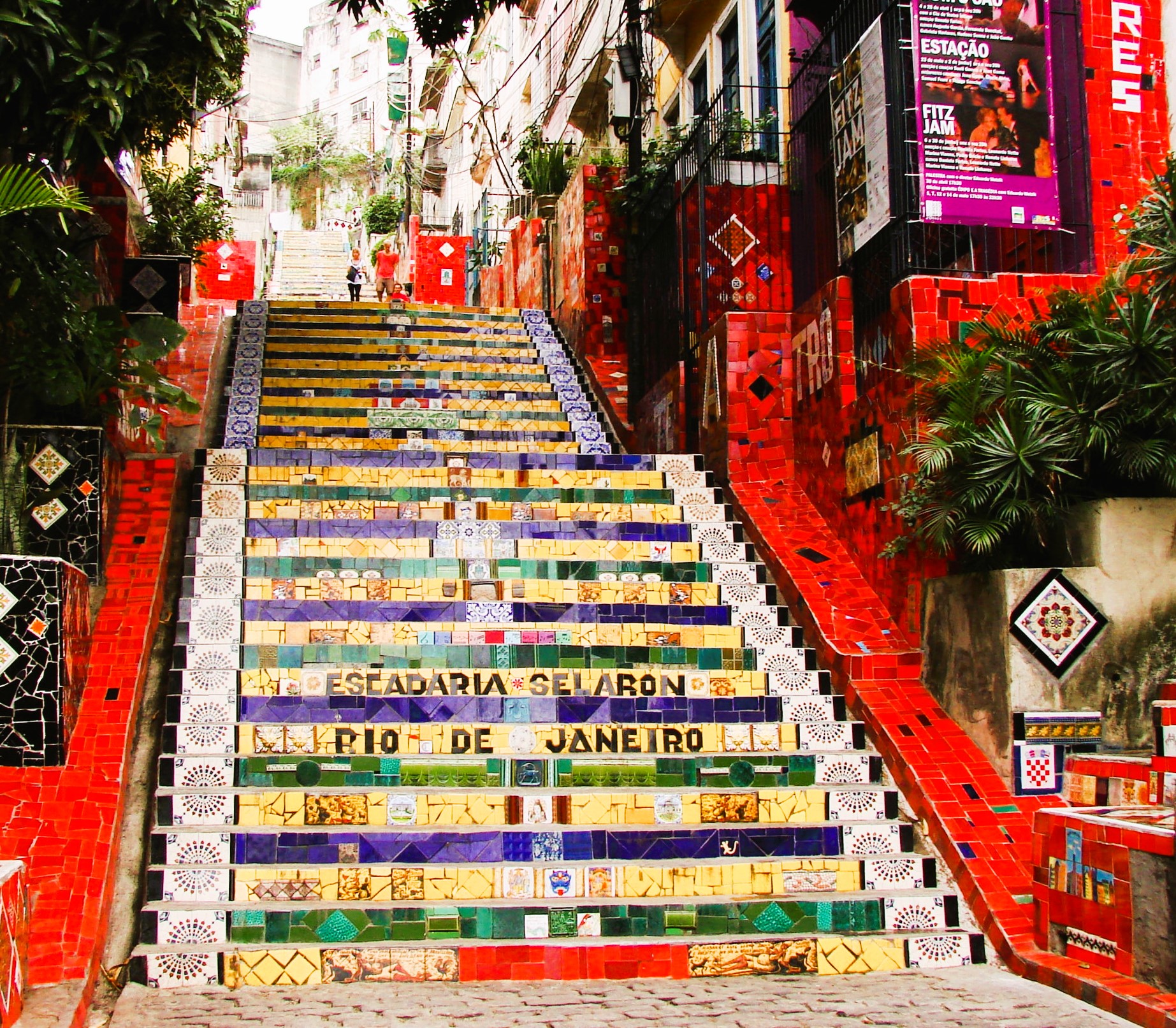
The Selarón Steps in Lapa — 215 steps covered floor to ceiling in tiles, mostly donated by visitors from around the world, a project the Chilean artist Jorge Selarón worked on daily until his death in 2013 — cost nothing and take twenty minutes. The Arcos da Lapa, the old aqueduct that now carries the Santa Teresa tram, is a five-minute walk from there. Copacabana and Ipanema beaches are, obviously, free, and the beachfront kiosks renting umbrellas and chairs charge a few reais rather than anything resembling a resort price. Parque Lage, at the base of Corcovado, has free grounds, a café inside a crumbling colonial mansion, and a trailhead for the hike up to Christ the Redeemer that most visitors don’t know exists.

Neighborhoods, and what each one is actually for
Copacabana is the classic postcard beach, dense, loud, and mixed — big hotels next to modest apartment blocks, and a boardwalk that never really empties. Ipanema and Leblon, next door, are quieter, wealthier, and better for restaurants; Ipanema’s Sunday street market and the Hippie Fair are worth timing a visit around. Santa Teresa, up in the hills, is the bohemian, artsy option — cobbled streets, studios, small guesthouses, and the yellow tram connecting it to the center — but it’s spread out and taxis are the practical way to get around after dark. Lapa, just below, is nightlife: samba clubs and street parties, especially Friday and Saturday, though it’s a place to visit rather than to base yourself. Botafogo and Flamengo, on the bay side, are calmer, more residential, and give you the single best framed view of Sugarloaf across the water, for a fraction of the hotel price of Copacabana.

A workable three-to-four-day route
Day 1: Christ the Redeemer early, then Parque Lage and lunch nearby; afternoon on Ipanema beach. Day 2: Sugarloaf at sunset — the two-stage cable car ride down after dark, with the city lighting up below, is arguably better than the daytime version — preceded by a slow morning around Botafogo or the Museu do Amanhã on the revitalized downtown waterfront. Day 3: Santa Teresa and Lapa: tram up in the morning, wander the studios, walk down to the Selarón Steps and the Arcos da Lapa by early afternoon, back that night for the samba clubs if it’s a weekend. Day 4, if you have it: a day trip — see below.
Food and a night out
Feiras (street food markets) pop up in different neighborhoods on different days of the week and are a cheap, low-stakes way to try acarajé (a Bahian black-eyed-pea fritter, less common in Rio than further north but increasingly found at these markets) and pão de queijo, the addictive cheese bread that’s sold everywhere from bakeries to beach vendors carrying it in baskets. Coconut water — served straight from the shell by beach kiosks — is the default hot-day drink and costs a fraction of what bottled juice does.
Feijoada — a black bean and pork stew, traditionally a Saturday lunch — is the dish most associated with Rio, and it’s worth seeking out a proper Saturday service rather than a tourist-hours version. Churrascaria rodízio, the all-you-can-eat grilled meat format, is easy to find and reliably good at a mid-range price. For something lighter, a pastel (fried pastry) and sugarcane juice from a beach kiosk is a legitimate lunch, not just a snack. Caipirinhas are everywhere and vary wildly in quality; a bar making them with fresh-squeezed lime rather than bottled mix is usually a good sign for the rest of the menu.
Getting around without a car
The metro also runs an integrated ticket with some bus and ferry routes, and a rechargeable card (Bilhete Único Carioca) is worth getting if you’re staying more than a couple of days — it works out cheaper than single-ride tickets and avoids fumbling with cash on buses, where change isn’t always given generously. Avoid the BRT (Bus Rapid Transit) lines at rush hour unless you enjoy being genuinely crushed; they’re efficient but not designed with luggage in mind.
Rio’s metro has two lines and covers Copacabana, Ipanema, and the city center well, but it doesn’t reach Santa Teresa or most of Lapa — those need a tram, taxi, or ride-hail. Uber is widely used and generally the easiest way to move around after dark; street taxis are fine in daylight in the main beach neighborhoods but agree on the meter (taxímetro) before setting off. Renting a car for the city itself is not recommended — parking is difficult, traffic is aggressive, and nothing central requires one — but it becomes useful for day trips into the mountains.
Where to sleep
For a full breakdown by neighborhood and budget, see our guide to where to stay in Rio de Janeiro. As a rule of thumb: Copacabana is cheapest for beachfront, Ipanema and Leblon cost more but feel calmer and safer at night, and Botafogo trades beach access for value and that Sugarloaf view.
Day trips
Petrópolis, the former imperial summer capital in the mountains north of the city, is about 90 minutes by road and makes an easy half-day trip — cooler air, the old imperial palace, and a completely different pace from the coast. Ilha Grande, a car-free island a few hours southwest, requires a ferry and is really an overnight trip rather than a day trip once you account for transfer time. Búzios, the beach town northeast of Rio, is a popular long-weekend add-on if you’re staying more than four or five days.
When to go
December through March is summer, peak season, and the most crowded and expensive — it includes New Year’s Eve on Copacabana beach and Carnival, both worth experiencing once but not if you want a quiet trip. April–June and September–November are the shoulder seasons: still warm, noticeably fewer crowds, and better hotel rates. July and August are Rio’s mild “winter” — rarely cold, but beach days are less reliable.
Honest practical notes
Phone snatching on the beach and in busy areas like Lapa at night is common enough that it’s worth treating any phone use in public as a small calculated risk — locals tend to keep valuables out of sight rather than avoid going out. The areas covered in this guide (Zona Sul, Santa Teresa, Lapa, downtown by day) are the ones visited by millions of tourists every year without incident; venturing into a favela without a guide, on the other hand, is a genuinely different risk category and not something to improvise.
Favela tours are a real and, in a handful of community-run neighborhoods like Santa Marta, reasonably safe way to see a side of the city most visitors never do — but only with a certified local guide, never independently, and never during any sign of police activity. Leave valuables and flashy jewelry at the hotel on the beach and in Lapa at night; bag-snatching on the sand is common enough that locals themselves don’t bring much down with them. Tipping isn’t obligatory — restaurants usually add a 10% service charge automatically — but rounding up for good service is normal. Brazil’s currency is the real (R$); most restaurants and shops take cards, but small kiosks and taxis are more likely to want cash.
Further reading
Where to stay in Rio de Janeiro · Domestic flights within Brazil · Things to do in Buenos Aires