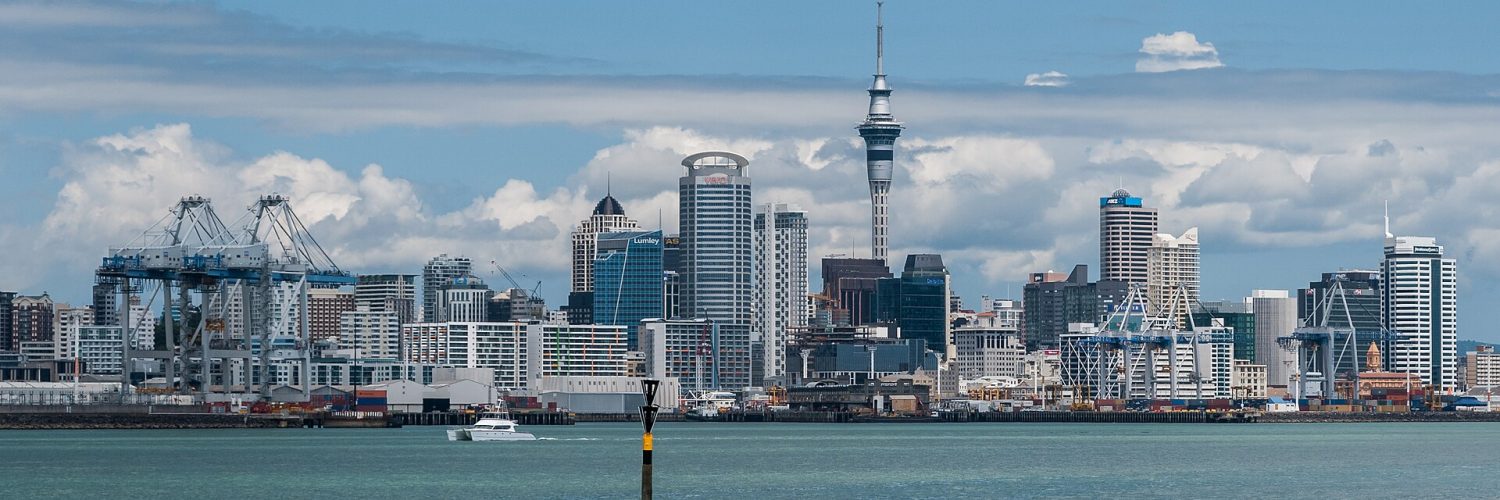
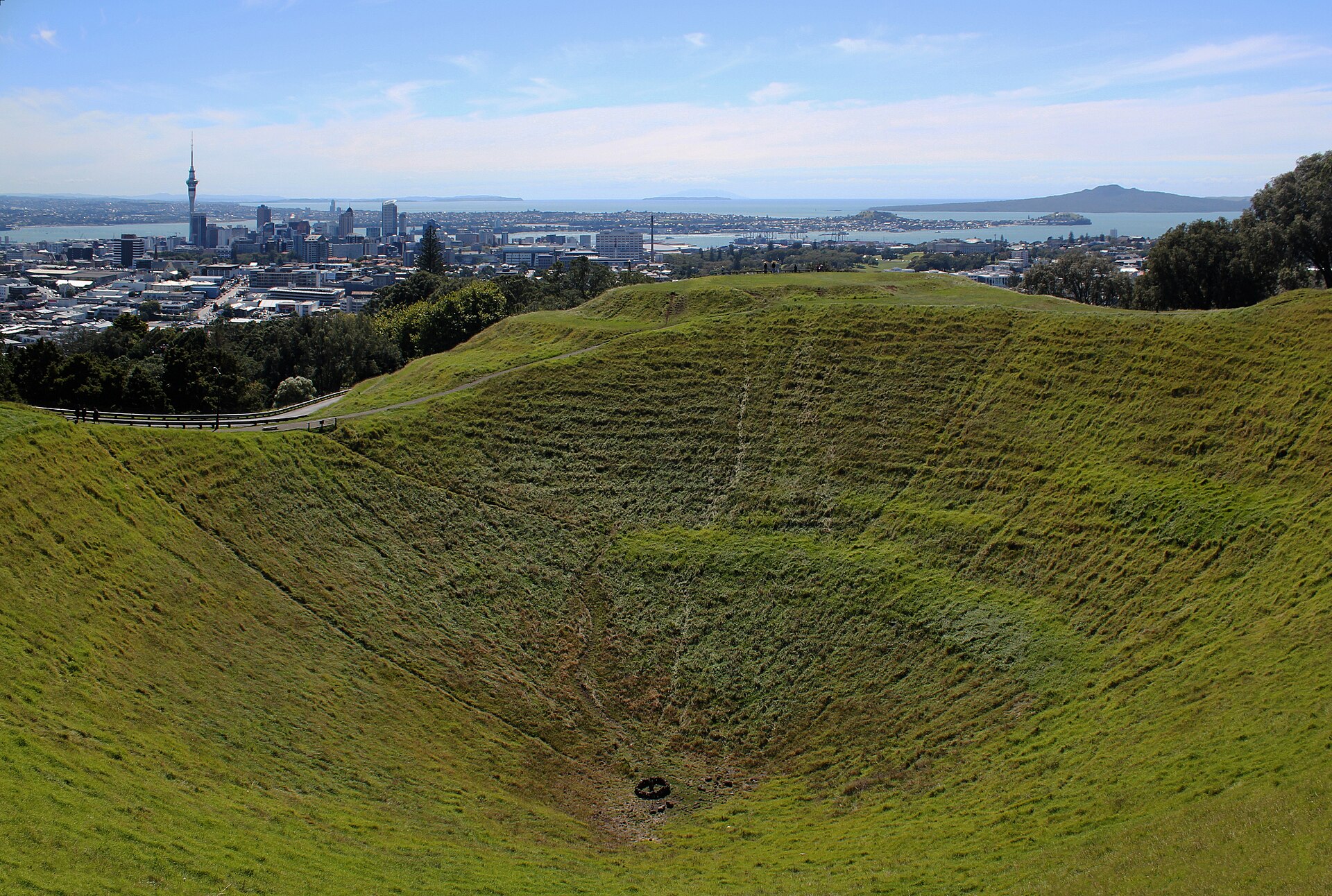
Auckland is built on 53 volcanoes. Not near them, not beside them — on top of them. The Auckland volcanic field has erupted around 53 times over the last 190,000 years, each eruption throwing up a new cone, crater or lava flow, and the modern city has simply grown around and over the results. Every green hill you see from the motorway is a volcano. The harbour itself is a drowned river valley; Rangitoto, the flat-topped island filling the view from every waterfront café, erupted from the sea around 600 years ago and was watched by people who already lived here.
This is the fact that reorganises a trip. Most visitors treat Auckland as a 24-hour stopover before the “real” New Zealand, and they spend those hours in the CBD, which is the least interesting square kilometre in the region. Treat the volcanoes and the two harbours as the itinerary instead and Auckland stops being an airport with a city attached.
Getting in from the airport
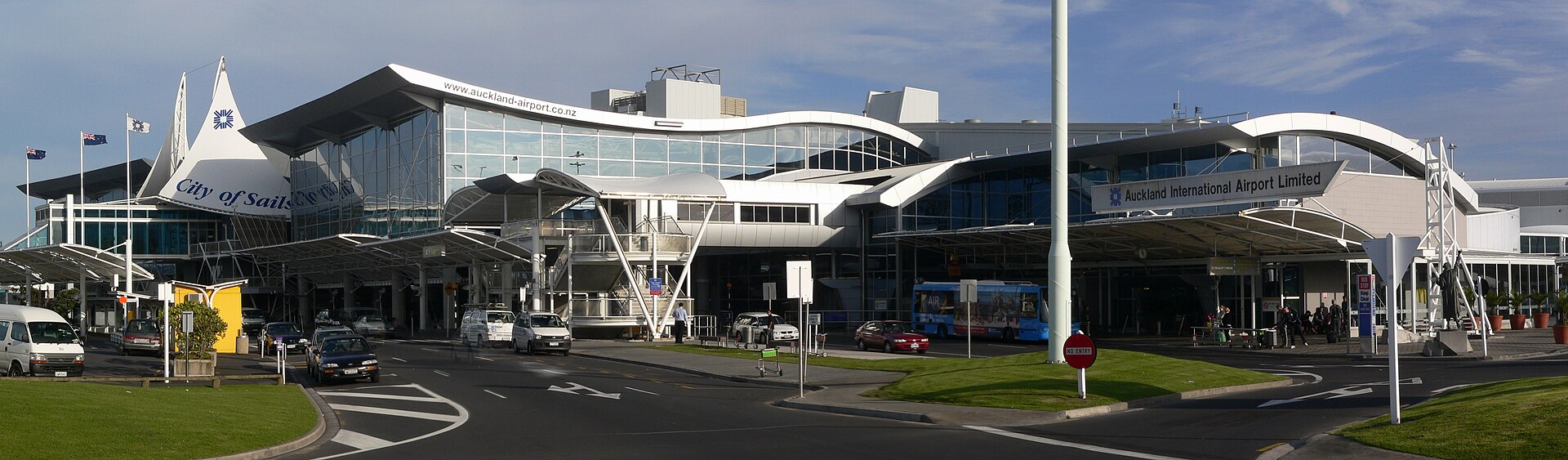
Auckland Airport sits 21 km south of the city centre and there is no train. The SkyBus that guidebooks still mention no longer operates under that name — it has been replaced by SkyDrive, a direct coach to the CBD. The cheaper public option is the AirportLink bus to Puhinui station combined with a train into Britomart, which costs around NZ$7.80 one way if you tap on with an AT HOP card, and takes roughly 50 minutes door to door.
The AT HOP card is worth buying on arrival: a one-zone trip runs about NZ$2.30 on HOP against a noticeably higher cash fare, two zones about NZ$3.80, and fares rose by a weighted average of 5.1% on 1 February 2026. Taxis and rideshare from the airport to the CBD land in the NZ$75–100 range depending on traffic, which is why a fixed-price pre-booked transfer usually wins for two or more people with luggage. Our dedicated guide to the Auckland airport transfer options breaks down each route with current timings.
Why the city looks like this
Auckland occupies an isthmus barely 2 km wide at its narrowest point, with the Waitematā Harbour on the Pacific side and the Manukau Harbour on the Tasman side. Māori called it Tāmaki Makaurau — commonly translated as “Tāmaki desired by many” — because that narrow neck let canoes be portaged between two oceans, making it the most strategically valuable ground in the country long before Europeans arrived. The volcanic cones were terraced into fortified pā, and you can still see the earthwork terraces ringing Maungawhau (Mount Eden) and Maungakiekie (One Tree Hill) today.
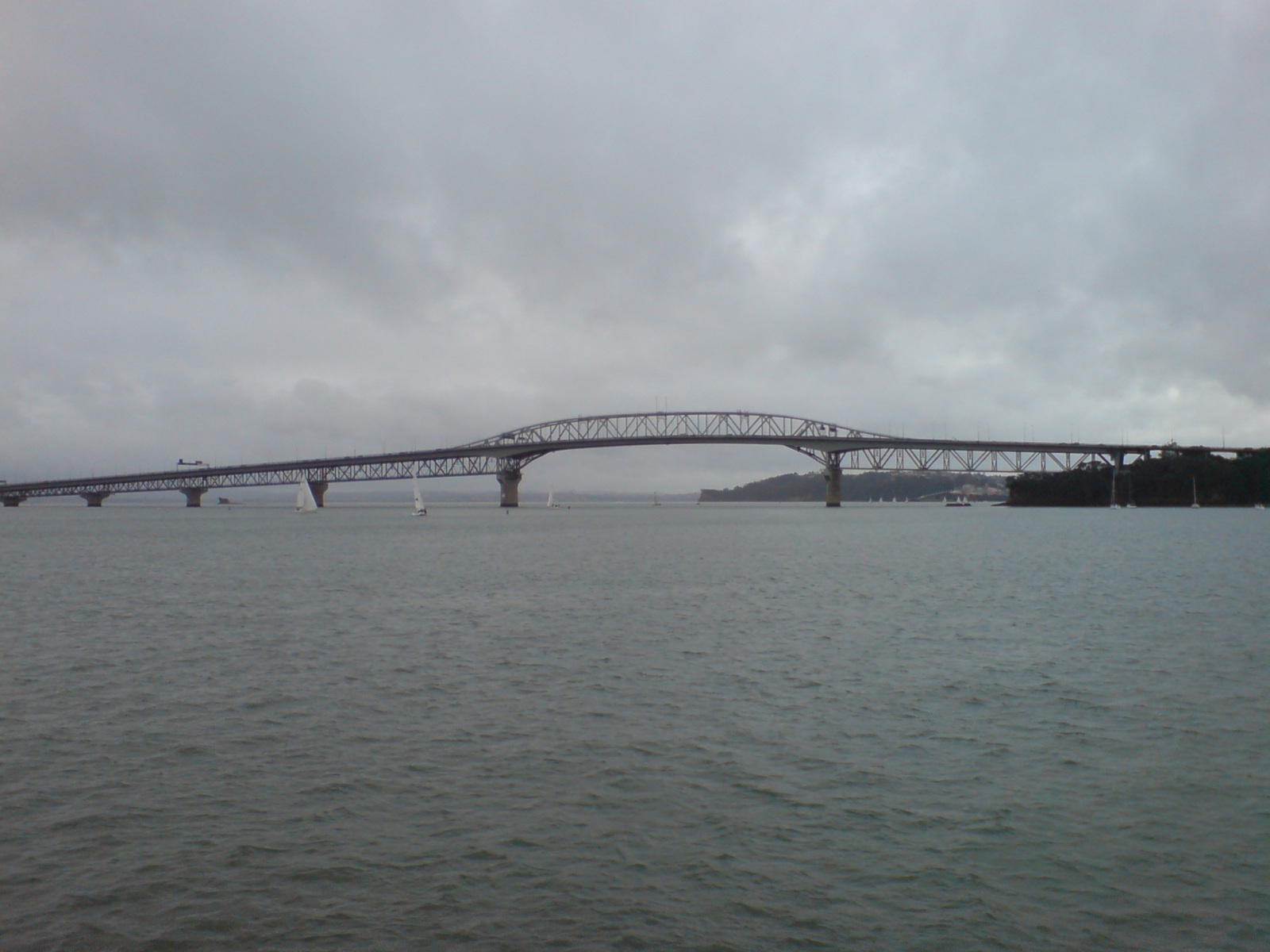
The isthmus also explains the traffic. A city of 1.7 million people funnels across a handful of harbour crossings, and the Auckland Harbour Bridge has no pedestrian or cycle path at all. Distances look short on a map and take twice as long as expected between 7–9am and 4–6.30pm.
What to book ahead, and what it costs
Auckland has few things that genuinely sell out, but three are worth locking in: the Sky Tower’s SkyWalk and SkyJump slots, Waiheke ferry-plus-wine tours in summer, and Hobbiton day trips if you plan to do the Matamata run from Auckland — that one books out weeks ahead in peak season.
Sky Tower general admission is around NZ$40 for adults and NZ$20 for children aged 6–14, with under-6s free. At 328 metres it is the tallest structure in the Southern Hemisphere and the view genuinely does explain the geography — you can see both harbours and count the cones from the observation deck. It is the one paid city attraction that earns its price, mostly as an orientation exercise on day one.
The free version, which is most of the good part
Climbing the volcanoes costs nothing. Maungawhau (Mount Eden) is the highest natural point in the city at 196 metres, with a 50-metre-deep crater at the top and a 360-degree view of both harbours; vehicles are no longer permitted to the summit, so everyone walks the last stretch. Maungakiekie (One Tree Hill) sits inside Cornwall Park, complete with a working sheep farm inside the city. Mount Victoria in Devonport gives the best straight-on view of the CBD skyline across the water.
Also free: the Auckland Domain and its Wintergardens, the Coast to Coast Walkway (16 km across the isthmus from the Waitematā to the Manukau, linking several cones), Mission Bay’s beachfront, and Karekare and Piha on the west coast — black volcanic sand beaches inside regional parkland. Auckland Art Gallery Toi o Tāmaki is free for New Zealand residents and charges international visitors a modest general admission. Auckland Museum, which holds the most significant Māori and Pacific collection anywhere, charges international visitors an entry fee that also covers a daily cultural performance; that performance is the single best hour a first-time visitor can spend in the city.
Neighbourhoods and what each is for
The CBD and Viaduct Harbour are for convenience — ferries, the Sky Tower, and the bars around the America’s Cup basin. It is functional rather than charming. Ponsonby, a ridge of restored villas 15 minutes’ walk west, is where Auckland actually eats and drinks: Ponsonby Road and the surrounding streets hold the best concentration of restaurants in the country. Parnell is the old money equivalent to the east, next to the Domain and the museum. Devonport, a 12-minute ferry across the harbour, is a Victorian seaside village with two volcanoes and naval history. Mount Eden village is quiet, leafy and close to the mountain. Karangahape Road — “K Road” — is the alternative strip: late-night bars, vintage shops, and the city’s queer heart.
A three-day plan that uses the geography
Day one — orientation. Sky Tower in the morning for the lay of the land, Auckland Museum in the Domain afterwards for the cultural performance, then walk down through Parnell to the waterfront. Evening on Ponsonby Road.
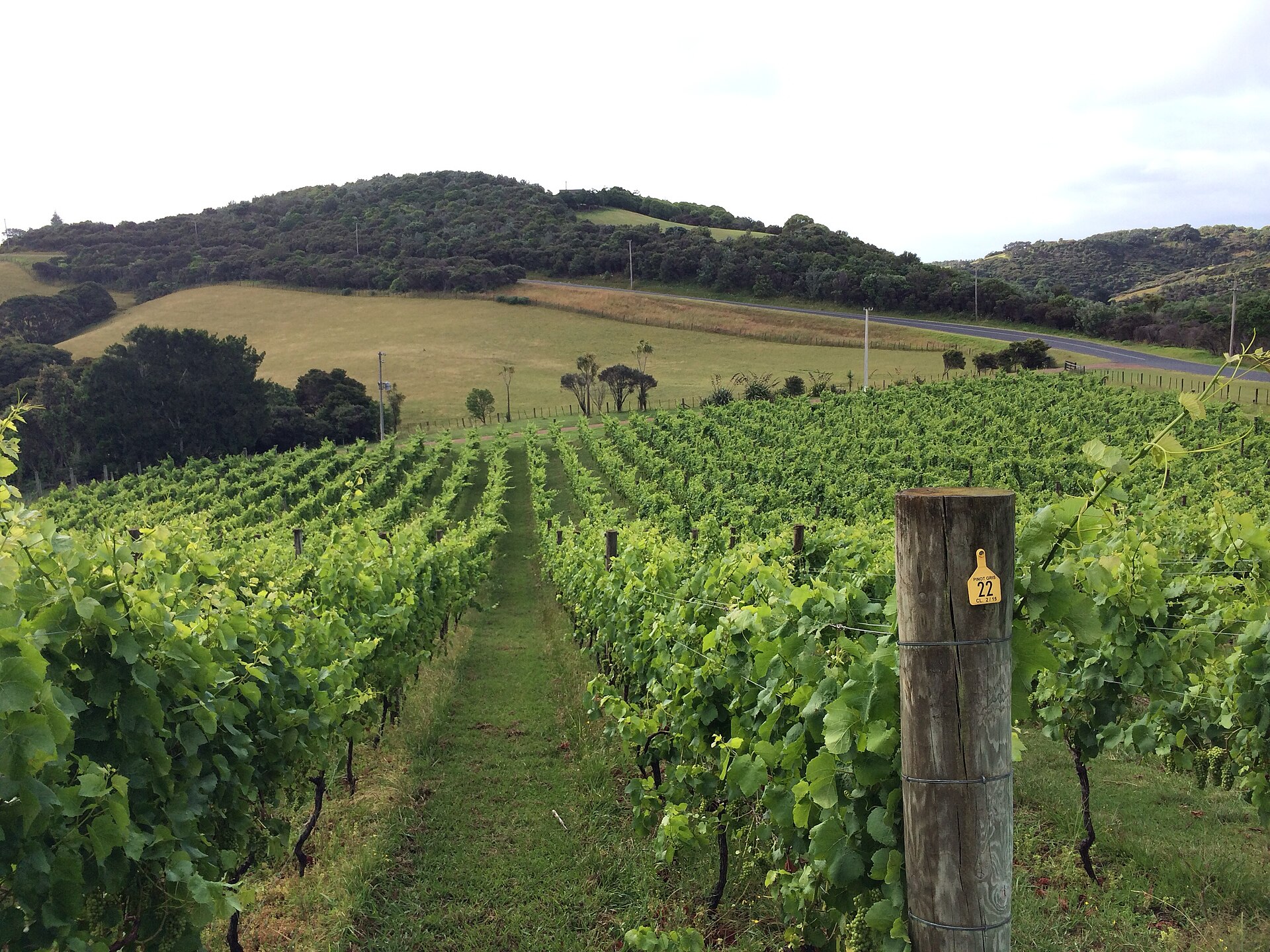
Day two — the islands. Ferry to Waiheke (40 minutes from the downtown terminal). The island has more than 20 vineyards, a hop-on hop-off bus, and beaches that are better than anything on the mainland side. Oneroa and Onetangi are the two to aim for. Alternatively, ferry to Rangitoto and climb the 260-metre cone across bare lava fields — a one-hour walk each way over sharp scoria, with no shade and no water on the island, so carry your own and check the return sailing time before you start.
Day three — the west coast and the cones. Drive or tour out to the Waitākere Ranges: Piha for the surf and Lion Rock, Karekare for the waterfall and the beach from The Piano. Be aware that kauri dieback disease has closed a number of Waitākere tracks and every open track has a mandatory boot-cleaning station — using it is not optional courtesy, it is the reason the forest still exists. Finish at Mount Eden for sunset.
Where to sleep
Auckland’s peak runs from December to February, which is the southern summer and also school holidays; hotel rates in the CBD climb sharply and Waiheke accommodation becomes both scarce and expensive. March and April are the value months — still warm, water still swimmable, prices down. Winter (June–August) is mild, wet and cheap, and the city functions perfectly well in it.
Staying in Ponsonby or Parnell rather than the central CBD usually buys a better neighbourhood at a similar price, with a 20-minute walk or a short bus ride into town. Devonport is the contrarian choice: quieter, cheaper, and the ferry commute is a pleasure rather than a chore. If you are flying out early, the airport hotel cluster in Māngere saves a stressful morning.
Getting around
Auckland’s public transport is bus-heavy with two rail lines and an excellent ferry network. AT HOP works across all three. Ferries are the standout: Devonport, Waiheke, Half Moon Bay and Birkenhead all run frequently, and even the short crossings double as sightseeing. Buses are reliable on the main corridors and thin in the suburbs. The City Rail Link project has been rebuilding the downtown rail network, so check current station closures before planning a train-based day.
A car is genuinely useful for the west coast beaches, the Waitākere Ranges and anywhere in the Hunua or Bombay hills, and genuinely a liability in the CBD, where parking is metered and expensive. The sensible pattern is city days on transit, then pick up a vehicle for the out-of-town days. If Auckland is the start of a longer road trip, our guides to campervan rental in New Zealand and motorcycle rental in New Zealand cover the licence and insurance rules that catch out visitors.
Eating and drinking
Auckland’s food is Pacific — literally. The city has the largest Polynesian population of any city in the world, and that shows up in Samoan, Tongan, Cook Islands and Niuean food alongside a large and long-established Chinese, Korean and Indian presence. Look for a hāngī (food cooked in an earth oven) at cultural events, and for the everyday New Zealand staples that visitors underestimate: whitebait fritters in season, green-lipped mussels, Bluff oysters from March, and flat whites made with genuine skill.
Practical notes: tipping is not expected in New Zealand and service charges are rare; a “flat white” is not a latte and locals will tell you so; and the legal drinking age is 18 with photo ID demanded routinely regardless of apparent age.
When to go
December to February is warm (23–25°C), busy and expensive. March and April hold the heat with fewer people. May to August is 10–16°C, wet and windy, with the compensations of empty beaches and cheap rooms. September to November brings unstable spring weather and the best whale and dolphin watching in the Hauraki Gulf. Whatever the month, Auckland’s weather changes within the hour — the local phrase “four seasons in one day” is a description, not a joke, and the UV index in summer is among the harshest on earth thanks to the ozone hole and clean air. Sunscreen at 11am in January is not optional.
What Auckland is not
Be honest with yourself about the trade-off. Auckland is not a beautiful city in the way Wellington or Queenstown are; the CBD is undistinguished and the sprawl is real. Public transport outside the main corridors is thin, traffic is genuinely bad, and prices — for food, accommodation and rental cars — are higher than most visitors expect from a country this far from anywhere. Central-city crime is low but opportunistic theft from parked rental cars at trailheads and beaches is common enough that leaving anything visible in a vehicle at Piha or Karekare is asking for a broken window.
What Auckland is: the only city on earth where you can climb a volcano before breakfast, swim on a black-sand ocean beach at noon, and drink wine grown on an island 40 minutes from downtown by evening. That is worth more than one stopover night.